Supreme Court Affirms Seven-Year Jail Term for Former Senator Albert Bassey
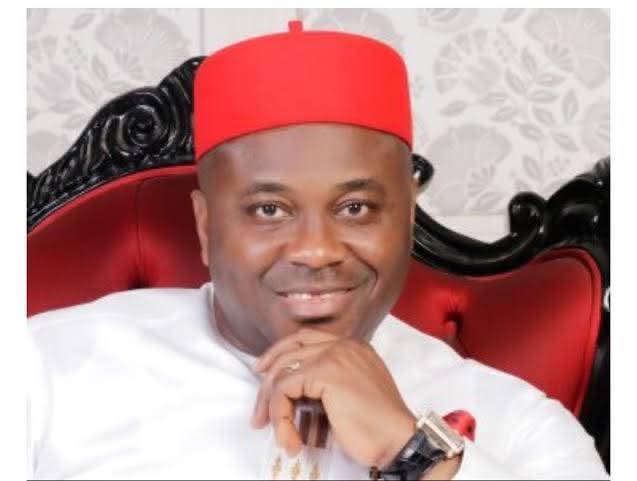

Nigeria’s apex court has upheld the conviction and seven-year prison sentence of former lawmaker Albert Bassey, effectively closing a lengthy legal battle over a N240 million fraud case.
In a unanimous judgment delivered by Justice Stephen Jonah Adah, the Supreme Court of Nigeria affirmed the earlier rulings of both the trial court and the Court of Appeal, which found Bassey guilty on corruption-related charges.
Bassey represented Akwa Ibom North-East Senatorial District between 2015 and 2023 and previously served as Commissioner for Finance in Akwa Ibom State from 2007 to 2014.
Background of the Case
The prosecution was initiated by the Economic and Financial Crimes Commission (EFCC), which arraigned him before the Federal High Court on a seven-count charge bordering on bribery and corruption.
The EFCC alleged that while serving as Commissioner for Finance, Bassey received bribes in the form of 12 vehicles valued at about N254 million.
Related News

FIFA and UEFA Presidents Named in ICC Complaint Alleging Complicity in Settlement Activities
Presidents Gianni Infantino and Aleksander Ceferin have been accused of aiding war crimes in a complaint submitted to the International…

Court Sentences Cleric to Death Over Killing of University of Uyo Final-Year Student in Akwa Ibom
An Akwa Ibom State High Court has sentenced Prince Emmanuel Umoh, a cleric, to death by hanging for the 2020…
Court Adjourns ₦2 Billion Assault Suit Against Odumodublvck to April 2026
A Federal Capital Territory High Court in Abuja has adjourned the ₦2 billion assault and battery case filed against rapper…
On December 1, 2022, the trial court convicted him on all seven counts and sentenced him to seven years’ imprisonment on each count. Although the cumulative sentence amounted to 42 years, the court ordered the terms to run concurrently — meaning he would serve seven years in total.
Restitution Order Restored
While the Court of Appeal upheld the conviction, it had modified aspects of the ruling, including introducing an option of fine and altering the restitution order.
However, the Supreme Court ruled that the appellate court erred in setting aside the original restitution directive. It restored the trial court’s order requiring Bassey to refund N204 million to Akwa Ibom State.
With this latest judgment, both the conviction and the seven-year jail term remain final, and the order to repay N204 million has been reinstated.
Public Reaction
The ruling has sparked mixed reactions online. Some commentators welcomed the judgment as a sign that anti-corruption efforts can reach high-ranking officials. Others questioned whether similar standards would consistently apply across party lines and political affiliations.
The case adds to ongoing public conversations about accountability, political influence, and the independence of Nigeria’s judicial system.
At this point, the Supreme Court’s decision marks the legal conclusion of the matter — unless executive clemency is sought or granted in the future.
If you want, I can also break down what “concurrent sentences” really mean in practical terms or explain how restitution orders are enforced in Nigeria.