2026 Will Bring Renewed Hope and Stability, Senate President Akpabio Assures Nigerians
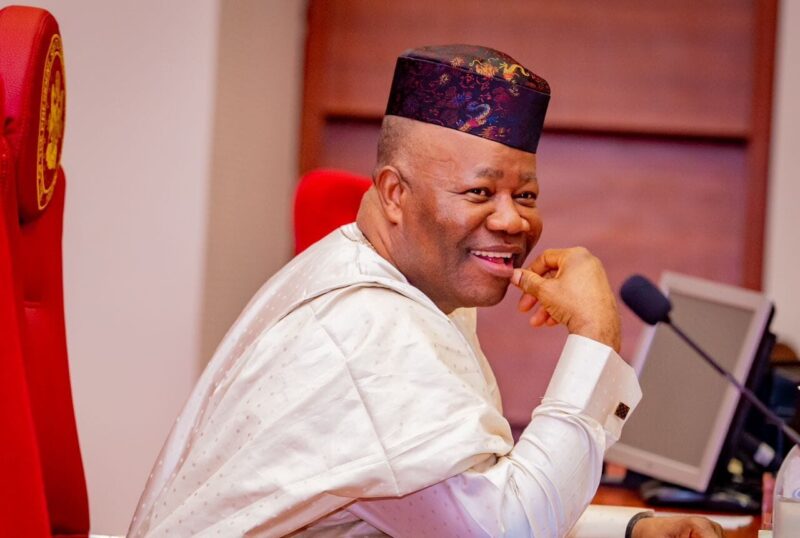

The President of the Senate, Godswill Obot Akpabio, has assured Nigerians that the year 2026 holds promise for renewed hope, stronger institutions, and gradual national progress, despite the economic and security challenges confronting the country. Akpabio gave the assurance in his New Year message to the nation, issued on Wednesday and signed by his Special Adviser on Media and Publicity, Hon. Eseme Eyiboh.
In the message, the Senate President expressed confidence that the outlook for 2026 would be anchored on responsible leadership, institutional stability, and collective national resolve. He commended Nigerians for their resilience, patience, and civic maturity, noting that the ability of citizens to endure difficult circumstances while remaining committed to democratic processes is a critical pillar of national stability.
“As we enter the year 2026, I extend my warm wishes to Nigerians for a peaceful and fulfilling year. I commend the resilience, patience, and civic maturity of our people, even in challenging times,” Akpabio stated. According to him, the sacrifices made by citizens amid economic pressures and security concerns have not gone unnoticed and must be matched by more accountable governance across all arms of government.
Related News
Former INEC Commissioner Igini Warns Lawmakers: Mandatory E-Transmission Key to Political Survival in 2027
Former electoral commissioner Mike Igini has urged Nigeria’s National Assembly to make real-time electronic transmission of election results compulsory, warning…
Controversy as Senate Rejects Mandatory Real-Time Electronic Transmission of Election Results
Fresh revelations suggest internal Senate interventions led to the removal of mandatory real-time electronic transmission of election results from the…

Nigeria Not Ready for Real-Time Election Result Transmission — Shagari Sparks National Debate
Former Sokoto State Deputy Governor Mukhtar Shagari has said Nigeria should not rush into adopting real-time electronic transmission of election…
Akpabio reaffirmed the commitment of the National Assembly to its constitutional responsibilities of lawmaking, representation, and oversight. He noted that while the Executive arm of government continues to formulate and implement policies, the legislature remains focused on ensuring that governance outcomes align with the aspirations and welfare of Nigerians. He stressed that the Senate would continue to provide legislative support where necessary, exercise oversight where required, and act in the overall interest of national unity, economic stability, and social justice.
The Senate President expressed cautious optimism that ongoing efforts to address insecurity, economic pressures, infrastructure deficits, and youth unemployment would yield more tangible results in 2026. He emphasised that sustainable development cannot be built around individuals alone but must rest on strong, credible institutions that function effectively and transparently.
“Our democracy is strengthened when institutions function properly and leaders remain accountable. The National Assembly will continue to work to strengthen these institutions and to ensure that public policy is people-centred and forward-looking,” Akpabio said.
Looking ahead to increased political activities as the country approaches the 2027 general elections, Akpabio cautioned political actors against divisive rhetoric and what he described as false messianic narratives. He warned that individuals who portray themselves as sole saviours of the nation often deepen divisions rather than promote solutions, adding that democracy thrives on ideas, accountability, responsibility, and respect for national cohesion.
He urged politicians across party lines to conduct themselves with restraint and a strong sense of national duty, noting that the stability of the country depends largely on the conduct of its political leaders. Akpabio assured Nigerians that the Senate would continue to uphold democratic norms, parliamentary discipline, and the rule of law, especially during politically sensitive periods.
The Senate President also reaffirmed the National Assembly’s commitment to constructive engagement with the Executive, the Judiciary, and other key stakeholders. According to him, cooperation among the arms of government remains essential for addressing Nigeria’s complex challenges and for building a more united, just, and prosperous nation.
In his concluding remarks, Akpabio called on Nigerians to remain hopeful, vigilant, and actively engaged in democratic processes. He encouraged citizens to continue holding leaders accountable while contributing positively to national development. He also wished Nigerians a peaceful, stable, and prosperous 2026, expressing confidence that sustained collective effort would gradually translate into improved living conditions for the populace.