300-Bed Enugu International Hospital Approaches Completion Amid Public Reactions
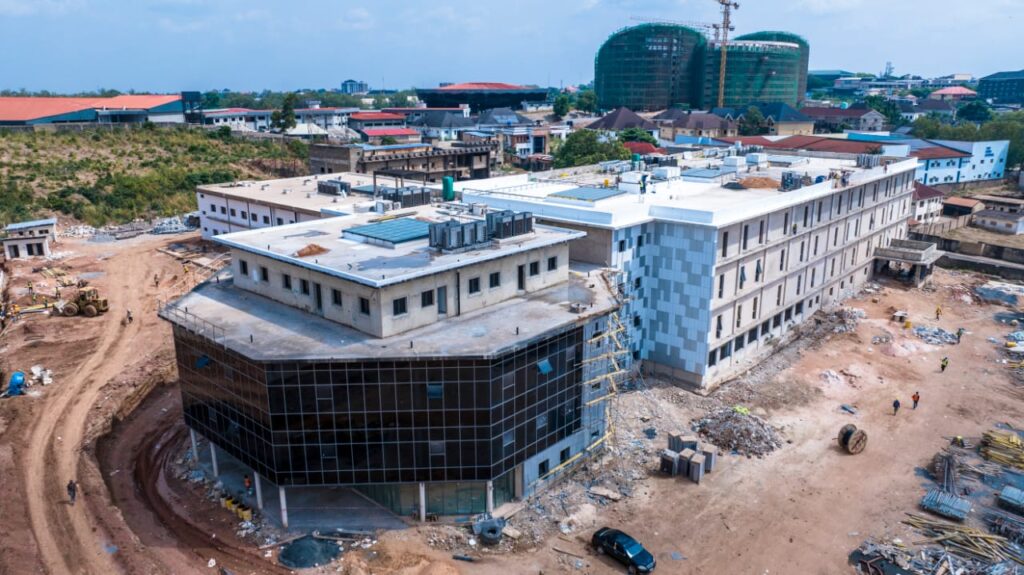

The construction of a 300-bed international hospital in Enugu is approaching its final stages, according to updates shared by project supporters and observers. The healthcare facility, described as a state-of-the-art development, is expected to significantly enhance specialized medical services within the state and across the South-East region.
Images and updates circulating online show a modern structure with advanced architectural design and interiors that supporters say will rival leading medical facilities in the country. Promoters of the project have described the hospital as “world-class” and “futuristic,” suggesting it is intended to redefine the standard of specialized medical care available locally.
Although an official commissioning date has not yet been announced, indications that the project is nearing completion have sparked widespread reactions from residents, commentators, and social media users. Many observers have welcomed the development, describing it as a major investment in public health infrastructure and a sign of progress in the state’s healthcare sector.
Supporters of the project argue that the new hospital could help reduce the need for Nigerians to travel abroad for specialized treatment. They note that access to modern medical facilities within the country would not only save foreign exchange but also improve emergency response and long-term care for patients who previously faced limited options.
Related News

Aerial Footage Shows Progress on Sokoto–Badagry Super Highway Construction
New aerial footage circulating online has revealed ongoing construction work on the proposed Sokoto–Badagry Super Highway, a major infrastructure project…

Kaduna State Government Takes Over Ahmadu Bello Stadium, Begins Major Reconstruction
The Kaduna State Government has officially taken over ownership of the iconic Ahmadu Bello Stadium from the Federal Government, following…

Hard Drugs and the Slow Destruction of a Friendship
A young man has shared the heartbreaking story of how drug addiction transformed his once vibrant childhood friend into a…
Some commentators have also praised the administration of Governor Peter Mbah, describing the hospital project as a legacy initiative that could outlive the current government if properly maintained and staffed. They believe the facility has the potential to position Enugu as a regional hub for advanced medical services and healthcare innovation.
However, not all reactions have been celebratory. A number of residents have raised concerns about celebrating the project before its completion and full operational launch. Critics argue that while construction progress is encouraging, the true measure of success will be determined by the hospital’s functionality, affordability, and maintenance over time.
Questions have also been raised about whether the hospital will be accessible to ordinary citizens or primarily serve private and high-income patients. Some observers emphasized the importance of integrating health insurance schemes and ensuring that services remain affordable for traders, workers, and low-income residents.
Maintenance and staffing have emerged as recurring themes in public discussions. Several commentators stressed that beyond construction, long-term success will depend on recruiting qualified medical personnel, maintaining equipment, and implementing sustainable management systems. Without these elements, they warned, even the most modern facilities could struggle to deliver consistent quality care.
Others suggested that transparent maintenance policies and funding mechanisms should be put in place to prevent the facility from deteriorating over time. They called for clear accountability measures and public access to information about how the hospital will be run once it becomes operational.
Despite differing views, there is broad agreement that the completion of the 300-bed international hospital represents a significant milestone for Enugu State. As construction moves closer to its final phase, attention is increasingly turning toward operational readiness, staffing, and long-term sustainability.
Residents and stakeholders alike are expected to watch closely as the project reaches completion, with hopes that the new facility will deliver on its promise of improving healthcare delivery and strengthening the state’s medical infrastructure.