Baba-Ahmed Accuses Tinubu of Colluding With U.S. Over Sokoto Airstrikes, Raises Sovereignty Concerns
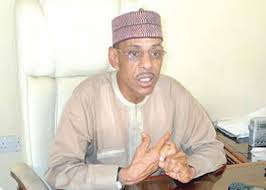

Hakeem Baba-Ahmed, a former senior public official and prominent political commentator, has strongly criticised President Bola Tinubu following recent airstrikes carried out by the United States military in Nigeria’s north-western Sokoto State. Speaking in an interview with Peoples Gazette on Friday, Baba-Ahmed accused the Tinubu administration of effectively surrendering Nigeria’s sovereign right to defend itself by allowing foreign military action on its territory.
According to Baba-Ahmed, the U.S.-led operation represents a dangerous precedent that diminishes the authority and morale of Nigeria’s armed forces. He argued that by permitting the strikes, the federal government has handed over a core constitutional responsibility—national defence—to an external power.
“Now our country’s right to defend itself has been handed over by our leadership to the United States,” Baba-Ahmed said. “Our military assets, sworn to protect and defend us, have been further diminished by the action of the U.S. They would be justified in feeling humiliated.”
The controversy follows an announcement by U.S. President Donald Trump, who disclosed via social media on Thursday that American forces had carried out a series of airstrikes against what he described as terrorist targets in north-western Nigeria. Several hours later, Nigeria’s Ministry of Foreign Affairs released a statement confirming that the operation had taken place and indicating that Nigerian authorities were aware of the action.
Baba-Ahmed, however, described the strikes as a gross violation of Nigeria’s sovereignty and questioned the motives behind Washington’s involvement. He alleged that the United States was pursuing a hidden agenda and warned that foreign military intervention risked deepening existing religious and social divisions within the country.
Related News

DSS Tells Court Kaduna Man’s Tweets Could Drag Nigeria into Israel–Iran Conflict
Nigeria’s domestic intelligence agency, the Department of State Services (DSS), has told a court that social media posts allegedly made…
Nigeria Begins Evacuation of Citizens from Iran Amid Escalating Middle East Conflict
The Nigerian government has started evacuating its citizens from Iran as tensions in the Middle East intensify.

Nigeria Surpasses India in Number of People Living in Poverty – Report
New data shared by Statisense suggests that Nigeria now has a higher number of people living below the poverty line…
“The real issue is not where, within Nigeria’s territory, the U.S. assault landed,” he said. “What matters is that our sovereignty, dignity, and rights have been violated by an external interest that claims it is acting in the interest of the Nigerian Christian community.”
He further accused the United States of consistently framing Nigeria’s security crisis in religious terms, arguing that such narratives could inflame tensions rather than resolve the underlying causes of violence. According to him, Nigeria’s terrorism problem is one that only Nigerians can ultimately solve through unity, political will, and effective domestic leadership.
While acknowledging the scale of the security challenges facing the country, Baba-Ahmed insisted that foreign intervention would not defeat terrorism in Nigeria. Instead, he warned that reliance on external military power could expose the country to renewed forms of political and economic domination.
“The U.S. does not just have a foot in our door; it has the whole room,” he said. “How do we eventually tell the U.S. to go home and say we can handle our problems ourselves?”
He argued that Nigeria risks becoming a “double victim”—suffering both from violent attacks by armed groups and from the strategic interests of powerful foreign nations that may benefit from a weakened Nigerian state. In his view, the continued erosion of Nigeria’s strategic autonomy could open the door to modern-day colonial influence.
Meanwhile, the airstrikes have also drawn criticism from religious figures. Islamic cleric Sheikh Ahmad Gumi condemned the operation, describing it as a symbolic act against Islam. In a statement on Friday, Gumi questioned the choice of Sokoto as a target and suggested that the timing and justification of the strikes raised troubling questions.
“The attacks are symbolic of a harbinger of a neo-Crusade war against Islam,” Gumi said. “An attack on Sokoto, where about 90 percent of the population is Muslim, on Christmas Eve, while the major terror threats remain in other regions, says a lot.”
The federal government has yet to issue a detailed response addressing the concerns raised by Baba-Ahmed and other critics, including questions about operational control, civilian impact, and Nigeria’s long-term security strategy. As debate continues, the incident has reignited broader national discussions about sovereignty, counterterrorism cooperation, and the appropriate balance between international assistance and domestic leadership in addressing Nigeria’s security challenges.