Dangote Elevates Daughters to Executive Leadership as Conglomerate Targets $100bn Valuation by 2030


African billionaire Aliko Dangote has promoted his three daughters into top executive leadership roles within the Dangote Group, signalling a major succession and growth strategy as the conglomerate pursues an ambitious valuation target of $100 billion by 2030.
The appointments see Halima Dangote, Fatima Dangote, and Mariya Dangote assume positions as Group Executive Directors across key business divisions of the sprawling industrial empire. Their elevation represents one of the most significant internal leadership restructures in the company’s history and reflects a deliberate effort to prepare the next generation of leadership while expanding globally.
Under the new structure, Halima Dangote will lead the newly created Dangote Family Office and oversee the conglomerate’s international offices in Dubai and London. Her responsibilities include coordinating global operations, strengthening governance frameworks, and managing strategic alignment across the group’s expanding international footprint. The creation of a structured family office also points to a long-term institutionalisation of leadership and wealth management within the conglomerate.
Fatima Dangote has been assigned to lead Commercial Operations for Oil and Gas, widely considered one of the most strategic portfolios within the group. Her responsibilities span operations tied to the flagship Dangote Petroleum Refinery and petrochemicals business, fertiliser production, upstream oil initiatives, procurement systems, and corporate communications. Analysts say this role places her at the centre of some of the group’s most capital-intensive and globally significant operations, especially as the refinery continues ramping up production capacity.
Related News
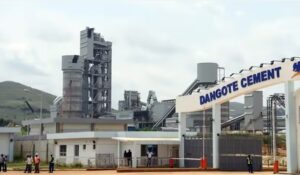
Senegal Government Acquires 10% Stake in Dangote Cement Senegal
The government of Senegal has acquired a 10 percent equity stake in Dangote Cement Senegal, becoming a minority shareholder in…

Apple Unveils MacBook Air M5 Using Fela Anikulapo Kuti’s “Let’s Start”
Tech giant Apple has unveiled its next-generation MacBook Air powered by the new M5 chip, with a campaign featuring Fela…

MTN Group Moves to Acquire IHS Towers in Landmark $6.2 Billion Telecom Infrastructure Deal
MTN Group has reached an agreement to acquire IHS Towers in a $6.2 billion all-cash transaction, marking one of the…
Meanwhile, Mariya Dangote will oversee Commercial Operations for the conglomerate’s cement and food businesses, two divisions that have historically driven revenue and regional market dominance. Her role involves shaping growth strategy, strengthening market positioning, and improving operational efficiency across these mature yet expanding sectors.
The leadership reshuffle comes as the conglomerate intensifies its expansion agenda. The company recently entered into a partnership with XCMG Construction Machinery to procure heavy equipment for projects spanning refining, petrochemicals, agriculture, and infrastructure. The collaboration is expected to accelerate the group’s “Vision 2030” objectives and strengthen its industrial capacity across Africa and beyond.
Central to these ambitions is a plan to significantly scale production across several business lines. The group aims to expand the refining capacity of its flagship refinery from 650,000 barrels per day to approximately 1.4 million barrels daily. It also plans to triple urea fertiliser production while boosting polypropylene and base oil output across operations in Nigeria and Ethiopia.
Industry observers interpret the appointments as a clear indication that Dangote is actively shaping a succession framework while ensuring continuity of strategic direction. Rather than waiting for a future leadership transition, the move integrates the next generation into high-level decision-making during a period of rapid expansion.
Family-led conglomerates across the world often adopt similar strategies to ensure continuity, institutional memory, and alignment of long-term goals. By placing his daughters in key operational roles, Dangote appears to be reinforcing internal leadership pipelines while maintaining tight strategic control over core business units.
The restructuring also reflects broader corporate trends in which large family-owned enterprises formalise governance structures and professionalise leadership transitions to maintain competitiveness in global markets. For the Dangote Group, which operates across cement, sugar, salt, fertiliser, oil and gas, and infrastructure, continuity of leadership and clarity of vision are seen as crucial for sustaining growth and investor confidence.
As the conglomerate accelerates its expansion across Africa and global markets, the appointment of the next generation into top executive roles positions the company for long-term continuity, operational stability, and sustained industrial influence in the decades ahead.