UK Prime Minister Keir Starmer Defends Decision Not to Join US-Israel Strikes on Iran
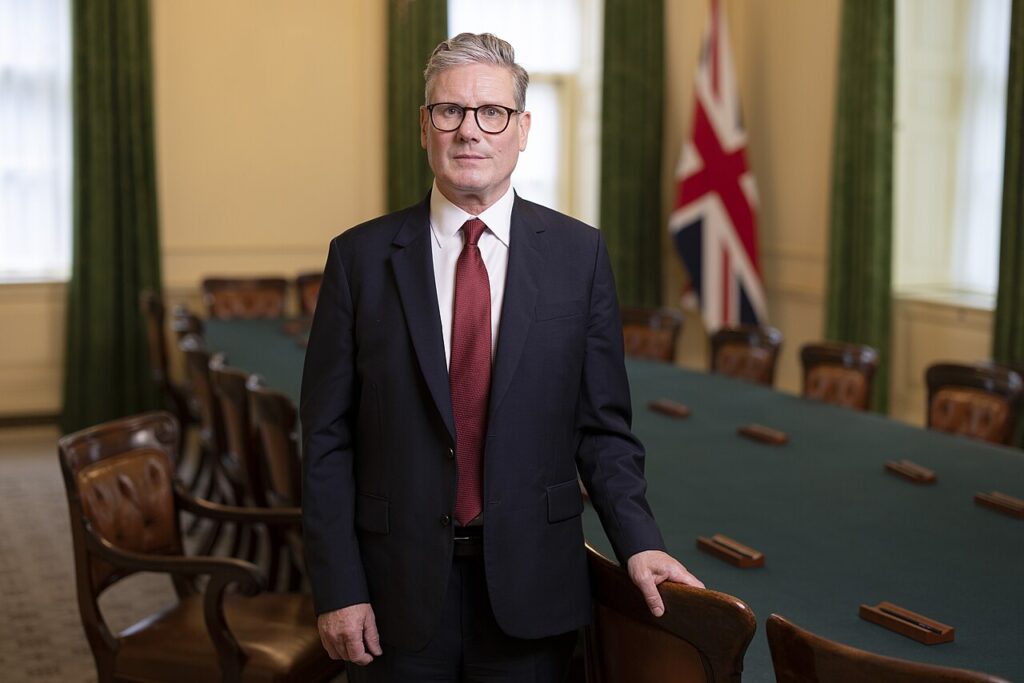

UK Prime Minister Keir Starmer has defended his government’s decision not to participate in the initial military strikes carried out by the United States and Israel against Iran, stating that Britain must act based on its own national interest rather than external pressure.
Speaking at a press conference in Downing Street and later addressing Parliament, Starmer said the United Kingdom remained committed to diplomacy and de-escalation despite criticism from international allies and political opponents at home.
The controversy follows joint military strikes by the United States and Israel targeting Iranian positions in the Middle East. While several allies supported the operation, the UK declined to take part in the first wave of attacks.
Starmer acknowledged that Donald Trump had expressed disagreement with Britain’s decision, but he insisted that the UK government must make independent strategic judgments.
“President Trump has expressed his disagreement with our decision not to get involved in the initial strikes, but it is my duty to judge what is in Britain’s national interest,” Starmer said.
He emphasised that Britain’s longstanding policy remains focused on achieving a negotiated settlement with Iran over its nuclear programme rather than escalating military confrontation.
“Our position has always been that the best way forward is a negotiated settlement with Iran where they give up their nuclear ambitions,” Starmer explained. “At this moment, every effort should be made to de-escalate the conflict.”
Despite declining to participate in the initial attacks, the UK has taken steps to strengthen its military presence in the region. The government announced that four additional Eurofighter Typhoon fighter jets will be deployed to Qatar as part of efforts to reinforce defensive capabilities and protect British interests in the Middle East.
British defence officials also confirmed that additional personnel have been deployed to support air defence operations at UK military installations, including bases in Cyprus.
The developments follow reports that a drone struck the runway at RAF Akrotiri in Cyprus, causing what the UK Ministry of Defence described as minimal damage. Defence sources believe the drone may have been launched from Lebanon.
Related News

FIFA and UEFA Presidents Named in ICC Complaint Alleging Complicity in Settlement Activities
Presidents Gianni Infantino and Aleksander Ceferin have been accused of aiding war crimes in a complaint submitted to the International…

Trump Accuses South Africa of Human Rights Abuses and Announces Exclusion from 2026 G20 Summit
U.S. President Donald Trump has accused South Africa of committing severe human rights abuses against white citizens, announcing that the…
Jonathan Says Guinea-Bissau Incident Was “Not a Coup”, Describes It as a “Ceremonial Takeover”
Former President Goodluck Jonathan has described the Guinea-Bissau military takeover as “not a coup,” calling it a “ceremonial” incident and…
In response to the escalating tensions, the British government has begun reinforcing its regional presence. Two Wildcat helicopters equipped with anti-drone capabilities are expected to arrive in Cyprus, while the Royal Navy warship HMS Dragon (D35) has been ordered to sail toward the area to support security operations.
Starmer also chaired a meeting of the government’s emergency committee, known as Cobra, to coordinate the UK’s response to the rapidly evolving conflict.
“We have done a lot of pre-planning and pre-deployment,” the prime minister said. “I am satisfied that we can keep our people safe.”
However, the decision not to join the initial strikes has sparked political debate within the UK.
Opposition Conservative leader Kemi Badenoch criticised the government’s cautious approach, arguing that failing to act decisively could prolong the conflict.
“Sometimes the best way to de-escalate a situation is to try and finish it quickly rather than allow it to drag out because you do not want to get involved,” Badenoch said during an interview with BBC Radio.
The debate intensified after reports that British military bases in the region had been targeted during retaliatory attacks linked to the conflict.
Despite these criticisms, Starmer rejected claims that the UK-US alliance had been damaged by the disagreement. He stressed that intelligence cooperation between both countries remains strong.
“The special relationship is in operation right now,” he said. “We are sharing intelligence on a 24-hour basis in the usual way.”
Meanwhile, the UK government has been working to evacuate British citizens from the Middle East as tensions continue to rise. According to Starmer, about 4,000 British nationals have already returned home, while thousands more remain in the region.
More than 140,000 people have reportedly registered their presence with the UK government, prompting authorities to organise charter flights and expand evacuation efforts from countries such as Oman and the United Arab Emirates.
Officials say additional flights are expected in the coming days as the government works with airlines and regional partners to speed up the evacuation process.
Iran has responded to the US-Israel strikes by launching retaliatory attacks targeting Israel and several US-aligned states in the Gulf, including Qatar, Bahrain, Jordan, the United Arab Emirates, Kuwait, Oman and Saudi Arabia.
As tensions continue to rise across the Middle East, the UK government has warned that the situation could evolve rapidly, noting that Britain’s response may change depending on how the conflict develops.