Global Lineup Takes Shape as 30 Nations Secure World Cup Qualification
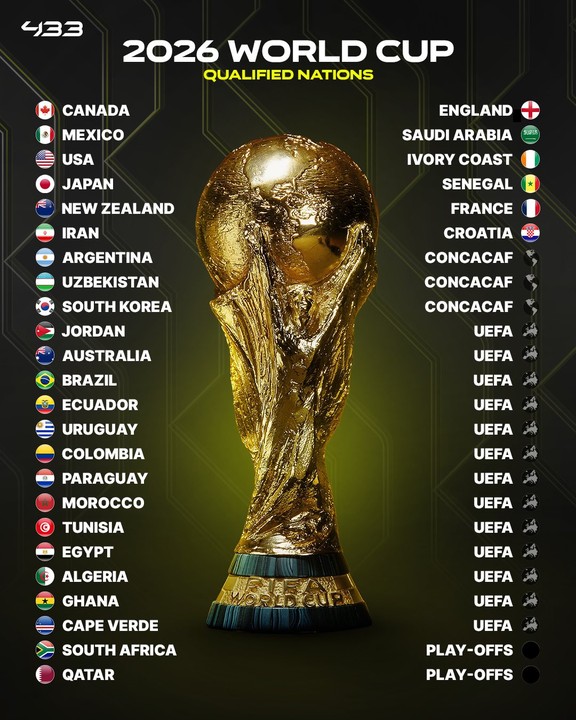

With the next FIFA World Cup drawing closer, qualification rounds across the globe have produced a confirmed list of 30 teams set to participate in the expanded tournament. The competition, which now accommodates more nations than in previous editions, has already generated widespread discussion about continental slot allocations, competitive balance, and the shifting landscape of international football.
The confirmed teams include Canada, Mexico, and the United States from North America, all securing their places early in the qualifying calendar. In Asia, Japan, New Zealand, Iran, Uzbekistan, South Korea, Jordan, Australia, Qatar, and Saudi Arabia have all progressed, representing a diverse range of football development and regional strength. Their qualification reflects the growing competitiveness in the Asian confederation, where established powers and emerging teams continue to shape the continent’s football narrative.
Related News

Kaduna State Government Takes Over Ahmadu Bello Stadium, Begins Major Reconstruction
The Kaduna State Government has officially taken over ownership of the iconic Ahmadu Bello Stadium from the Federal Government, following…

Nigeria Marks Fourth Consecutive Winter Olympics Appearance with Athlete Samuel Ikpefan
Nigeria has continued its growing presence in winter sports with its fourth consecutive appearance at the Winter Olympic Games.

Mikel Obi Reveals How Premier League Rule Blocked Manchester United Move
Former Super Eagles captain John Obi Mikel has disclosed that a Premier League work permit regulation stopped Manchester United from…
South America, a region historically known for its intensity and football pedigree, has confirmed Argentina, Brazil, Ecuador, Uruguay, Paraguay, and Colombia. These countries have long-standing traditions of producing top-tier football talent, and their qualification maintains the continent’s reputation as one of the strongest in global football. Argentina, fresh from their recent international successes, enters the tournament as one of the most closely watched sides, while Brazil’s long-standing legacy ensures they remain a major talking point.
Africa has made a significant impression in this qualification cycle, with Morocco, Tunisia, Egypt, Algeria, Ghana, Cape Verde, South Africa, Côte d’Ivoire, and Senegal all securing places. This marks one of the most diverse African representations in recent memory. Fans and analysts alike have pointed to Africa’s strong presence as evidence of rising football standards across the continent, supported by recent World Cup performances that showcased African teams as serious competitors on the global stage.
Europe’s confirmed qualifiers include England, France, and Croatia. Although these teams represent some of the strongest in world football, their lower-than-expected early qualification representation has triggered intense debate among fans. Discussions centre on FIFA’s expanded tournament structure, which added more global slots without increasing Europe’s allocation. Fans in online forums have argued that European teams, particularly historically dominant nations such as Italy, Portugal, Germany, and the Netherlands, should have received more guaranteed places. Supporters from other regions countered that the tournament is designed to represent global diversity, not to reinforce traditional continental dominance.
Reactions from football fans across social platforms have ranged from excitement to concern. Some supporters expressed frustration that Europe may miss out on sending certain heavyweight footballing nations, while others celebrated broader global inclusion. African fans noted with pride the continent’s strong showing, while North American supporters expressed optimism about their teams’ evolving football profiles.
Meanwhile, Nigerian fans remain particularly vocal, expressing both hope and anxiety as the Super Eagles continue their qualification efforts. Commenters online called for national support, discipline within the football federation, and improved performance as Nigeria seeks to join the growing list of qualified nations.
While the current list of 30 teams marks substantial progress, qualification is still ongoing. Several high-profile football nations are yet to secure their places, and the playoffs promise dramatic encounters that will shape the final tournament lineup. As discussions intensify and global anticipation builds, the football world continues to monitor which teams will claim the remaining spots in what promises to be one of the most competitive and diverse World Cups in modern history.