Gombe Man Sparks Nationwide Debate After Marrying His Uncle’s Daughter
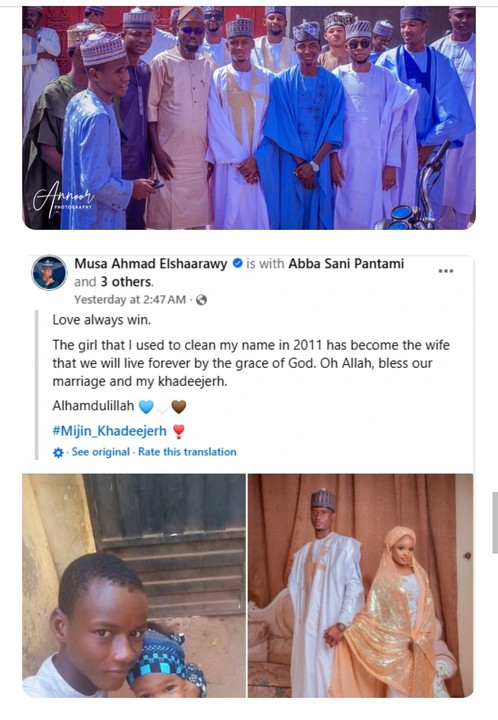

A man identified as Musa Elshaarawy from Gombe State has found himself at the center of intense public attention following his marriage to his uncle’s daughter. What might have been a private family celebration quickly became a nationwide talking point after Musa shared a detailed account of his long-standing relationship with his bride, accompanied by old photographs dating back more than a decade.
According to Musa, the bond between him and his wife began in childhood. He explained that in 2011, when he was 12 years old, his bride—identified as Khadeejerh—was just over two years old. At the time, she frequently visited his family home with her mother, and Musa described himself as being very protective and caring toward her. In a heartfelt social media post announcing his upcoming wedding, he recalled carrying her, playing with her, and even saving his school transport money to buy her snacks.
Musa’s post, written in a tone of gratitude and nostalgia, framed the marriage as the culmination of a long-standing emotional connection rather than something sudden or coerced. He thanked God for bringing the relationship to fruition and expressed optimism about their future together. Days later, he shared photos from their wedding ceremony, writing that “love always wins” and praying for blessings on their marriage.
Related News

DSS Tells Court Kaduna Man’s Tweets Could Drag Nigeria into Israel–Iran Conflict
Nigeria’s domestic intelligence agency, the Department of State Services (DSS), has told a court that social media posts allegedly made…

Nigeria Begins Evacuation of Citizens from Iran Amid Escalating Middle East Conflict
The Nigerian government has started evacuating its citizens from Iran as tensions in the Middle East intensify.

Nigeria Surpasses India in Number of People Living in Poverty – Report
New data shared by Statisense suggests that Nigeria now has a higher number of people living below the poverty line…
While the couple appeared joyful, public reaction was anything but unanimous. Social media platforms and online forums quickly filled with comments expressing shock, curiosity, approval, and outright condemnation. Many commenters questioned whether marrying one’s cousin—since an uncle’s daughter is typically a first cousin—should be considered acceptable in modern society. Others asked whether such unions are legal, ethical, or safe, particularly with concerns about genetics and consent.
Supporters of the marriage pointed out that cousin marriages are culturally and religiously accepted in parts of northern Nigeria and in several societies around the world. They argued that the union did not violate any known laws, provided both parties were of legal age at the time of marriage and gave their consent. Some commenters emphasized cultural diversity in Nigeria, cautioning against judging long-standing traditions solely through a modern or urban lens.
On the other hand, critics described the marriage as disturbing, inappropriate, or indicative of deeper social problems. Several commenters used strong language, calling the practice outdated or harmful, while others linked it to broader debates about education, women’s rights, and public health. A number of reactions also veered into religious arguments, sparking heated exchanges and counterarguments about faith, tolerance, and misrepresentation.
The controversy was further fueled by speculation about the bride’s age and the interpretation of Musa’s original post. While Musa stated that he was 12 in 2011 and his bride was just over two years old at the time, some readers attempted to calculate their current ages, leading to disagreements and confusion. Despite the speculation, no official claims of wrongdoing or illegality have been reported.
Beyond the couple themselves, the story highlights a broader tension within Nigerian society: the clash between traditional practices and contemporary social norms. As Nigeria continues to urbanize and digitize, personal events that were once confined to families and communities now unfold before a national—and sometimes global—audience, inviting scrutiny and debate.
For Musa and Khadeejerh, what remains clear is that their marriage has become more than a personal milestone. It has turned into a symbol of ongoing conversations about culture, choice, and change in a diverse and complex society.