Iran Reportedly Destroys Key US Missile Defense Radar in Jordan
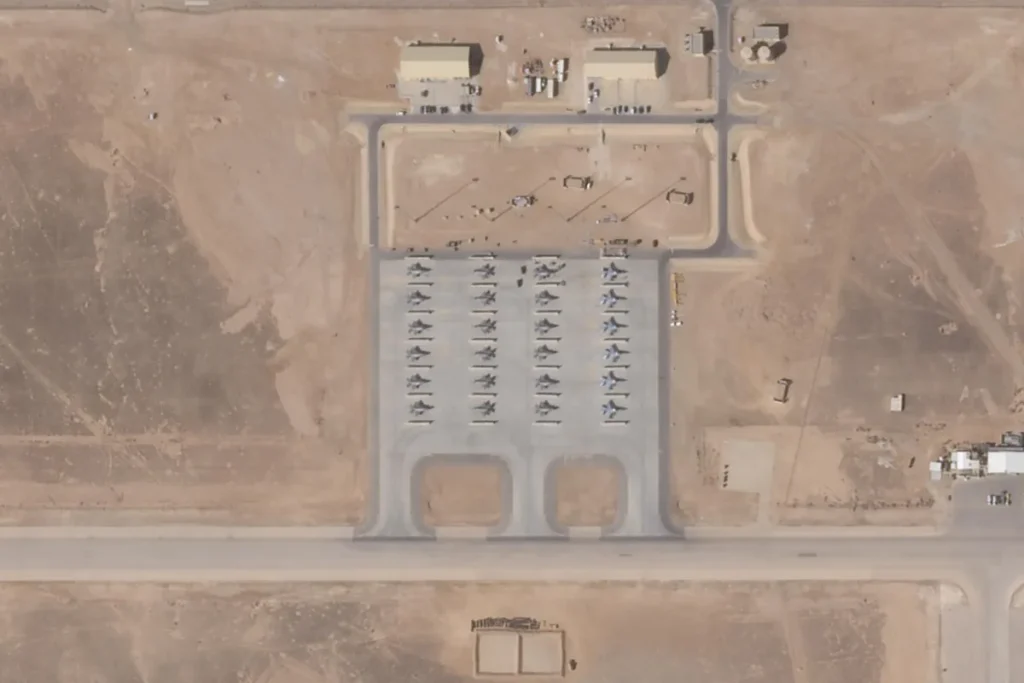

Iran has reportedly destroyed a key United States missile defense radar system in Jordan, raising concerns about the effectiveness of air defense coverage in the Gulf region as tensions escalate in the ongoing conflict.
According to reports, the radar system—valued at roughly $300 million—was part of the U.S. military’s Terminal High Altitude Area Defense (THAAD) system and was stationed at Muwaffaq Salti Air Base in Jordan. The radar plays a critical role in detecting and tracking ballistic missiles, providing targeting data that allows THAAD interceptors to destroy incoming threats.
Satellite images reportedly show that the radar and its supporting equipment were destroyed during Iranian strikes in the early days of the conflict. The damage was later confirmed by a U.S. official, highlighting a rare successful strike against a key component of the American missile defense network.
The radar in question, known as the AN/TPY-2 radar, is designed to detect missile launches at long distances and guide interceptors to their targets. It works closely with the Terminal High Altitude Area Defense (THAAD) system, which intercepts ballistic missiles at the edge of the Earth’s atmosphere.
Military analysts say that if the radar was indeed destroyed, it represents one of the most significant operational successes for Iran since hostilities began.
Ryan Brobst, a defense analyst at the Foundation for Defense of Democracies, said that a successful strike against a THAAD radar would be a major achievement for Iranian forces.
“If successful, an Iranian strike on a THAAD radar would mark one of Iran’s most successful attacks so far,” Brobst said.
However, experts also noted that the U.S. military maintains multiple radar systems and defense layers in the region, which could help compensate for the loss of a single installation.
The THAAD system is considered one of the most advanced missile defense platforms in the world. Each THAAD battery includes a powerful radar system, a fire-control unit, several truck-mounted launchers, and dozens of interceptor missiles designed to destroy incoming ballistic threats before they reach their targets.
Related News
Iran Warns US Tech Giants Like Google, Amazon Could Become “Legitimate Targets” in Expanding Regional War
Authorities in Iran have warned that infrastructure linked to major American technology companies may become “legitimate targets” as the regional…

DSS Tells Court Kaduna Man’s Tweets Could Drag Nigeria into Israel–Iran Conflict
Nigeria’s domestic intelligence agency, the Department of State Services (DSS), has told a court that social media posts allegedly made…
Nigeria Begins Evacuation of Citizens from Iran Amid Escalating Middle East Conflict
The Nigerian government has started evacuating its citizens from Iran as tensions in the Middle East intensify.
The United States currently operates only eight THAAD systems worldwide, including deployments in South Korea and Guam. Each battery costs around $1 billion, with the radar itself accounting for about $300 million of the total cost.
Tom Karako, a missile defense expert at the Center for Strategic and International Studies, said the loss of such a radar could be significant given the limited number of systems available.
“These are scarce strategic resources and its loss is a huge blow,” Karako said, noting that the U.S. military already operates fewer THAAD units than originally planned.
Without the radar, missile interception duties in the region could increasingly fall on Patriot air defense systems, which are designed to intercept shorter-range threats. However, reports indicate that supplies of advanced interceptors such as PAC-3 missiles are already limited due to heavy usage in ongoing conflicts.
The radar damage is not the only challenge facing U.S. missile defense networks in the region. Earlier in the conflict, another radar installation in Qatar—identified as an AN/FPS-132 early warning radar—was reportedly damaged during an Iranian attack.
Unlike the mobile THAAD radar, the AN/FPS-132 is a fixed installation designed to detect threats at extremely long distances. While it provides early warning capabilities, it lacks the precision required to guide interceptor missiles directly.
The ongoing exchange of missile and drone attacks has placed enormous pressure on missile defense systems throughout the Gulf region. Iran has launched waves of drones and ballistic missiles targeting U.S. and allied installations, forcing defensive systems to operate at high intensity.
Military planners worry that continued attacks could eventually deplete stockpiles of advanced interceptors used by both THAAD and Patriot systems.
In response to these concerns, senior U.S. defense officials have reportedly been working with major defense contractors to accelerate the production of missile defense equipment.
Executives from companies such as Lockheed Martin and RTX Corporation recently met with officials in Washington to discuss ways to increase manufacturing capacity for interceptors and other critical components.
As the conflict continues, analysts warn that missile defense systems across the region could face further strain if attacks persist. The destruction of key radar infrastructure highlights the growing risks and technological challenges involved in modern missile warfare.
For now, U.S. officials say other radar systems in the region can still provide coverage, but the loss underscores how vulnerable even advanced defense networks can be during sustained conflict.