Jubilation in Oyo Town as Alaafin Moves into Rehabilitated Ancient Palace
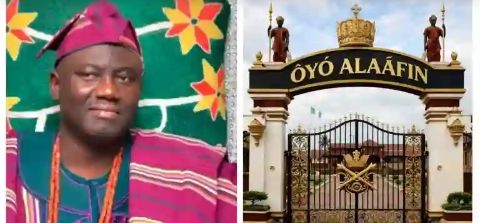

nt was confirmed in a statement issued by the Director of Media and Publicity to the Alaafin, Bode Durojaiye, from Ibadan, the Oyo State capital. According to the statement, the move represents the culmination of months of rehabilitation work carried out on the ancient palace, which had fallen into serious disrepair over the years.
Oba Owoade was formally presented with the Staff of Office on Friday, April 5, 2025, by Oyo State Governor Seyi Makinde, following the death of the former Alaafin, Oba Lamidi Adeyemi III. The late monarch passed away in April 2022 at the age of 83 after a historic 52-year reign, making him the longest-reigning Alaafin of Oyo. His death prompted widespread mourning across Yorubaland and beyond, with traditional and Islamic burial rites observed in Oyo town.
Related News

DSS Tells Court Kaduna Man’s Tweets Could Drag Nigeria into Israel–Iran Conflict
Nigeria’s domestic intelligence agency, the Department of State Services (DSS), has told a court that social media posts allegedly made…

Nigeria Begins Evacuation of Citizens from Iran Amid Escalating Middle East Conflict
The Nigerian government has started evacuating its citizens from Iran as tensions in the Middle East intensify.

Nigeria Surpasses India in Number of People Living in Poverty – Report
New data shared by Statisense suggests that Nigeria now has a higher number of people living below the poverty line…
While presenting the new Alaafin in 2025, Governor Makinde stated that the selection process followed due consultation with the Oyo Mesi and relevant traditional institutions. He stressed that the state government had fulfilled its constitutional role and urged all stakeholders to rally behind the new monarch for the unity and progress of the kingdom.
According to Durojaiye, the ancient palace was largely abandoned before Oba Owoade’s ascension, with vandalised facilities and weakened structures requiring urgent attention. Shortly after becoming Alaafin, the monarch reportedly initiated the rehabilitation of sections of the palace, an effort described as part of a broader commitment to preserving tangible Yoruba cultural heritage. The renovation work was supervised by the Alaafin’s Personal Assistant, Kolade Oladele.
The statement highlighted the architectural and artistic significance of the palace, noting its courtyards, carved wooden posts, decorated door panels, mosaics, murals, and sculptures depicting scenes from Yoruba life, mythology, and royalty. These elements, it said, reflect the craftsmanship and cultural depth of the old Oyo Empire and underscore the palace’s status as a storehouse of history and tradition.
As the Alaafin entered the palace, residents reportedly trooped out in large numbers to welcome him, with drumming, chants, and traditional displays accompanying the event. Supporters described the moment as symbolic, interpreting it as a full assumption of royal duties and a reconnection with ancestral heritage.
However, reactions beyond the palace grounds have been mixed. While many hailed the development as a positive step for cultural preservation and continuity, others questioned the scale of the reported jubilation and debated the relevance of traditional institutions in contemporary governance. Some commentators also raised concerns about security, public spending, and the relationship between traditional rulers and elected officials.
Despite differing opinions, the relocation of the Alaafin into the ancient palace has once again placed Oyo at the centre of national discussions on tradition, history, and identity. For many within the kingdom, the move represents not just a change of residence, but a reaffirmation of the enduring legacy of the Oyo Empire in modern Nigeria.