Lagos to Expand Red Line Capacity With Three New Eight-Coach Trains by Q3 2026
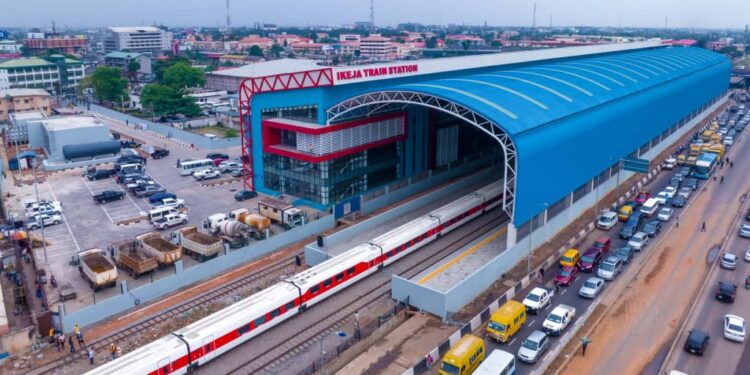

The Lagos State Government has revealed plans to strengthen the capacity of its rail transport system with the addition of three new eight-coach trains to the Red Line fleet by the third quarter of 2026. The announcement was made by the Head of Corporate Communication at the Lagos Metropolitan Area Transport Authority (LAMATA), Kolawole Ojelabi, as part of ongoing efforts to improve service delivery and passenger experience across the rapidly expanding Lagos Rail Mass Transit network.
According to the agency, the new rolling stock will consist of three train sets, each with eight coaches, bringing a total of 24 additional coaches to the Red Line system. The expansion is expected to significantly boost operational capacity, reduce overcrowding, and enhance commuter comfort along the busy Oyingbo–Agbado corridor.
LAMATA explained that the acquisition forms part of a long-term strategy designed to improve reliability, efficiency, and overall service quality across Lagos’ rail infrastructure. Delivery and operationalisation of the new trains are projected for completion by the third quarter of 2026.
The development comes amid recent complaints from commuters regarding technical issues affecting some of the existing coaches on the Red Line. Passengers had reported discomfort caused by faulty air-conditioning systems on certain trains operating between Oyingbo and Agbado. In response, LAMATA acknowledged the concerns and apologised for the inconvenience experienced by passengers during affected journeys.
Related News
Lagos Government Asked Landlord to Pay ₦400,000 to Unseal Her House Despite Having Complete Documents
A Lagos landlord shared a shocking experience after returning home to find her newly built house sealed by officials despite…
Lagos Ready for State Police, Says LNSA Chief Ifalade
Lagos State has declared its readiness for the establishment of state police in Nigeria, with the leadership of the Lagos…
Lagos State Holds Nigeria’s Largest Subnational Domestic Debt at ₦1.05 Trillion, Data Shows
New data from Nigeria’s Debt Management Office indicates that Lagos State holds the largest domestic debt among all states, standing…
The authority stated that its technical and engineering teams have been deployed to identify and resolve the root causes of the cooling system failures. Restoration and maintenance works are currently underway to return all affected coaches to optimal operating condition. Officials say the additional trains will help reduce pressure on the current fleet while improving overall service reliability.
The Red Line is one of the flagship projects under the Lagos Rail Mass Transit master plan, which aims to provide a modern and efficient rail network across the state. The first phase of the Red Line, covering approximately 27 kilometres from Oyingbo in Lagos to Agbado in neighbouring Ogun State, commenced full passenger operations in October 2024. The line was officially commissioned earlier that year by President Bola Tinubu during its initial launch phase.
The first phase of the Red Line includes eight stations strategically located at Agbado, Iju, Agege, Ikeja, Oshodi, Mushin, Yaba, and Oyingbo. Construction began in April 2021, with partial trial operations conducted in 2024 before full commercial services commenced later that year.
The rail system operates under a track-sharing agreement with the Nigerian Railway Corporation, allowing the Red Line to run alongside the Lagos-Ibadan standard gauge route. This partnership has enabled faster deployment of rail services while reducing infrastructure duplication.
Authorities have indicated that once the second phase of the Red Line is completed and the full system becomes operational, the network is expected to run up to 20 daily trips and transport as many as 500,000 passengers per day. The planned addition of new trains is considered a key step toward achieving that capacity target.
The Red Line is one of six proposed rail corridors under the Lagos Rail Mass Transit master plan. Currently, only portions of the Red and Blue Lines are operational, while construction continues on other sections. Plans are also underway to commence work on the Green Line as part of the state’s broader strategy to improve urban mobility and reduce traffic congestion.
Transport analysts note that expanding rail capacity is critical for a city like Lagos, which faces growing population pressure and heavy road traffic. By investing in rail infrastructure and modern rolling stock, the state government aims to provide a more reliable alternative to road transport and ease congestion across major corridors.
With the planned arrival of additional trains by 2026, authorities say commuters can expect improved comfort, shorter wait times, and more consistent service on one of Lagos’ most important mass transit routes.