LAWMA Warns Against Attacks on Enforcement Officers as Lagos Steps Up Environmental Sanitation Drive


The Lagos State Waste Management Authority (LAWMA) has cautioned members of the public against attacking, harassing, or obstructing its enforcement officers during the discharge of their official duties, warning that such actions will be met with firm legal sanctions.
The warning follows a series of reported incidents in which LAWMA enforcement personnel were allegedly threatened or assaulted while enforcing environmental sanitation laws in different parts of Lagos State. The Authority described the incidents as unacceptable and a serious threat to public order, environmental governance, and the safety of officers tasked with protecting public health.
Speaking on the development, the Managing Director and Chief Executive Officer of LAWMA, Mr. Muyiwa Gbadegesin, emphasized that the agency’s enforcement officers are deployed to ensure compliance with waste management regulations, safeguard public health, and promote a clean, safe, and sustainable environment for residents of the state.
According to Gbadegesin, violence or intimidation directed at LAWMA officials undermines the rule of law and frustrates ongoing efforts by the government to address Lagos’ longstanding waste management challenges. He stressed that enforcement officers are carrying out lawful responsibilities assigned to them by the state and should not be subjected to hostility while on duty.
Related News
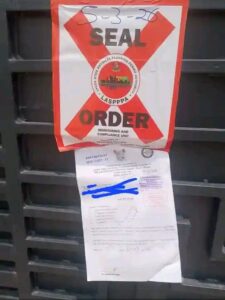
Lagos Government Asked Landlord to Pay ₦400,000 to Unseal Her House Despite Having Complete Documents
A Lagos landlord shared a shocking experience after returning home to find her newly built house sealed by officials despite…

Lagos Ready for State Police, Says LNSA Chief Ifalade
Lagos State has declared its readiness for the establishment of state police in Nigeria, with the leadership of the Lagos…

Lagos State Holds Nigeria’s Largest Subnational Domestic Debt at ₦1.05 Trillion, Data Shows
New data from Nigeria’s Debt Management Office indicates that Lagos State holds the largest domestic debt among all states, standing…
He further noted that LAWMA’s operations are fully backed by the Lagos State Environmental Management and Protection Law of 2017, which empowers the Authority to investigate and address environmental infractions across the state. The law also provides legal protection for enforcement officers while carrying out their duties, including waste control, monitoring of illegal dumping, and enforcement of sanitation standards.
Gbadegesin warned that individuals or groups found attacking, threatening, or obstructing LAWMA personnel would be arrested and prosecuted in accordance with existing laws. He added that the Authority would not hesitate to work with security agencies to ensure the safety of its officers and the smooth execution of its mandate.
While reaffirming LAWMA’s commitment to enforcement, the Managing Director urged residents to adopt lawful and constructive channels for resolving grievances related to waste management. He advised members of the public to comply with approved waste disposal guidelines and to report environmental violations through designated reporting platforms rather than resorting to confrontation or self-help.
The LAWMA boss also appealed to community leaders, market associations, transport unions, and other stakeholder groups to support the agency’s efforts by promoting environmental responsibility and encouraging compliance within their respective communities. He noted that collective cooperation remains critical to achieving sustainable sanitation outcomes in a densely populated city like Lagos.
The warning comes amid ongoing public debates about waste collection efficiency and environmental cleanliness in parts of the state, with some residents expressing frustration over irregular refuse evacuation and the impact of seasonal rainfall on sanitation conditions. LAWMA, however, maintained that enforcement remains a necessary component of a broader waste management strategy that includes public education, stakeholder engagement, and infrastructure improvement.
Gbadegesin reiterated that LAWMA is committed to firm but fair enforcement, continuous engagement with residents, and the protection of its workforce. He stressed that attacks on enforcement officers would not deter the Authority from carrying out its responsibilities.
“LAWMA remains resolute in its mandate to deliver a cleaner, healthier, and more liveable city for all residents of Lagos State,” he said.
The Authority encouraged residents to see environmental sanitation as a shared responsibility, noting that sustained cooperation between the government and the public is essential to improving living conditions and preventing public health risks in Africa’s most populous city.