Macron Says “China Is Welcome” in Europe as Trade Tensions With U.S. Reshape Global Alliances
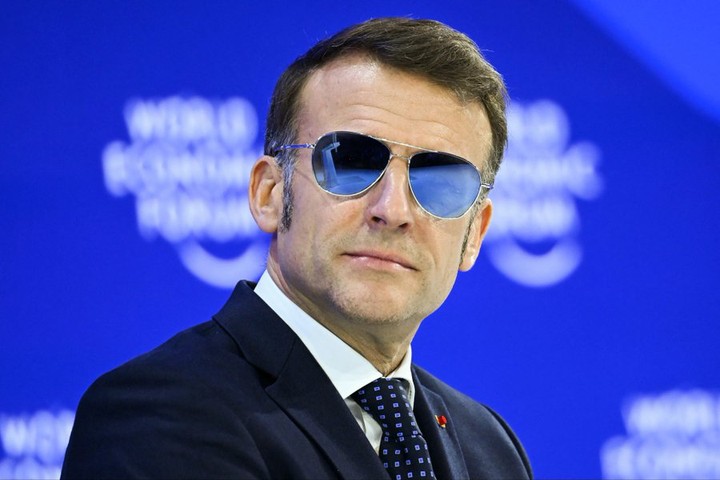

French President Emmanuel Macron has sparked renewed international debate after publicly stating that China is welcome in Europe, a remark widely interpreted as a signal of Europe’s desire to diversify its economic partnerships amid escalating trade frictions with the United States. The comment, shared via social media and amplified by geopolitical observers, comes at a time when Europe is reassessing its strategic autonomy and long-standing dependence on Washington.
Macron’s statement aligns with his long-held view that Europe must chart a more independent course in global affairs. Over recent years, he has repeatedly argued that the European Union should avoid becoming overly reliant on any single global power, whether the United States or China. However, his latest remarks have landed at a particularly sensitive moment, as global trade patterns continue to shift in response to tariffs, sanctions, and geopolitical rivalries.
The backdrop to Macron’s comments includes renewed trade tensions driven by aggressive tariff policies from Washington, particularly under U.S. President Donald Trump. These policies have strained relationships with traditional allies in Europe, pushing EU leaders to explore alternative economic and diplomatic partnerships. China, with its vast manufacturing base, expanding consumer market, and growing influence across Asia, Africa, and Latin America, has emerged as a key player in this recalibration.
Related News
Nigeria, Germany Move to Deepen Cooperation on Security, Power and Infrastructure
Nigeria and Germany have reaffirmed plans to strengthen bilateral relations following a high-level telephone conversation between President Bola Tinubu and…
King Charles III to Host Nigerian President Tinubu in First UK State Visit in 37 Years
Buckingham Palace has confirmed that King Charles III will host Nigerian President Bola Ahmed Tinubu and First Lady Oluremi Tinubu…

US Approves $413 Million Security Budget for Counter-Insurgency Operations in Nigeria, Africa
The United States has approved a $413 million security budget for counter-insurgency and security operations in Nigeria and other African…
Supporters of Macron’s stance argue that China has demonstrated its ability to adapt to trade pressures by diversifying away from heavy reliance on the U.S. market. They point to Beijing’s expanding trade relationships and its push to strengthen ties with regions willing to engage on more balanced terms. For these observers, Europe’s openness to China is a pragmatic response to a changing global economy rather than a rejection of its transatlantic alliance.
However, critics warn that welcoming China more deeply into Europe carries significant risks. Concerns remain about trade imbalances, state subsidies for Chinese industries, and the potential impact of cheaper Chinese imports on European manufacturing and employment. Some analysts caution that sectors such as electric vehicles, electronics, and consumer goods could face intense competition, potentially worsening unemployment in parts of the EU if safeguards are not carefully designed.
There are also broader geopolitical implications. Skeptics argue that closer economic ties with China could expose Europe to political pressure, particularly if strategic industries or infrastructure become dependent on Chinese investment. These concerns echo ongoing debates within the EU over foreign investment screening, technology security, and supply chain resilience.
Public reaction to Macron’s statement has been sharply divided. Online discussions reflect a mix of approval, skepticism, and outright hostility, with some commentators praising the move as a necessary assertion of European sovereignty, while others accuse France of undermining Western unity. Some voices frame the development as evidence of a broader global realignment, where traditional alliances are being tested and reshaped by economic self-interest.
Despite the controversy, Macron’s remarks underscore a growing reality: Europe is increasingly unwilling to be caught in the crossfire of U.S.-China rivalry without options of its own. While the EU continues to describe the United States as a vital ally, it is also seeking leverage by strengthening ties with other major economies, including China and India.
As global trade continues to fragment and power dynamics evolve, Macron’s statement may prove less a provocation than a reflection of the moment. Whether Europe can successfully balance engagement with China while protecting its industries and values remains an open question—one that will shape international politics and economics in the years ahead.