Nigeria, Germany Move to Deepen Cooperation on Security, Power and Infrastructure
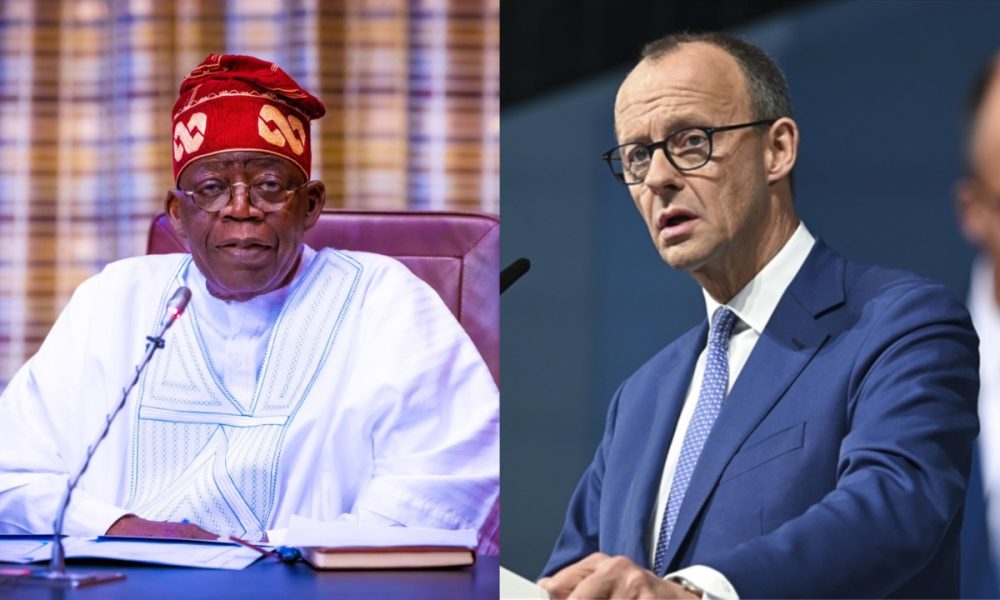

President Bola Tinubu and German Chancellor Friedrich Merz have pledged to deepen bilateral cooperation between their countries, with a focus on security, energy, infrastructure development, and creative industry partnerships.
Details of the discussions were disclosed in a statement issued by the Nigerian presidency, which confirmed that both leaders held a telephone conversation on Wednesday to review areas of mutual interest and explore new opportunities for collaboration. The talks, which lasted approximately nine minutes, touched on key sectors considered critical to Nigeria’s economic growth and regional stability.
One of the central issues raised during the discussion was Nigeria’s ongoing effort to strengthen its power sector. President Tinubu highlighted the country’s need for technical and financial support to improve electricity transmission under the Presidential Power Initiative, a programme aimed at upgrading Nigeria’s power infrastructure and expanding supply capacity nationwide.
In response, Chancellor Merz indicated that German engineering giant Siemens is prepared to support Nigeria’s power sector upgrades, while Deutsche Bank has expressed willingness to provide financing for relevant projects. The potential collaboration is expected to build on existing engagements between Nigeria and German institutions in the energy sector.
Related News
King Charles III to Host Nigerian President Tinubu in First UK State Visit in 37 Years
Buckingham Palace has confirmed that King Charles III will host Nigerian President Bola Ahmed Tinubu and First Lady Oluremi Tinubu…
Macron Says “China Is Welcome” in Europe as Trade Tensions With U.S. Reshape Global Alliances
French President Emmanuel Macron has declared that “China is welcome” in Europe, a statement that has intensified debate about Europe’s…

US Approves $413 Million Security Budget for Counter-Insurgency Operations in Nigeria, Africa
The United States has approved a $413 million security budget for counter-insurgency and security operations in Nigeria and other African…
Beyond electricity, both leaders discussed railway development as another key area for cooperation. Improved rail infrastructure is viewed by Nigerian authorities as essential to enhancing logistics efficiency, boosting trade, and reducing transportation costs across the country. Strengthening railway systems could also support industrial expansion and improve connectivity between production hubs and markets.
Security cooperation also featured prominently in the conversation. President Tinubu raised concerns about instability in the Sahel region and its implications for Nigeria and neighbouring countries. He emphasised the need for enhanced intelligence sharing and reconnaissance support to address growing security threats across the corridor. The discussion underscored the importance of international collaboration in tackling terrorism, banditry, and transnational crime affecting West Africa.
Diplomatic relations between Nigeria and Germany span more than six decades, with both nations maintaining longstanding economic and cultural ties. During the call, Chancellor Merz welcomed efforts to strengthen the partnership and expressed anticipation for the arrival of Nigeria’s new ambassador to Germany, noting that closer diplomatic engagement would help advance joint initiatives.
In addition to infrastructure and security, both leaders explored collaboration in the creative arts and skills development. The German chancellor highlighted the role of cultural exchange in strengthening relations between nations and advocated support for initiatives such as the proposed Great Museum of African Arts, which aims to promote African heritage and creative expression on a global stage.
Analysts view the renewed engagement as part of Nigeria’s broader strategy to strengthen international partnerships and attract investment into critical sectors of the economy. Enhanced cooperation with Germany—Europe’s largest economy—could provide technical expertise, financing opportunities, and industrial partnerships that support Nigeria’s long-term development goals.
However, observers note that the effectiveness of such agreements will depend on implementation and sustained follow-through. Past bilateral commitments have sometimes faced delays due to funding challenges, bureaucratic processes, or shifting policy priorities. Ensuring transparency, clear timelines, and measurable outcomes will be essential to translating diplomatic discussions into tangible projects.
For now, the conversation between both leaders signals a shared intention to deepen cooperation across multiple sectors, from energy and infrastructure to security and cultural exchange. As both countries move forward with the proposed collaborations, stakeholders will be watching closely to see how these commitments translate into concrete developments on the ground.