Naira Records First Annual Appreciation in 13 Years, Closes 2025 Stronger
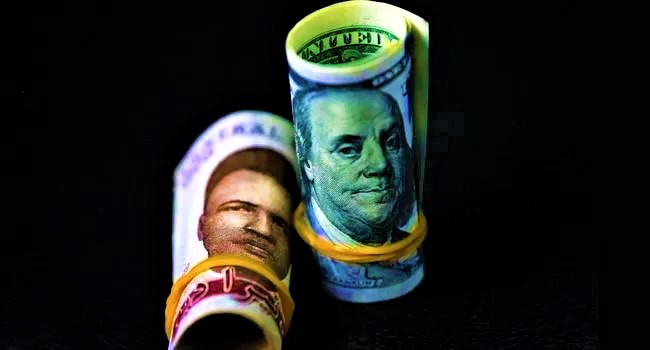

Nigeria’s national currency, the naira, recorded its first annual appreciation in more than a decade in 2025, marking a significant shift after 13 consecutive years of decline.
According to data from the Central Bank of Nigeria (CBN), the naira closed trading on December 31, 2025, at ₦1,429 to the US dollar. This represents a 7.4 per cent gain over the year, making 2025 the first year of net appreciation since 2012.
The currency had depreciated continuously for over a decade, pressured by Nigeria’s heavy reliance on imports, persistent foreign exchange shortages, weak dollar inflows, and long-standing distortions within the foreign exchange market. Between 2013 and 2024, the naira lost value each year, reflecting structural weaknesses in the economy and policy inconsistencies.
Analysts say the 2025 turnaround is closely linked to foreign exchange reforms initiated by the Central Bank of Nigeria in 2024 under its Governor, Yemi Cardoso. These reforms included the unification of multiple exchange rate windows, tighter controls on speculative trading, and efforts to improve transparency in price discovery.
One of the most notable outcomes of the reforms has been the narrowing of the gap between the official exchange rate and the parallel market rate. By the end of 2025, the differential between both markets had reportedly fallen to below five per cent, compared to gaps as wide as 80 per cent in previous years.
Related News

FCT Women Turn Private Cars into Commercial Taxis Amid Rising Cost of Living
Growing economic pressure in Nigeria’s capital, Federal Capital Territory, is pushing many women to convert their private cars into informal…

Tinubu Announces Global Acceptance of Naira Cards for International Transactions
President Bola Ahmed Tinubu has announced that Nigerian-issued Naira debit cards can now be used for transactions worldwide, describing the…

China to Remove Tariffs on Most African Imports Starting May 1, Says Xi Jinping
China has announced plans to eliminate tariffs on imports from nearly all African nations beginning May 1, a move President…
Market observers note that the wide disparity between official and black market rates in the past encouraged arbitrage, discouraged foreign investment, and undermined confidence in Nigeria’s currency management framework. The reduced spread, they argue, has helped limit speculative activities and provided clearer signals to investors about the true value of the naira.
Improved dollar inflows also contributed to the currency’s performance in 2025. These inflows were supported by higher remittances, better export earnings, and increased participation by foreign portfolio investors following reforms aimed at improving market liquidity and access to foreign exchange.
Despite the recorded annual gain, reactions to the naira’s performance have remained sharply divided. While some analysts view the appreciation as a positive signal of stabilisation, others argue that the improvement should be assessed in context, given the steep depreciation the currency experienced in earlier years.
Critics point out that the naira’s value remains significantly weaker than it was before major exchange rate adjustments and policy shifts implemented in recent years. They argue that while the currency may have strengthened within 2025, its purchasing power relative to previous years remains low, especially for households facing rising living costs.
Supporters of the reforms, however, counter that currency stability, rather than a return to past exchange levels, is the more meaningful indicator of progress. They note that a predictable and transparent foreign exchange market is critical for long-term economic planning, foreign investment, and export competitiveness.
The CBN has maintained that the reforms were necessary to correct longstanding distortions and lay the foundation for sustainable growth, even if the short-term impact on inflation and living standards has been painful for many Nigerians.
By the close of 2025, the naira’s performance marked its first full-year appreciation in 13 years, ending a prolonged cycle of decline. Whether the gains can be sustained will depend on continued policy discipline, stable dollar inflows, and broader structural reforms aimed at reducing import dependence and boosting domestic production.
As Nigeria enters 2026, the naira’s modest recovery remains a key point of debate—hailed by some as a turning point and questioned by others as insufficient against the backdrop of years of currency weakness.