Nigerian Athlete Godson Brume Pleads Guilty to Firearms Possession in the United States


Nigerian track and field athlete Godson Brume has pleaded guilty in a United States federal court to unlawful possession of a firearm while in the country on a non-immigrant visa. Brume, who is regarded as one of Nigeria’s fastest sprinters of all time, now faces severe legal and professional consequences, including a possible prison sentence, heavy fines, supervised release, and deportation.
Godson Brume is the younger brother of Ese Brume, Nigeria’s celebrated long jumper and Olympic medallist. In his own right, Brume has built an impressive athletics profile. He is currently ranked as the fourth fastest Nigerian man in history, with a personal best of 9.90 seconds in the 100 metres. In 2023, he won a silver medal at the NCAA Championships and was part of Louisiana State University’s 4×100 metres relay team that set a new NCAA record of 37.90 seconds and claimed the national title.
The legal case stems from an incident that occurred in February 2025 in Baton Rouge, Louisiana. According to court filings and reports shared by Track & Field Gazette, Brume was inside his apartment with another young woman when his ex-girlfriend, who is also the mother of his infant child, arrived with the baby. A heated argument reportedly broke out outside the apartment.
Related News

Kaduna State Government Takes Over Ahmadu Bello Stadium, Begins Major Reconstruction
The Kaduna State Government has officially taken over ownership of the iconic Ahmadu Bello Stadium from the Federal Government, following…
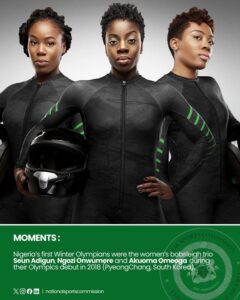
Nigeria Marks Fourth Consecutive Winter Olympics Appearance with Athlete Samuel Ikpefan
Nigeria has continued its growing presence in winter sports with its fourth consecutive appearance at the Winter Olympic Games.

Mikel Obi Reveals How Premier League Rule Blocked Manchester United Move
Former Super Eagles captain John Obi Mikel has disclosed that a Premier League work permit regulation stopped Manchester United from…
During the confrontation, Brume discharged a Glock 43X pistol while the infant was present. After the initial altercation, the child’s mother reportedly opened the apartment door and saw Brume with the other woman, leading to a second argument that again spilled outside the apartment complex. During this second confrontation, Brume fired the weapon multiple times as the woman fled the scene. Investigators later observed multiple bullet strikes on the walls of the apartment complex.
Authorities further alleged that Brume smashed the woman’s phone during the incident, took the child from her, and discarded the firearm in nearby shrubs in an apparent attempt to conceal it. He was later apprehended by deputies and taken into custody. The firearm was recovered shortly afterward.
Because Brume was in the United States on a non-immigrant visa, federal law prohibited him from possessing a firearm. By pleading guilty, he now faces a potential prison sentence of up to 15 years, a fine of up to 250,000 dollars, and up to three years of supervised release following incarceration. In addition, the conviction places him at serious risk of deportation, which could effectively end his ability to train, compete, or study in the United States.
The case has generated intense reactions across Nigerian social media and online forums. While some commentators responded with mockery or harsh criticism, others expressed disappointment and concern, noting that Brume’s actions may permanently derail a promising athletics career. Several voices also highlighted the broader issue of Nigerian and African athletes in the U.S. collegiate system lacking adequate orientation about American laws, particularly strict firearms regulations and the legal responsibilities tied to visa status.
Sports analysts have pointed out that Brume’s situation mirrors past cases involving athletes whose careers were damaged or ended by off-track issues rather than performance. They argue that elite talent alone is not enough to guarantee long-term success, especially when athletes are operating under foreign legal systems where ignorance of the law offers no protection.
As sentencing approaches, Brume’s future in athletics remains uncertain. What is clear, however, is that the case serves as a sobering reminder of how quickly personal decisions can override years of discipline, training, and opportunity, particularly for athletes representing their country on the global stage.