No Christian or Muslim Genocide in Nigeria, President Tinubu Reaffirms
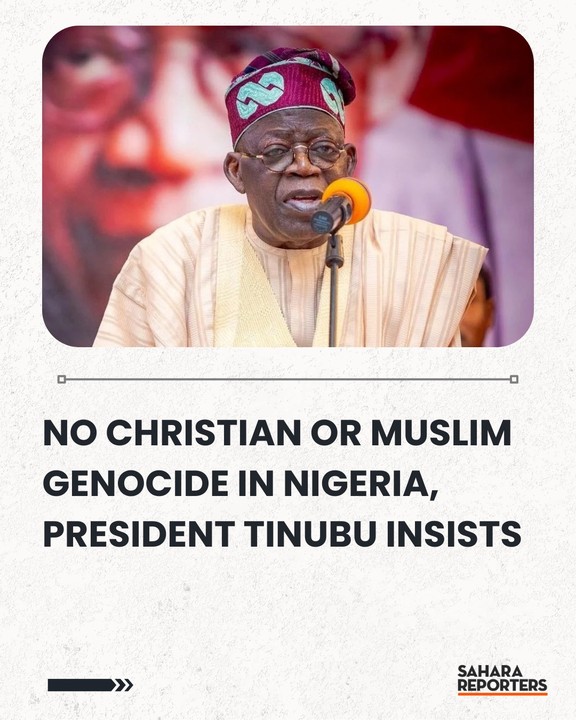

President Bola Ahmed Tinubu has reiterated that there is no Christian or Muslim genocide in Nigeria, maintaining that the nation’s security challenges are rooted in criminality, extremism, and socio-economic factors rather than religious persecution. The President made this assertion on Friday in Abuja while declaring open the 8th Biennial Conference and Annual General Meeting of the Nasrul-Lahi-l-Fatih Society (NASFAT).
The conference, themed “Building Resilience in a Changing World: The Role of Faith and Community,” brought together religious leaders, scholars, and policymakers to reflect on the role of faith-based organisations in promoting peace, unity, and national development. President Tinubu was represented at the event by the Attorney General of the Federation and Minister of Justice, Lateef Fagbemi, SAN.
Addressing the gathering, Tinubu dismissed allegations that Nigeria is experiencing genocide targeted at either Christians or Muslims, describing such claims as unfounded and potentially dangerous. According to him, these narratives risk inflaming tensions and undermining the fragile but ongoing efforts to sustain peaceful coexistence among Nigeria’s diverse population.
“In recent times, the Federal Government and other persons of goodwill have had to address unfounded allegations,” the President said. “These allegations are not only false, but harmful, and capable of disrupting the peace and unity we continue to build as a nation.”
Related News

DSS Tells Court Kaduna Man’s Tweets Could Drag Nigeria into Israel–Iran Conflict
Nigeria’s domestic intelligence agency, the Department of State Services (DSS), has told a court that social media posts allegedly made…

Nigeria Begins Evacuation of Citizens from Iran Amid Escalating Middle East Conflict
The Nigerian government has started evacuating its citizens from Iran as tensions in the Middle East intensify.

Nigeria Surpasses India in Number of People Living in Poverty – Report
New data shared by Statisense suggests that Nigeria now has a higher number of people living below the poverty line…
The President referenced Nigeria’s response to international concerns, including its designation by the United States as a “Country of Particular Concern” following allegations of Christian persecution. Tinubu stressed that Nigeria’s position on the matter had been “clear, firm, and measured,” reaffirming that the country does not support or tolerate the persecution of any religious group.
According to him, Nigeria’s security crisis has complex roots linked to historical grievances, economic pressures, weak institutions, and organised criminal activity. He emphasised that both Christians and Muslims have been victims of terrorism and violent crime, noting that faith lines do not determine who suffers from insecurity.
“As President, I reiterate with all sense of responsibility and fidelity to the Constitution that there is no Christian genocide in Nigeria, and there is no Muslim genocide in Nigeria,” he said. “What we have is terrorism driven by criminality, extremism, and challenges we are working tirelessly to overcome.”
Tinubu reaffirmed his administration’s commitment to protecting all Nigerians, regardless of faith, ethnicity, or geographic location. He called on citizens to reject narratives that seek to divide the country, whether such narratives originate domestically or from external actors.
“Nigeria’s strength lies in its diversity,” the President stated, commending NASFAT for its emphasis on moderation, tolerance, and service to humanity. He described these values as essential pathways for resolving conflict and deepening national unity, adding that differences among Nigerians should be seen as a divine design rather than a source of conflict.
Beyond security, Tinubu also addressed ongoing economic reforms, acknowledging that many citizens are experiencing hardship as a result of policy changes. While stressing that the reforms are necessary for long-term prosperity, he assured Nigerians that his administration is working to expand social support systems and ensure that the benefits of the reforms are felt more quickly.
He further pledged to reinvigorate the nation’s security architecture but noted that government action alone is not sufficient to build national resilience. According to him, faith-based institutions such as NASFAT have a critical role to play in reinforcing moral values, countering misinformation, and promoting peace at the community level.
Delivering the keynote address at the event, Dr. Nurudeen Lemu urged Muslims to remain patient and optimistic despite Nigeria’s challenges, calling for stronger collaboration among faith-based organisations to promote development and good governance. Similarly, the Secretary General of the Nigerian Supreme Council for Islamic Affairs, Professor Is-haq Oloyede, praised NASFAT’s contributions and emphasised the need for a modern and thoughtful application of Islamic principles in a rapidly changing world.