Oil Marketers Say Petrol Imports Have Halted as Dangote Refinery Supplies Local Market
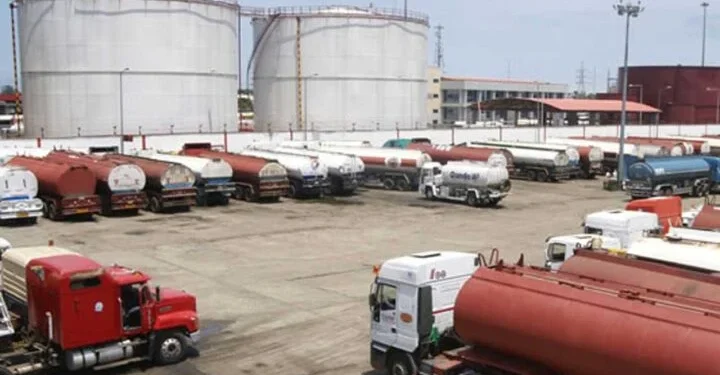

Oil marketers in Nigeria have stated that petrol imports have effectively stopped, with supplies now being sourced largely from the Dangote Petroleum Refinery and Petrochemical Complex. The development, they say, has contributed to improved fuel availability and relative price stability across the country.
Speaking in an interview, the National Publicity Secretary of the Independent Petroleum Marketers Association of Nigeria (IPMAN), Chinedu Ukadike, said independent marketers are no longer experiencing shortages and are currently purchasing petrol directly from the Dangote Refinery. According to him, the absence of scarcity, even during peak demand periods, suggests that importation has reduced significantly.
Ukadike explained that following recent price adjustments by the refinery, the supply chain has remained stable. He noted that during the Christmas season—typically characterised by heightened fuel consumption—there were no disruptions in supply. Based on this, he said he does not believe petrol is being imported at this time.
According to him, the current supply arrangement has eased tensions within the downstream sector and addressed previous accusations surrounding fuel importation. He added that Dangote Refinery has opened access to independent marketers, allowing them to purchase products directly rather than through multiple layers of distribution.
Concerns had previously been raised following reports that a pilot supply arrangement between Dangote Refinery and about 20 major oil marketers had collapsed over pricing disputes. The arrangement reportedly involved a monthly offtake of 600 million litres of petrol and was intended to stabilise supply and moderate pump prices. Reports in November 2025 suggested that a breakdown in the agreement had led to increased petrol imports.
Data from the Nigerian Midstream and Downstream Petroleum Regulatory Authority (NMDPRA) showed that petrol imports rose sharply to 1.563 billion litres in November 2025, up from 828 million litres in October of the same year. However, Dangote Refinery denied claims that the increase was linked to any collapse in its supply arrangements, describing the reports as misleading.
Related News

IEA Announces Record Release of 400 Million Barrels of Oil to Stabilize Markets Amid Iran War
The International Energy Agency (IEA) has announced the largest emergency oil release in its history, unlocking 400 million barrels from…

Petrol Price Could Reach ₦2,000 Per Litre If Middle East Conflict Persists – PETROAN
The Petroleum Products Retail Outlets Owners Association of Nigeria (PETROAN) has warned that petrol prices in Nigeria could surge to…
IPMAN Urges Federal Government to Cut Crude Oil Price for Dangote Refinery
The Independent Petroleum Marketers Association of Nigeria (IPMAN) has called on the Federal Government to reduce the cost of crude…
The refinery stated that its engagement with the downstream sector was designed to respond to rising demand while improving competition and efficiency. Independent oil marketers also distanced themselves from suggestions that the import surge was due to supply failures, maintaining that product availability nationwide had improved since domestic supply commenced.
Ukadike further explained that independent marketers now buy petrol directly from the refinery in smaller volumes, reducing logistical challenges. He said the minimum loading volume has been adjusted, enabling marketers to pool resources and access products more efficiently.
He added that marketers expect further reductions in petrol prices as refinery operations stabilise. According to him, local refining significantly lowers transportation and logistics costs, which could translate into sustained price moderation. He described the refinery’s direct supply policy as beneficial and said it has increased competition within the market.
However, not all industry stakeholders agree that petrol importation has completely stopped. Another retail oil marketer, Edwin Ogah, said imports are still ongoing, primarily as a precautionary measure. According to him, marketers import fuel to build stock buffers and avoid scarcity, rather than to flood the market.
Ogah noted that Nigeria’s domestic refining capacity, while improving, has not yet reached the scale required to fully meet national demand consistently. He cited factors such as foreign exchange availability, port congestion, pipeline integrity, and trucking costs as ongoing challenges within the supply chain.
He acknowledged that Dangote Refinery has begun supplying the market but said full nationwide distribution is still evolving. He added that marketers with access to foreign exchange and credit facilities continue to import petrol, particularly during periods of high consumption.
Meanwhile, Dangote Refinery has reiterated that it is operating at full capacity and supplying over 50 million litres of petrol daily. The refinery recently dismissed reports suggesting it was shutting down for maintenance, describing such claims as false and aimed at causing panic.
In December 2025, the refinery informed the NMDPRA of its readiness to meet Nigeria’s domestic petrol demand, pledging to supply up to 1.5 billion litres monthly. The 650,000-barrel-per-day facility has positioned itself as a key player in stabilising fuel supply amid recent price volatility.
As debate continues within the sector, industry observers say the long-term outlook will depend on sustained production, pricing transparency, and the entry of additional domestic refining capacity to prevent overreliance on a single supplier.