Salihu Yakasai Slams Federal Executive Council Over “South-West Bias” in ₦1 Trillion Project Approvals
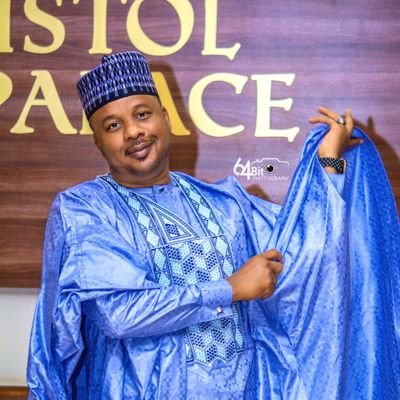

A political storm is brewing over the latest Federal Executive Council (FEC) approvals, after former Kano State government aide, Salihu Yakasai, accused the Tinubu administration of regional favoritism in the distribution of federal infrastructure projects.
Taking to X (formerly Twitter), Yakasai described the November 6 FEC session as a “South-West FEC meeting,” alleging that the overwhelming majority of the ₦1 trillion worth of newly approved and revised road projects were allocated to the South-West region.
According to the list of projects approved during the meeting, the Council gave the green light to multiple road and flyover contracts across various parts of Nigeria, including:
-
Sokoto–Badagry Coastal Superhighway (Section 3) – 163 km from Badagry to the Ogun–Oyo border, valued at ₦553 billion.
-
Ota–Idiroko Road and Flyover (Ogun) – ₦121 billion total.
-
Ijebu Igbo–Etapa–Owoyen Road (Ogun–Oyo) – ₦53 billion, a 307% budget increase from ₦13 billion.
-
Lagos–Ibadan Expressway Phase II, Section II – ₦43.73 billion for new ramps and underpasses.
-
Ilorin–Omu Aran–Egba Road (Kwara) – ₦43 billion.
-
Wasasa–Turunku–Mararaba Road (Kaduna) – ₦30.23 billion.
-
Enugu–Onitsha Road (Enugu–Anambra) – ₦28.47 billion.
Related News

Rights Group Accuses Police of Judicial Persecution Over Remand of Blogger Maureen Badejo
The Committee for the Defence of Human Rights (CDHR) has accused the Nigeria Police Force of engaging in judicial persecution…
Enugu Government Declares 90-Day Amnesty for Buildings Without Approved Plans
The Enugu State Government has introduced a 90-day amnesty period for property owners whose buildings lack approved plans, offering them…
China to Remove Tariffs on Most African Imports Starting May 1, Says Xi Jinping
China has announced plans to eliminate tariffs on imports from nearly all African nations beginning May 1, a move President…
-
Mushin–NNPC–Apapa–Oshodi Dualisation (Lagos) – ₦19.09 billion.
-
East–West Road (PH–Warri Axis) – ₦156 billion, including new flyovers and bridges.
Yakasai’s breakdown alleged that out of the total ₦1 trillion approved, ₦789 billion (75%) went to the South-West region, ₦156 billion (14%) to the South-South, ₦43 billion (4%) to the North-Central, ₦30 billion (2%) to the North-West, ₦28 billion (2%) to the South-East, and ₦0 billion to the North-East.
His post sparked a wave of debate and controversy online. Many social media users and commentators shared his concern, calling the allocation “brazenly lopsided.” Some pointed out that while other regions received minimal or no funding, projects within Lagos and Ogun States accounted for the majority of the approvals.
“This is how lopsided nations begin to crumble,” one commenter wrote. “No region except the South-West got more than 15%. The North-East got zero.”
Others echoed Yakasai’s claim that the administration appeared to be heavily prioritizing the President’s home region. “And they’ll borrow money and spend 75% of it in the South-West while expecting the rest of the country to repay the loans,” another user said.
However, not all reactions were in agreement. Some argued that critics were misinterpreting the project locations. A few pointed out that the Sokoto–Badagry Superhighway, one of the most expensive items on the list, spans several regions, including the North-West. “When did Sokoto become part of the South-West?” one user asked.
Still, the controversy has reignited Nigeria’s enduring debate over federal equity and regional balance in resource allocation—a politically sensitive issue that has long shaped public trust in governance. Critics accused the Tinubu-led government of following the same “regional favoritism” pattern many attributed to former President Muhammadu Buhari’s administration.
A commentator wrote, “You can’t rule Nigeria like a poultry farm. Buhari did it for the North, now Tinubu is doing it for the West. Both are destroying national unity.”
Others adopted a more pragmatic tone, suggesting that this was simply the continuation of a long-standing political cycle. “When Buhari did it, the South-West supported him. Now that it’s Tinubu’s turn, they’ll do the same. It’s turn-by-turn governance,” one person noted.
Meanwhile, some political analysts argue that Yakasai’s criticism may also reflect rising intra-northern discontent with Tinubu’s presidency, as the region grapples with internal divisions and a loss of influence in key policy decisions.
For now, neither the Presidency nor the Ministry of Works has issued an official response to Yakasai’s claims. But the backlash underscores growing public sensitivity to how federal projects are distributed—especially amid economic hardship and political polarization.
As one frustrated user summed it up, “Every President comes with his own region-first agenda. Until Nigeria fixes its federal structure, we’ll keep fighting over who gets what share of the pie.”