Tinubu Meets Sultan of Sokoto Amid Rising Religious Tensions and U.S. Scrutiny
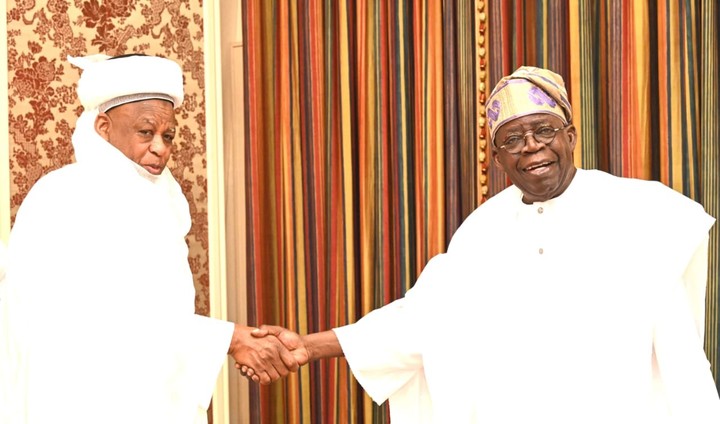

President Bola Tinubu on Friday held a private meeting with the Sultan of Sokoto, Alhaji Muhammad Sa’ad Abubakar III, at the State House in Abuja. The engagement, which followed closely on the heels of a similar meeting with the Archbishop of Abuja, Bishop Ignatius Kaigama, underscores the president’s continuing consultations with major religious and traditional figures across Nigeria.
Dada Olusegun, the President’s Special Assistant on Social Media, shared video clips of the separate meetings on X (formerly Twitter), describing them as part of Tinubu’s broader strategy to “foster dialogue, strengthen national unity, and build trust across religious and cultural lines.”
According to sources within the Presidency, the meeting formed part of a renewed effort to consolidate peace and address mounting concerns over Nigeria’s fragile interfaith relations. Officials noted that Tinubu’s “Renewed Hope Agenda” identifies religious inclusion and social cohesion as core components of his administration’s stability and development plan.
The dialogue comes at a sensitive time for the administration. On October 31, former U.S. President Donald Trump announced Nigeria’s redesignation as a “Country of Particular Concern,” citing alleged human rights abuses and the killing of Christians by extremist groups such as Boko Haram, the Islamic State West Africa Province (ISWAP), and Fulani militants.
Reports from Washington claimed that over 7,000 Christians had been killed between January and July 2025. The Nigerian government, however, has firmly rejected these allegations. In a statement, officials dismissed claims of systemic persecution as “false narratives” designed to sow division, reaffirming that Nigeria’s constitution guarantees religious freedom for all citizens.
Related News

DSS Tells Court Kaduna Man’s Tweets Could Drag Nigeria into Israel–Iran Conflict
Nigeria’s domestic intelligence agency, the Department of State Services (DSS), has told a court that social media posts allegedly made…

Nigeria Begins Evacuation of Citizens from Iran Amid Escalating Middle East Conflict
The Nigerian government has started evacuating its citizens from Iran as tensions in the Middle East intensify.

Nigeria Surpasses India in Number of People Living in Poverty – Report
New data shared by Statisense suggests that Nigeria now has a higher number of people living below the poverty line…
“The Nigerian government remains committed to protecting the rights of all faith communities,” the statement read. “Our strength lies in our diversity, and our unity is built on mutual respect and tolerance.”
Friday’s meeting with the Sultan of Sokoto—who also serves as the spiritual leader of Nigeria’s Muslim community—was seen as a deliberate step toward defusing tension following international criticism and local outcry over rising insecurity in northern Nigeria.
Presidential aides emphasized that Tinubu’s meetings with both Muslim and Christian leaders were not symbolic but part of a structured national dialogue framework designed to restore confidence in government peacebuilding efforts.
Analysts, however, note that the timing of these consultations may also reflect growing diplomatic pressure on the Nigerian government. U.S. lawmakers, led by Congressman Riley Moore, recently proposed a resolution calling on President Tinubu to “take immediate steps to safeguard Nigerian Christians” and to repeal laws that restrict freedom of belief.
While religious violence has long plagued Nigeria’s Middle Belt and northern regions, critics say the problem has worsened due to political complacency, lack of accountability, and weak security coordination.
The Sultan, known for his consistent calls for interfaith understanding and the denunciation of extremism, reportedly used the meeting to advocate for stronger community engagement and government support for grassroots peace initiatives.
The Presidency has yet to release an official statement on the details of the conversation. However, sources familiar with the discussions described the tone as “constructive and forward-looking,” with both leaders reaffirming their commitment to promoting unity, tolerance, and mutual respect among Nigeria’s diverse population.
As the nation grapples with deepening religious and ethnic polarization, Tinubu’s meeting with the Sultan signals an attempt to reposition his administration as a bridge-builder at a time when international attention on Nigeria’s religious climate continues to intensify.