Trump Warns of “Bigger Wave” of Strikes on Iran as US Urges Americans to Leave Middle East
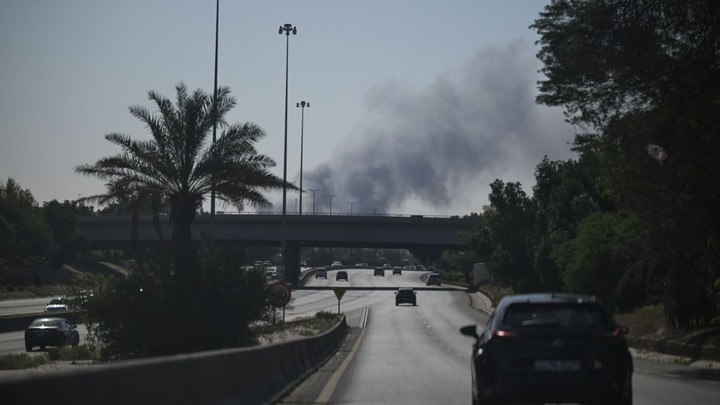

US President Donald Trump has issued a stark warning to Iran, declaring that a “big wave” of American military strikes is yet to come as hostilities between Washington and Tehran intensify across the Middle East.
Speaking to CNN, Trump outlined what he described as clear war objectives: the destruction of Iran’s missile capabilities, the annihilation of its naval forces, the dismantling of its nuclear ambitions, and the prevention of Tehran from arming militant groups across the region. His remarks signal a significant escalation in rhetoric and potentially in military action.
The conflict, which has already seen direct strikes and counterstrikes, is rapidly spreading beyond Iran’s borders. Reports indicate that Iran and its allied groups have launched attacks targeting US allies in the Gulf. The US Embassy in Saudi Arabia was reportedly hit by suspected Iranian drones, while explosions were heard in Iraq and warning sirens sounded over Bahrain.
At the same time, Israel has expanded its operations. The Israel Defense Forces are reportedly striking Hezbollah-linked targets in Beirut, opening another front in an already volatile regional confrontation.
Related News
Iran Warns US Tech Giants Like Google, Amazon Could Become “Legitimate Targets” in Expanding Regional War
Authorities in Iran have warned that infrastructure linked to major American technology companies may become “legitimate targets” as the regional…

DSS Tells Court Kaduna Man’s Tweets Could Drag Nigeria into Israel–Iran Conflict
Nigeria’s domestic intelligence agency, the Department of State Services (DSS), has told a court that social media posts allegedly made…
Nigeria Begins Evacuation of Citizens from Iran Amid Escalating Middle East Conflict
The Nigerian government has started evacuating its citizens from Iran as tensions in the Middle East intensify.
The rising violence has prompted the United States Department of State to issue an urgent advisory, urging American citizens to leave the Middle East immediately. The advisory underscores fears that the conflict could spiral into a broader regional war affecting multiple Gulf nations.
Trump described what he called “the biggest surprise” of the conflict as Iran’s willingness to strike Arab countries in the region. Traditionally, Iran’s confrontations have largely centered on Israel and US forces, but recent developments suggest a widening battlefield.
In response, Iranian officials have sharply criticised Washington’s actions. Iran’s foreign minister accused the US administration of destabilising the region and stated that “the American people deserve better and should take back their country,” echoing Trump’s own past rhetoric directed at Iranian citizens during periods of unrest inside Iran.
Military analysts say the stakes are high. Iran possesses significant ballistic missile capabilities and maintains influence through allied groups across Iraq, Lebanon, Syria, and Yemen. Meanwhile, the United States has a vast military footprint in the Gulf, with bases in countries such as Bahrain, Qatar, Kuwait, and the United Arab Emirates.
The destruction of Iranian naval assets, as referenced by Trump, could shift the strategic balance in the Strait of Hormuz, a critical waterway through which a significant percentage of the world’s oil supply passes. Any disruption there could send global energy markets into turmoil.
Despite the aggressive tone, diplomatic observers note that the situation remains fluid. While Washington appears determined to degrade Iran’s military infrastructure, Tehran has demonstrated its capacity to retaliate against both American and allied targets.
The escalating rhetoric has sparked global concern about the possibility of a wider war involving regional powers and potentially drawing in additional international actors. Calls for de-escalation have emerged from various quarters, with appeals for dialogue and restraint growing louder as civilian populations across the Middle East brace for uncertainty.
For now, the warning from Washington is clear: more strikes could be imminent, and American citizens in the region are being urged to leave before the conflict deepens further.