U.S. Congressman Riley Moore Meets Nigerian Delegation, Calls for Concrete Action on Christian Persecution and Terrorism
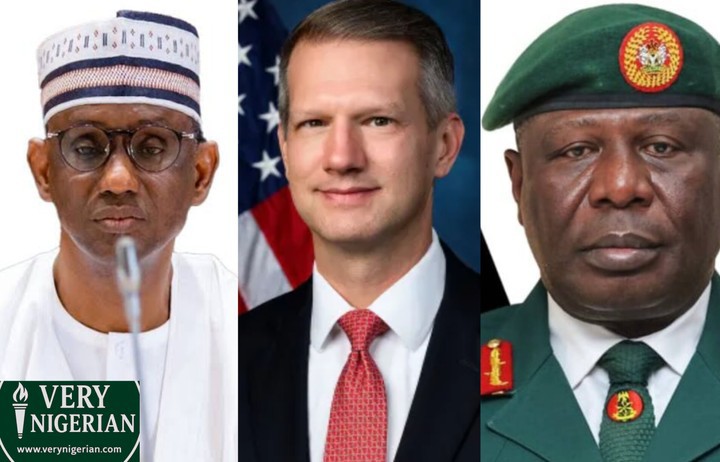

A delegation of senior Nigerian government officials met with U.S. Congressman Riley M. Moore in Washington, D.C., to address concerns over the increasing persecution of Christians and the persistent threat posed by terrorist groups across Nigeria. The meeting, led by Nigeria’s National Security Adviser, Nuhu Ribadu, took place as insecurity across several regions of the country continues to intensify.
According to the U.S. lawmaker, the discussion was “frank, honest, and productive,” offering both sides an opportunity to confront the scale of ongoing violence and to explore pathways toward stronger cooperation between the two nations. The Nigerian delegation included ministers, security chiefs and top diplomats, reflecting the gravity of the concerns raised by U.S. officials and the urgency of Nigeria’s internal security challenges.
During the engagement, Nigerian officials outlined the difficulties the country faces in combating armed groups such as Boko Haram, ISWAP, and various militant factions operating in the Northeast, Northwest and Middle Belt. They also highlighted constraints around security infrastructure, intelligence gaps, and the long-standing challenge of protecting civilians in rural and conflict-prone areas. The issue of violence targeted specifically at Christian communities was a central point of discussion.
Congressman Moore stressed that the United States expects “tangible steps” from Nigeria to curb religious persecution and violence. He reiterated that the U.S. government, under President Donald Trump, would not tolerate continued attacks on Christian populations. Moore emphasized that the U.S. stands ready to assist Nigeria militarily and strategically but warned that cooperation depends on Nigeria’s willingness to engage transparently and take meaningful action.
Related News

DSS Tells Court Kaduna Man’s Tweets Could Drag Nigeria into Israel–Iran Conflict
Nigeria’s domestic intelligence agency, the Department of State Services (DSS), has told a court that social media posts allegedly made…
Nigeria Begins Evacuation of Citizens from Iran Amid Escalating Middle East Conflict
The Nigerian government has started evacuating its citizens from Iran as tensions in the Middle East intensify.

Nigeria Surpasses India in Number of People Living in Poverty – Report
New data shared by Statisense suggests that Nigeria now has a higher number of people living below the poverty line…
In his public statement following the meeting, Moore described the killings and displacement of Christians in Nigeria as “horrific.” He expressed concern that the country’s security situation remains unstable and urged Nigerian authorities to collaborate more closely with the United States to dismantle terrorist networks. Moore underscored U.S. readiness to support counterterrorism missions aimed at groups that have destabilized large regions of Nigeria for more than a decade.
The meeting involved several high-ranking Nigerian officials, including Minister of State for Foreign Affairs Bianca Ojukwu, Inspector General of Police Kayode Egbetokun, Attorney General Lateef Fagbemi, Chief of Defence Staff General Olufemi Oluyede, Chief of Defence Intelligence Lt. Gen. EAP Undiendeye, and other key representatives from the Office of the National Security Adviser and the Nigerian Embassy.
The public reaction to the meeting has been intense, with many Nigerians expressing mixed views. Some commenters welcomed the renewed diplomatic dialogue, hoping that closer cooperation with the U.S. could help curb terrorism, mass kidnappings, and sectarian attacks that have become routine across the country. Others raised concerns about Nigeria’s willingness to rely on foreign intervention, questioning whether external support would translate into long-term security improvements.
A significant portion of online discourse revolved around the political implications of Congressman Moore’s statements. Critics argued that U.S. pressure reflects a perceived failure of Nigeria’s leadership to address insecurity, while supporters of the government countered that the meeting demonstrates proactive engagement with international partners. Political disagreements also emerged over whether the U.S. may pursue a more interventionist posture, though analysts generally consider such scenarios unlikely.
At the same time, several commenters pointed out that attacks on churches, schools, and rural communities continued to occur even as diplomatic discussions were underway. These incidents, including recent killings and abductions in northern and central states, have intensified calls for faster, more decisive action.
While the meeting signals increased attention from the United States, the broader question remains whether Nigeria can implement reforms and coordinate effectively enough to reduce violence on the ground. Observers note that without sustained political will, intelligence-sharing, and improved local security capacity, international support alone will not be sufficient to address the complex web of extremist and criminal groups operating across the country.
As both nations navigate their evolving security partnership, the pressure on Nigeria to deliver concrete results is expected to rise, especially as global attention shifts toward the country’s growing humanitarian and security crisis.