Umahi Inspects Ongoing Rehabilitation of Lagos–Ota–Abeokuta Expressway
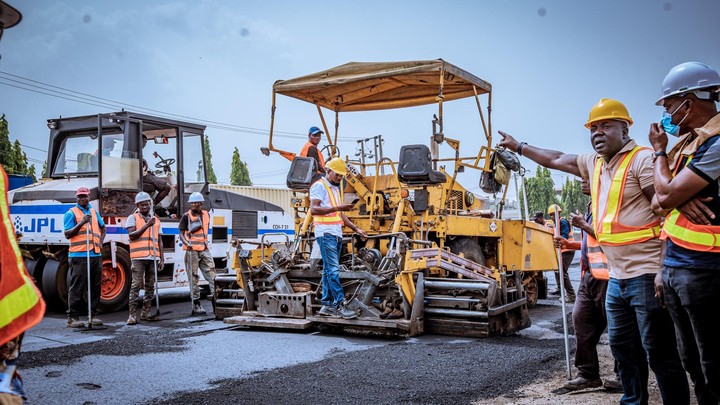

The Minister of Works, David Umahi, has conducted an on-site inspection of the ongoing rehabilitation of the Lagos–Ota–Abeokuta Expressway, reaffirming the Federal Government’s commitment to improving critical road infrastructure across the country.
During the inspection tour, Umahi assessed progress on construction works along the corridor, which links Lagos to Ogun State and serves as a major route for commuters, commercial transporters, and industrial operators. The road connects key economic hubs, including the Ota industrial zone, and is widely regarded as one of the busiest highways in southwestern Nigeria.
The rehabilitation project is part of broader infrastructure initiatives under the administration of Bola Tinubu. Government officials have repeatedly described road infrastructure as central to boosting trade, reducing travel time, and improving safety on federal highways.
According to officials familiar with the project, the Lagos–Ota–Abeokuta corridor has suffered years of deterioration due to heavy vehicular traffic, including trucks transporting goods between Lagos ports and neighboring states. Potholes, failed sections, and drainage challenges have historically contributed to prolonged travel times and increased vehicle maintenance costs for road users.
Related News
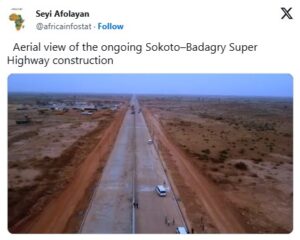
Aerial Footage Shows Progress on Sokoto–Badagry Super Highway Construction
New aerial footage circulating online has revealed ongoing construction work on the proposed Sokoto–Badagry Super Highway, a major infrastructure project…
Kaduna State Government Takes Over Ahmadu Bello Stadium, Begins Major Reconstruction
The Kaduna State Government has officially taken over ownership of the iconic Ahmadu Bello Stadium from the Federal Government, following…

Lagos Completes 9km Rehabilitation on Lekki–Ajah Corridor, Finishes Ahead of Schedule
The Lagos State Government has announced the completion of a 9-kilometre stretch of road rehabilitation from Chevron to Admiralty along…
Umahi emphasized the importance of strict supervision and quality control in delivering durable infrastructure. He noted that federal authorities are monitoring contractors closely to ensure compliance with project specifications and timelines. The Minister reiterated that infrastructure delivery must be matched with accountability and measurable outcomes.
Observers note that the Lagos–Ota–Abeokuta Expressway plays a strategic role in facilitating economic activity between Lagos and Ogun States. The corridor provides access to industrial estates, residential communities, and agricultural supply routes, making it vital to both commercial logistics and daily commuting.
Public reaction to the inspection has been varied. Some residents and commuters welcomed the renewed attention to the highway, expressing hope that the rehabilitation will finally resolve longstanding road challenges. Others called for improved drainage systems and durable construction methods to ensure that the road remains motorable during the rainy season.
Infrastructure analysts have pointed out that sustained maintenance planning will be essential once the rehabilitation is completed. They argue that preventive maintenance frameworks and traffic regulation enforcement are necessary to prevent the recurrence of structural damage, particularly given the high volume of heavy-duty vehicles using the route.
In addition, stakeholders have emphasized the importance of transparency regarding project costs and timelines. With rising public scrutiny around infrastructure spending nationwide, experts say clear reporting and adherence to budgetary discipline will be critical in maintaining public confidence.
The Lagos–Ota–Abeokuta Expressway project forms part of a wider federal effort to upgrade key transportation arteries across Nigeria. The Ministry of Works has indicated that multiple highway rehabilitation and reconstruction projects are ongoing in various geopolitical zones.
As construction continues, motorists along the corridor are advised to comply with traffic diversions and safety instructions put in place to facilitate smooth project execution. Authorities have assured the public that efforts are being made to minimize disruptions while maintaining construction quality standards.
The completion timeline for the rehabilitation has not been formally announced, but officials suggest that steady progress is being recorded. For residents and businesses along the corridor, the expectation remains that the renewed focus on the Lagos–Ota–Abeokuta Expressway will translate into lasting improvements in mobility, safety, and economic efficiency.