US Congressman Says Trump Likely to Pursue Sanctions, Not Military Action, Against Nigeria
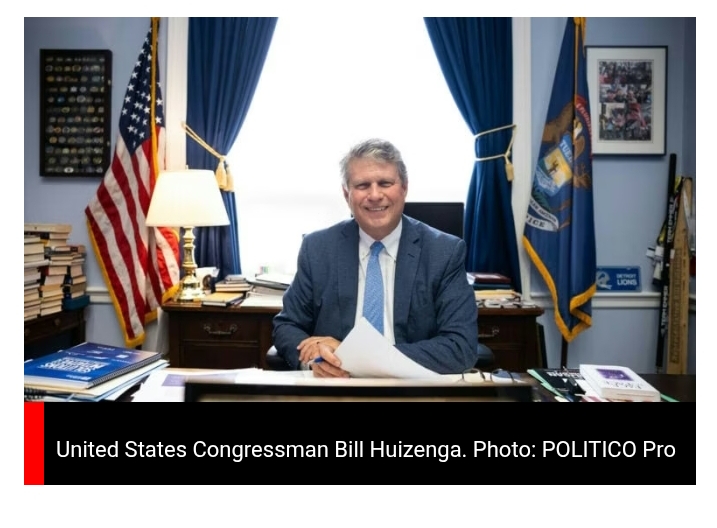

United States Congressman Bill Huizenga has downplayed fears of a potential U.S. military intervention in Nigeria, stating that former President Donald Trump’s comments about going “guns-ablazing” were more an expression of frustration than a policy declaration.
In an interview with Arise TV, Huizenga explained that while Trump had voiced anger over the alleged killing of Christians and other civilians in Nigeria, the U.S. approach is expected to lean toward economic and diplomatic pressure, not military engagement.
“I too was surprised by the comments that the President came out that forcefully,” Huizenga said. “I suspect that that is not a high priority of having actual military intervention, specifically in Nigeria. But I think he does want to make sure that, from his view, the genocide that is happening specifically against Christians, but also others in Nigeria, needs to stop.”
Huizenga further emphasized that sanctions on individuals and organizations implicated in violence would likely be the most effective strategy. “I would first and foremost encourage them to look at economic pressure and sanctions on both individuals and organizations. I think that would be the most effective,” he added.
The U.S. Congressman also pointed out that Trump’s general foreign policy style during his presidency showed a preference for negotiation over warfare. “Frankly, this President has been someone who has pursued peace rather than just expanding war. So I think he would be very selective before he did anything militarily,” Huizenga said.
Related News

DSS Tells Court Kaduna Man’s Tweets Could Drag Nigeria into Israel–Iran Conflict
Nigeria’s domestic intelligence agency, the Department of State Services (DSS), has told a court that social media posts allegedly made…
Nigeria Begins Evacuation of Citizens from Iran Amid Escalating Middle East Conflict
The Nigerian government has started evacuating its citizens from Iran as tensions in the Middle East intensify.
Nigeria Surpasses India in Number of People Living in Poverty – Report
New data shared by Statisense suggests that Nigeria now has a higher number of people living below the poverty line…
In a speech published by SaharaReporters, Trump reaffirmed that he had placed Nigeria on the list of “countries of particular concern” over what he described as the widespread killing of Christians. “Christianity is facing an existential threat in Nigeria,” he said. “Thousands and thousands of Christians are being killed. Radical Islamists are responsible for this mass slaughter.”
Trump called on the U.S. Congress to act swiftly. “Something has to be done. I am asking Congressman Riley Moore together with Chairman Tom Cole and the House Appropriations Committee to immediately look into this matter,” he declared.
He further warned that the United States could impose strict measures if the Nigerian government failed to curb the violence. “The United States cannot stand by while such atrocities are happening in Nigeria and other countries,” Trump added.
Huizenga, however, reiterated that while Trump’s words were strong, military intervention was improbable. Instead, he argued, financial restrictions targeting violent networks and their financiers could yield tangible results. “Sanctions really cut off the flow of money, cut off the flow of travel. We don’t know who exactly is financing much of these operations from the Fulani or Boko Haram in the past. But if we put economic pressure on them and stop their ability to move money, that will have a positive impact,” he said.
The comments have triggered widespread discussion among Nigerians both online and offline. While some citizens welcomed the possibility of sanctions to hold political elites accountable, others expressed concern that such measures would worsen the country’s economic challenges and disproportionately affect ordinary Nigerians.
Critics argued that international pressure often forces short-term compliance but rarely leads to systemic reform, especially when sanctions hit the wider population rather than specific actors. Supporters, on the other hand, viewed U.S. involvement—whether through sanctions or diplomatic engagement—as a necessary wake-up call for Nigerian leaders.
The Nigerian government has not issued an official response to Huizenga’s remarks. However, past administrations have routinely rejected external threats of sanctions or intervention, insisting on Nigeria’s sovereignty in handling domestic security matters.
As debate continues, analysts say the unfolding situation underscores growing international concern about Nigeria’s internal security and governance. Whether through sanctions or diplomacy, the message from Washington appears clear: the world is paying close attention to how Nigeria addresses its ongoing crises of violence and accountability.