Wike’s Clash With Naval Officer Sparks National Security Debate — Buratai Warns Against Eroding Military Discipline
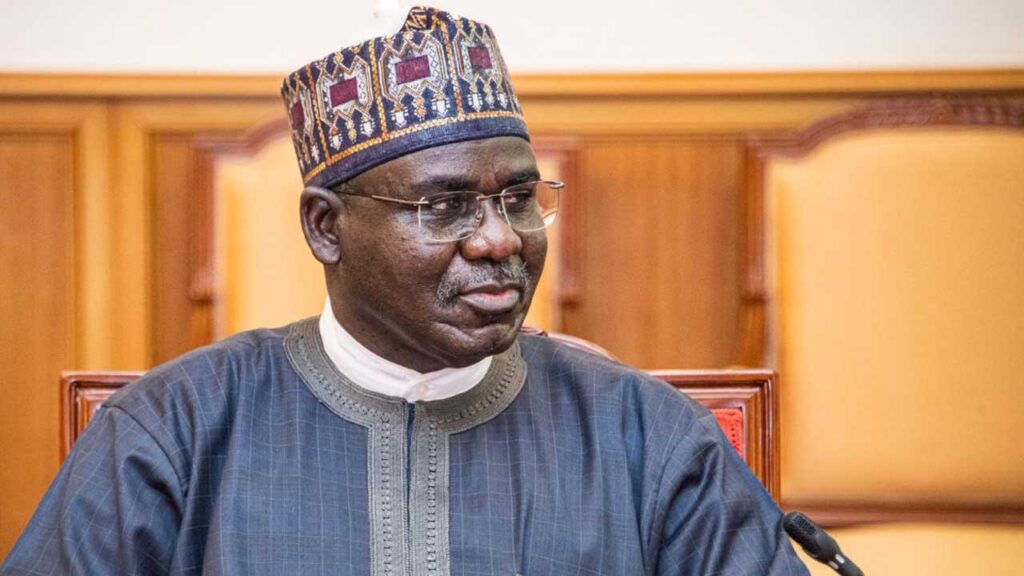

A recent confrontation between the Minister of the Federal Capital Territory (FCT), Nyesom Wike, and a Nigerian Navy officer has sparked nationwide debate, with former Chief of Army Staff, Lieutenant General Tukur Yusuf Buratai (retd.), warning that the incident represents a “clear and present danger to national security.”
The altercation, which reportedly took place at Plot 1946, Gaduwa District, Abuja, was said to have stemmed from a dispute over ownership and development rights to a piece of land allegedly linked to a former Chief of Naval Staff. The FCT Minister, who had led officials of the Federal Capital Development Authority (FCDA) to halt construction on what he termed “an illegal site,” confronted a naval officer supervising the property.
In a viral video that has since circulated across social media platforms, Wike is seen engaging the officer in a heated argument, questioning the legitimacy of the construction and asserting the supremacy of the law. “You are in uniform, and you’re telling me that the Navy owns this land? Who gave you the right to build without approval? Even if you are the Chief of Naval Staff, the law must be respected,” Wike declared in the footage.
Related News

DSS Tells Court Kaduna Man’s Tweets Could Drag Nigeria into Israel–Iran Conflict
Nigeria’s domestic intelligence agency, the Department of State Services (DSS), has told a court that social media posts allegedly made…

Nigeria Begins Evacuation of Citizens from Iran Amid Escalating Middle East Conflict
The Nigerian government has started evacuating its citizens from Iran as tensions in the Middle East intensify.

Nigeria Surpasses India in Number of People Living in Poverty – Report
New data shared by Statisense suggests that Nigeria now has a higher number of people living below the poverty line…
The officer, whose identity has not been officially disclosed by the Nigerian Navy, reportedly maintained that the property was legally owned and that his presence on-site was to protect it from encroachment. The tense exchange quickly drew attention online, with divided reactions over whether the minister’s outburst was justified or excessive.
Reacting to the incident, Buratai criticized Wike’s handling of the situation, describing it as “a reckless act that strikes at the core of Nigeria’s command and control structure.” In a statement released via his verified Facebook page, the retired general said, “A minister’s verbal assault on a military officer in uniform is an act of profound indiscipline that strikes at the very foundation of our national security apparatus. It is not political theatre—it is a reckless endangerment of national order.”
Buratai further argued that Wike’s tone and conduct could demoralize the armed forces, weaken discipline, and erode respect for constituted authority. “This action by Wike is clearly an indication of undermining the Federal Government’s authority. It disrespects the Commander-in-Chief and wounds the morale of every officer who serves under the Nigerian flag,” he added.
He urged President Bola Tinubu to treat the matter as a serious national security concern, calling for an immediate public apology from the minister. “Barrister Nyesom Wike must tender an unequivocal apology to President Bola Ahmed Tinubu, to the Armed Forces of Nigeria, and to the officer whose honour was violated. The integrity of our Armed Forces demands nothing less,” Buratai declared.
Public reaction to the clash has been polarized. Some Nigerians defended Wike’s stance, insisting that no institution or officer should be above the law, while others agreed with Buratai, emphasizing the importance of preserving military discipline and decorum. Critics of both men, however, argue that the altercation underscores deeper issues of overlapping authority and weak civil-military coordination in Nigeria’s governance structure.
As debate continues, the presidency has yet to issue an official statement on the matter. Analysts warn that incidents like this could escalate tensions between civil authorities and the armed forces if not properly addressed, calling for institutional reforms that clearly define the boundaries of authority between political officeholders and security agencies.
Whether viewed as an act of accountability or a display of overreach, the Wike–Navy officer confrontation has once again spotlighted the fragile balance between civilian oversight and military respect in Nigeria’s democratic system — a balance that, according to Buratai, must be maintained to safeguard national stability.