Tunisian Man Sentenced to Death Over Facebook Posts Criticizing President Kais Saied, Sparking Nationwide Outrage
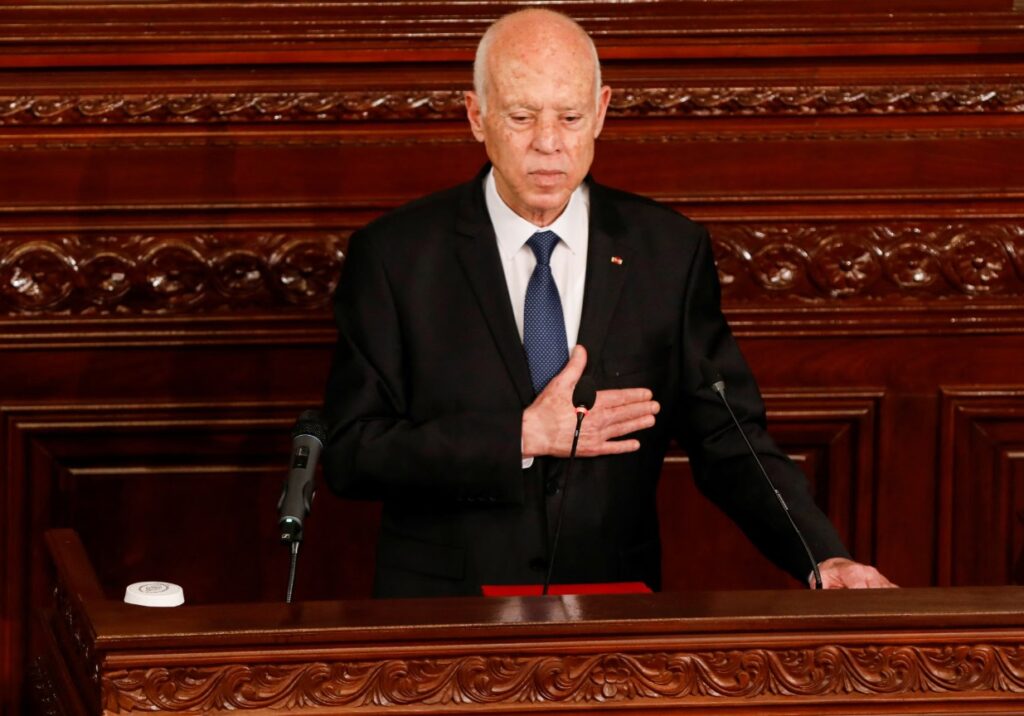

A Tunisian court has sentenced 56-year-old Saber Chouchane to death after he was accused of insulting President Kais Saied and threatening state security through posts made on Facebook — a verdict that has triggered widespread condemnation both within Tunisia and internationally.
The ruling, delivered by a court in the coastal city of Nabeul, has been described by human rights groups and Chouchane’s lawyer as “shocking, excessive, and unprecedented”. The case has reignited fears of authoritarianism and raised serious concerns about the erosion of freedom of expression in Tunisia, once hailed as the birthplace of the Arab Spring.
According to Eyes of Lagos, Chouchane, a day labourer from a modest background with limited formal education, was arrested in 2024 after repeatedly posting critical comments about President Saied’s leadership and government policies. His lawyer, Oussama Bouthalja, confirmed the court’s decision, expressing disbelief at the severity of the punishment.
“The judge in the Nabeul court sentenced my client to death over Facebook posts. It is a shocking and unprecedented ruling in the history of modern Tunisia,” said Bouthalja.
A Family Crushed by Poverty and Injustice
Following the verdict, Chouchane’s brother, Jamal, expressed deep sorrow over the family’s situation, saying they were already living in poverty before oppression added a new layer of suffering.
“We can’t believe it. We are a poor family that has always struggled to survive, and now injustice has been added to our pain,” Jamal lamented.
Related News

Gunmen Attack ADC Leaders in Benin as Obi, Oyegun Allege Assassination Attempt
Tension rose in Benin City after gunmen attacked the African Democratic Congress (ADC) secretariat and the residence of former Edo…

NDLEA Arrests Lekki Real Estate Executive Kolapo Oladapo Over Alleged Drug Distribution Network
The National Drug Law Enforcement Agency has arrested Lekki-based real estate executive Kolapo Oladapo following the recovery of 89.2 kilograms…

Rising Phone Thefts and Scams Spark Fear at Lagos’ Ikeja Computer Village
Nigeria’s largest technology market, Ikeja Computer Village, is facing growing concerns over rising phone theft and scam activities.
Tunisia has not carried out an execution since the early 1990s, although courts occasionally hand down death sentences. An appeal has already been filed, and legal experts expect that the ruling could be overturned or commuted.
Growing Fears of Silenced Dissent
The verdict has sparked fears of increasing authoritarianism in Tunisia under President Saied’s rule. Since dissolving parliament in 2021 and assuming near-total executive power, Saied has faced mounting accusations of using the judiciary and security forces to stifle dissent.
Opposition politicians, journalists, and activists have repeatedly reported harassment and intimidation, often under broad laws related to national security or spreading false information. Critics argue that this latest judgment represents a dangerous escalation — one that criminalizes political speech and public criticism.
Human rights organizations, including Amnesty International and Human Rights Watch, have condemned the sentence as an outrageous violation of basic civil liberties. They have urged Tunisia to respect its long-standing moratorium on executions and reaffirm citizens’ rights to free expression.
Tunisia’s Democratic Backslide
Once celebrated as a rare democratic success story following the 2011 Arab Spring, Tunisia’s political landscape has dramatically shifted in recent years. President Saied’s consolidation of power — through constitutional changes, arrests of opponents, and crackdowns on independent media — has drawn international concern.
Analysts warn that cases like Chouchane’s could mark a turning point for the country’s fragile democracy. Political commentator Hafedh Karray noted, “This verdict sends a chilling message to Tunisians: criticising the government can cost you your life. It’s a deliberate attempt to silence opposition through fear.”
International Reaction and Calls for Justice
The case has quickly gained global attention, with diplomats, NGOs, and online activists calling for Tunisia to reverse the decision. The European Union, a key economic partner, has expressed “serious concern” and urged Tunisian authorities to uphold human rights and freedom of speech in line with international law.
Online, the outrage has been swift. Tunisians took to social media platforms such as X (formerly Twitter) and Facebook to protest under hashtags like #FreeSaberChouchane and #StopRepressionInTunisia, calling the verdict a step backward for the country that once symbolized hope for democratic reform in North Africa.
Looking Ahead
As Chouchane’s legal team prepares to appeal, activists warn that his fate will serve as a crucial test for Tunisia’s justice system and its commitment to human rights.
For now, the 56-year-old remains in detention, facing execution for words he wrote on social media — a stark reminder of how fragile freedom can become in times of political fear.