Insecurity Crisis Deepens in Kwara: Communities Devastated as Bandit Attacks Escalate Across the State
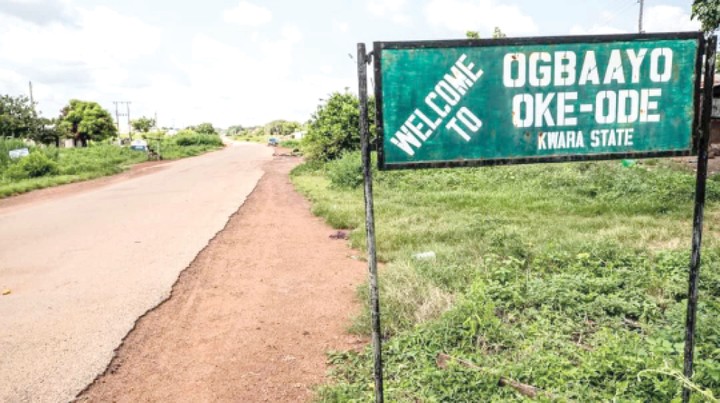

Kwara State, once praised for its peace and stability, is now facing an unprecedented wave of violence, kidnappings, and mass displacement as banditry and terrorism take root across its communities. Once considered one of Nigeria’s safest regions, the state has descended into fear, mourning, and chaos over the past nine months — with dozens killed, hundreds kidnapped, and entire villages deserted.
The most recent assault occurred in Oke-Ode, Ifelodun Local Government Area, where heavily armed bandits attacked residents, killing at least 12 people, including hunters, forest guards, vigilantes, and civilians. The attack has left the town desolate, as residents fled their homes and farms to seek safety in Ilorin and other nearby communities. Witnesses described harrowing scenes, including a viral video showing a widow mourning beside her husband’s corpse after he was ambushed and killed while returning home.
Weekend Trust reports that economic life in the affected regions has come to a standstill. Farming — the economic lifeblood of the state — has been crippled, and local markets remain shuttered. The state’s insecurity crisis has also taken on an international dimension following the abduction of a Chinese mining investor in Oreke, Edu Local Government, earlier this year. Despite demands for a ransom of ₦1 billion, the expatriate remains missing, and two police officers were killed in the attack.
Cumulative data from local sources indicate that over 71 people have been killed and more than 86 kidnapped in 57 communities across the state — many of which are now deserted.
The Rise of the Mahmuda Group and the Spread of Violence
The roots of the crisis trace back to the rise of the Mahmuda Group, a terrorist faction that initially presented itself as itinerant preachers nearly 14 years ago. Locals in Kaiama and Baruten — the hardest-hit areas in northern Kwara — recall how the group gradually evolved from harmless religious preachers into a well-armed militant network occupying parts of the vast Kainji National Park, which extends into Niger State.
“They came as young men, claiming to preach and farm,” a community leader recounted. “No one suspected they would one day turn into warlords.”
Over time, Mahmuda and his followers began stockpiling weapons, recruiting heavily, and extorting residents under the guise of protection. Their control expanded as they carried out kidnappings, arson, and executions, forcing thousands of villagers to flee.
One of the most devastating attacks occurred on August 8, 2025, in Babanla, Ifelodun LGA, when more than 200 armed men invaded the community, razed the police station, looted shops, and killed five people, including a police officer. Over 3,000 residents were displaced as the attackers took control of the area.
Victims such as 19-year-old Hamzat Waliya described barely escaping alive: “They came in hundreds on motorcycles, shooting everywhere. We had to run and leave everything behind. This is our fourth month in Ilorin now.”
Related News

Gunmen Attack ADC Leaders in Benin as Obi, Oyegun Allege Assassination Attempt
Tension rose in Benin City after gunmen attacked the African Democratic Congress (ADC) secretariat and the residence of former Edo…

NDLEA Arrests Lekki Real Estate Executive Kolapo Oladapo Over Alleged Drug Distribution Network
The National Drug Law Enforcement Agency has arrested Lekki-based real estate executive Kolapo Oladapo following the recovery of 89.2 kilograms…

Rising Phone Thefts and Scams Spark Fear at Lagos’ Ikeja Computer Village
Nigeria’s largest technology market, Ikeja Computer Village, is facing growing concerns over rising phone theft and scam activities.
Local leaders say the crisis has been brewing for nearly two decades, worsened by uncontrolled migration, lack of background checks on settlers, and weak security presence.
The Terror of Baba Sango Forest
Residents now live in constant fear of the Baba Sango Forest, which stretches across Ifelodun, Patigi, Lafiagi, and into Kogi State. Described as a “government within a government,” the forest is now a sanctuary for armed bandits, housing hundreds of militants and their families.
One survivor recounted: “They occupy different zones in the forest. One of the camps has more people than Babanla town. Their wives and children move around carrying AK-47s.”
Kwara North Under Siege
Communities in Kwara North, including Kaiama, Edu, Patigi, and Baruten, have suffered relentless attacks. In Ilesha Baruba, gunmen in military uniforms opened fire at a market, killing six people, including a teenager and a vigilante. Another deadly ambush in Patigi left several soldiers, police officers, and vigilantes dead.
Farmers have abandoned their lands after large-scale destruction. One leader revealed: “They burnt our farms and killed 200 livestock. Forty farmers were kidnapped in one attack and forced to pay ₦10 million and 10 motorcycles as ransom.”
Kwara Central and the Expanding Threat
Though less affected, Kwara Central has also felt the heat of the crisis. In Asa and Oko-Olowo, several kidnappings have occurred, disrupting markets and agriculture. Former lawmaker Wahab Aliyu Opakunle lamented: “I wanted to start farming after returning from the UK, but I can’t go home now. Our communities are bleeding.”
Factors Driving the Insecurity
Experts and community leaders point to multiple causes: porous borders with Niger and Kogi States, weak security presence, youth unemployment, proliferation of arms, and political interference.
Alhaji Mohammed, a youth leader from Patigi, noted: “People who lack economic opportunities are now working with bandits for ransom money. Helicopters even land in remote areas to supply them.”
He added that shrinking grazing lands and competition for resources have also intensified tensions between herders and farmers.
Government Response and Humanitarian Fallout
The escalating violence has forced authorities to relocate the National Youth Service Corps (NYSC) orientation camp from Yikpata in Edu LGA to Ilorin for safety reasons. The Kwara State Ministry of Health also moved a medical outreach from Oke-Ode to Omupo due to security risks.
Markets across seven local government areas — Ifelodun, Irepodun, Isin, Oke-Ero, Ekiti, Offa, and Oyun — were temporarily shut down to prevent further attacks.
Heavy Losses and Growing Ethnic Tensions
The Miyetti Allah Fulaku Yeso Yeso Development Association reported that over 3,000 cattle were rustled in recent months, and more than 50 Fulani herders were kidnapped. Chairman Alhaji Ali Mohammed Jonwuro appealed for calm, stating: “We are also victims. We have paid over ₦10 million in ransom for our members. Crime has no tribe.”
Meanwhile, displaced residents like Mrs. Sikirat Yunus and Taibat Jimoh shared their despair: “We couldn’t sleep anymore. Every night we prayed to see another day. We abandoned our cashew and maize farms and fled with only the clothes on our backs.”
As Kwara continues to bleed, residents say they are caught between fear and hopelessness — pleading for immediate government action, stronger security presence, and humanitarian assistance to rebuild their shattered communities.