EFCC Must Prove No One Is Above the Law in Wike’s Asset Scandal – Wale Oyebolu
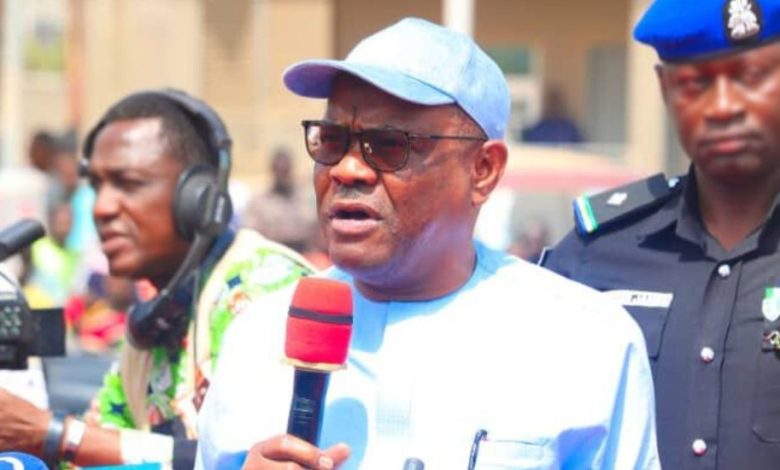

The recent allegations of asset concealment, illicit enrichment, and financial misconduct involving the Minister of the Federal Capital Territory, Nyesom Wike, have reignited the national debate over corruption, accountability, and the credibility of Nigeria’s anti-graft institutions.
In an opinion shared by forensics expert Wale Oyebolu, the call for the Economic and Financial Crimes Commission (EFCC) to act decisively and without bias has never been more urgent. The case, he argues, is not just about one individual — it is a litmus test for whether the rule of law in Nigeria truly applies to all, or remains selectively enforced.
Troubling Allegations and the Florida Connection
Investigations by multiple media outlets, including SaharaReporters, have revealed disturbing claims linking Wike, his wife Justice Eberechi Suzzette Nyesom-Wike, and their children to a number of luxury properties in Winter Springs, Florida, allegedly acquired between 2021 and 2023. These assets were reportedly purchased through shell companies and large cash transfers, without full disclosure to the Code of Conduct Bureau (CCB) — a potential violation of Nigeria’s asset declaration laws.
Even more concerning are allegations that $300 million meant for the Ogoniland environmental remediation project — funds earmarked to heal decades of ecological damage in the Niger Delta — were diverted into private retail ventures. If proven true, this would represent one of the most serious breaches of public trust in modern Nigerian governance.
“These allegations are not mere rumors,” Oyebolu writes. “They strike at the heart of Nigeria’s integrity and test the moral resolve of our institutions. The EFCC must act — not as a political tool, but as an impartial defender of justice.”
A Test of Institutional Credibility
Oyebolu emphasizes that the EFCC and the Independent Corrupt Practices and Other Related Offences Commission (ICPC) must demonstrate professionalism and neutrality, starting with a comprehensive forensic audit of Wike’s asset declarations. Such an investigation should include:
-
A full review of asset disclosures made during his tenure as Rivers State Governor and FCT Minister.
Related News
Gunmen Attack ADC Leaders in Benin as Obi, Oyegun Allege Assassination Attempt
Tension rose in Benin City after gunmen attacked the African Democratic Congress (ADC) secretariat and the residence of former Edo…
NDLEA Arrests Lekki Real Estate Executive Kolapo Oladapo Over Alleged Drug Distribution Network
The National Drug Law Enforcement Agency has arrested Lekki-based real estate executive Kolapo Oladapo following the recovery of 89.2 kilograms…

Rising Phone Thefts and Scams Spark Fear at Lagos’ Ikeja Computer Village
Nigeria’s largest technology market, Ikeja Computer Village, is facing growing concerns over rising phone theft and scam activities.
-
A cross-check of these declarations with local and foreign property registries.
-
A detailed examination of bank statements and land allocations both in Nigeria and abroad.
He further calls on the EFCC to invoke the Mutual Legal Assistance Treaty (MLAT) between Nigeria and the United States, enabling the acquisition of certified property and financial documents from Florida authorities. This, Oyebolu argues, is essential to verify the legitimacy of Wike’s asset acquisitions and funding sources.
Forensic Transparency and Public Accountability
“The EFCC’s credibility rests not only on arrests but on transparency,” Oyebolu asserts. “The Nigerian public deserves timely updates. Silence or selective enforcement only fuels cynicism and weakens trust.”
He points to past instances where forensic audits exposed large-scale corruption, such as the Niger Delta Development Commission (NDDC) probe and EFCC’s recovery of over $500 million in illicit proceeds within a single fiscal year. These, he says, are proof that diligent forensic investigations can dismantle entrenched corruption networks.
If the alleged diversion of Ogoni remediation funds is verified, Oyebolu warns, “it would not only represent a financial crime but also a moral failure — a betrayal of the very communities the funds were meant to heal.”
Public Reactions: Nigerians Divided
Public sentiment surrounding the Wike case remains polarized. On Nairaland and other online platforms, many users expressed skepticism about whether the EFCC would pursue the matter.
User Racoon argued that Wike should step aside or resign to allow a fair investigation, lamenting that Nigeria’s state institutions have become “captured” by political interests. Others, like Apcnewrecruit, dismissed the allegations as distractions, insisting Wike remains loyal to the President’s agenda.
Some users, such as samogo1, condemned perceived hypocrisy in governance, while others like freeborn02 accused the EFCC of being “a tool for political witch-hunting.” Across social media, a recurring theme emerged — a deep distrust of Nigeria’s anti-corruption agencies and doubts about their independence from political control.
A Defining Moment for Nigeria’s Anti-Corruption Drive
Oyebolu concludes that the outcome of this case will determine whether the EFCC is a genuine anti-graft institution or merely a political instrument.
“If Nigeria is to restore global confidence in its justice system, every document, transaction, and declaration must be scrutinized,” he states. “Those found guilty must face justice — regardless of their political power or connections. Anything less would be an indictment of our national integrity.”