Nigerian Ministers and the NYSC Scandals That Have Rocked Public Office
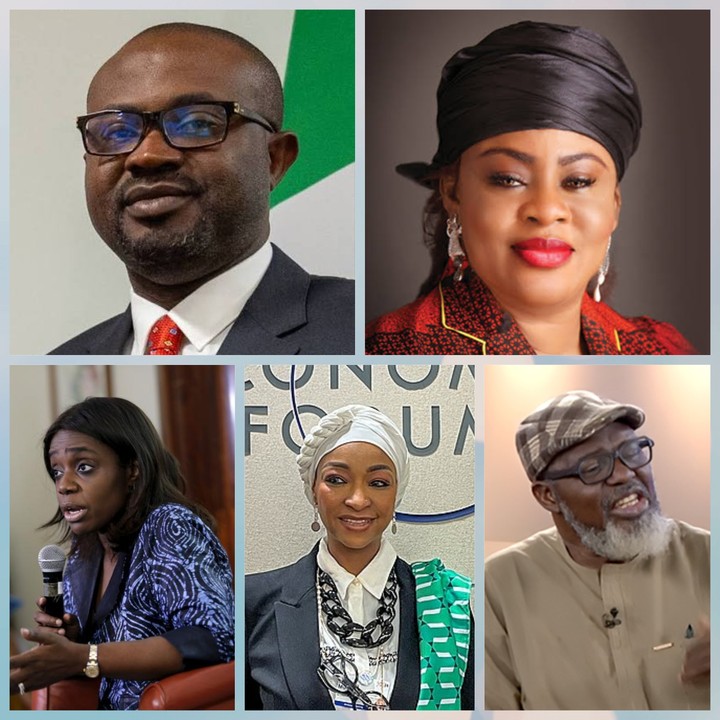

A fresh wave of controversy has engulfed the Nigerian political landscape as the University of Nigeria, Nsukka (UNN) and the National Youth Service Corps (NYSC) disowned certificates linked to a sitting minister, reigniting national debate over forged or questionable credentials among members of the Federal Executive Council.
According to a detailed investigation by PREMIUM TIMES, UNN’s Vice-Chancellor, Prof. Simon U. Ortuanya, confirmed that the unnamed minister — admitted to the university in 1981 — never completed his studies and was not awarded a degree. The NYSC further discredited the certificate of national service presented by the same official, stating that it could not verify its authenticity.
This revelation has once again spotlighted the recurring issue of certificate scandals in high office, a phenomenon that has repeatedly raised concerns over integrity and accountability in Nigeria’s governance system. Below are some of the most prominent cases involving ministers who have faced similar allegations while serving in government.
Kemi Adeosun — The NYSC Exemption Scandal
Appointed in 2015 as Minister of Finance under President Muhammadu Buhari, Kemi Adeosun’s tenure was marred by a forged NYSC exemption certificate scandal that shocked the nation. Investigations revealed that the exemption certificate she presented, dated 2009, bore the signature of an NYSC Director-General who had already left office months before — casting major doubt on its legitimacy.
Though Adeosun claimed she obtained the document in good faith, public outrage forced her to resign in September 2018. The NYSC confirmed that she had indeed applied for an exemption but did not verify the authenticity of the certificate she submitted.
In 2021, the Federal High Court in Abuja ruled that Adeosun was not legally required to possess an NYSC certificate to hold public office, as she was already a British citizen at the time of graduation. While this judgment offered her legal relief, the ethical questions surrounding the scandal remain a key reference point in Nigeria’s debate on integrity in governance.
Adebayo Shittu — “Higher Service” Argument
Former Minister of Communications, Adebayo Shittu, found himself in hot water after reports emerged that he never participated in the mandatory one-year NYSC programme. A graduate of the University of Ife (now Obafemi Awolowo University), Shittu argued that his election into the Oyo State House of Assembly immediately after law school in 1979 was a form of “higher national service.”
However, the NYSC Act makes no such provision. Officials clarified that elective office cannot replace the mandatory service, particularly since Shittu graduated at age 25 — well below the exemption threshold. Despite the controversy, Shittu remained defiant, insisting that his political service to Nigeria fulfilled his civic duty.
Related News

Henry Seriake Dickson Defects from PDP to Newly Formed Nigeria Democratic Congress
Senator Henry Seriake Dickson has formally defected from the Peoples Democratic Party (PDP) to the newly registered Nigeria Democratic Congress…
Hon. Sarah Ivie Adidi Receives “Her Excellence Award” During International Women’s Day Event in Abuja
Reps aspirant Sarah Ivie Adidi has been honoured with the 2026 “Her Excellence Award” during an event marking International Women’s…
Governor Peter Mbah Urges Ndigbo to Return to Strategic Politics
Peter Mbah, Governor of Enugu State, has urged the Igbo political class to return to what he described as “strategic…
Hannatu Musawa — Serving Minister, Serving Corps Member
In 2023, Hannatu Musawa, Minister of Art, Culture, and Creative Economy under President Bola Ahmed Tinubu, was accused of holding ministerial office while still serving as an NYSC member — a potential violation of the NYSC Act.
Civil society groups and the Nigerian Bar Association (NBA) filed suits questioning her eligibility, arguing that a corps member cannot legally hold ministerial office. In April 2024, Justice James Omotosho of the Federal High Court dismissed the suit on technical grounds, stating that the plaintiffs lacked standing.
Musawa has since maintained her innocence, asserting that she completed her service lawfully and did nothing improper. Nevertheless, the controversy continues to linger, symbolizing the blurred lines between legality and propriety in Nigerian political appointments.
Olubunmi Tunji-Ojo — Allegations of Forged Discharge Certificate
Olubunmi Tunji-Ojo, the current Minister of Interior, was accused of presenting a forged NYSC discharge certificate during his ministerial screening in 2023. Critics pointed to inconsistencies in the document’s details and dates, suggesting he might have completed the programme while already serving as a lawmaker.
After mounting scrutiny, the NYSC cleared Tunji-Ojo, explaining that he was first mobilized in 2006 but absconded, only to be remobilized in 2019 and subsequently completed his service in 2023. Despite the clarification, many questioned the overlap between his NYSC service and public office. Opposition groups argued that the incident highlighted broader flaws in Nigeria’s verification system.
Stella Oduah — Ongoing Legal Battle Over NYSC Status
Former Aviation Minister and Senator representing Anambra North, Stella Oduah, remains one of the longest-running cases tied to NYSC-related controversies. The Corps confirmed that Oduah was mobilized in the 1982/83 service year but absconded shortly after camp, meaning she never completed her service or received a valid discharge certificate.
Despite this, Oduah claimed to have finished her service, providing an affidavit and police extract claiming her certificate was lost. The Economic and Financial Crimes Commission (EFCC) subsequently charged her with forgery, perjury, and falsification of documents in 2023. She has denied all charges, calling them politically motivated.
The case remains in court, with the NYSC standing firm that she never earned a discharge certificate, thereby putting her previous declarations under serious legal scrutiny.
A Pattern of Lax Verification and Political Immunity
The repeated emergence of NYSC certificate scandals among top government officials reflects deeper systemic issues — weak institutional checks, poor verification systems, and a culture of impunity that allows powerful figures to sidestep legal requirements.
Analysts argue that until the government strengthens background checks and institutes severe penalties for falsification, such controversies will continue to erode public trust and tarnish Nigeria’s global image.
As Nigerians debate the latest revelation involving UNN and the NYSC, many are calling for a comprehensive audit of credentials for all serving ministers and top public officials — a move they believe is long overdue.