Asagba of Asaba Urges President Tinubu to Apologize for the 1967 Asaba Massacre
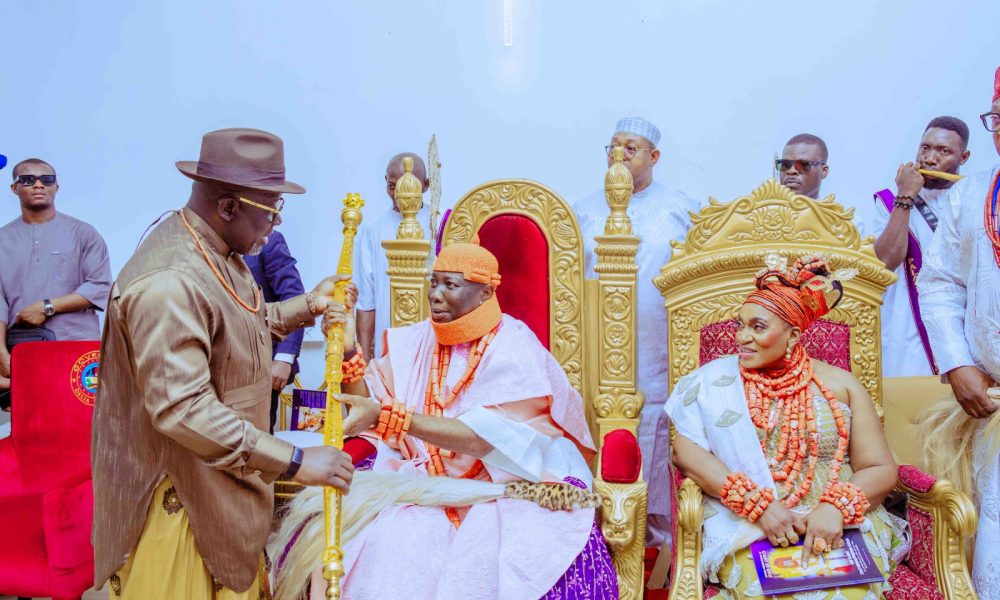

The Asagba of Asaba, His Royal Majesty Professor Epiphany Azinge, has called on President Bola Ahmed Tinubu and the Federal Government of Nigeria to issue a formal apology and offer reparations for the October 7, 1967 Asaba Massacre, during which hundreds of unarmed civilians were executed by Nigerian troops at the height of the civil war.
Speaking at the 58th anniversary memorial held at the Asaba Ogwa Ukwu Cultural Centre, the monarch described the tragic killings as one of the darkest chapters in Nigeria’s history, but noted that the people of Asaba had transformed their pain into strength, rebuilding their community into one of the fastest-growing cities in Nigeria.
“Asaba has risen from the ashes because of the blood of our sons and daughters massacred 58 years ago,” he said. “They are martyrs we proudly identify with — our closest ancestors. We invoke their spirits today as we pour libations in their honour.”
Demand for Federal Apology and Memorial
Obi Azinge lamented that, 58 years after the massacre, no formal acknowledgment or apology had been made by the Nigerian government. He urged President Tinubu to take a historic step toward reconciliation by publicly apologizing to the people of Asaba and establishing a Federal University in Asaba to immortalize the victims.
Related News
Gunmen Attack ADC Leaders in Benin as Obi, Oyegun Allege Assassination Attempt
Tension rose in Benin City after gunmen attacked the African Democratic Congress (ADC) secretariat and the residence of former Edo…

NDLEA Arrests Lekki Real Estate Executive Kolapo Oladapo Over Alleged Drug Distribution Network
The National Drug Law Enforcement Agency has arrested Lekki-based real estate executive Kolapo Oladapo following the recovery of 89.2 kilograms…

Rising Phone Thefts and Scams Spark Fear at Lagos’ Ikeja Computer Village
Nigeria’s largest technology market, Ikeja Computer Village, is facing growing concerns over rising phone theft and scam activities.
“We deserve a fitting memorial,” he declared. “We have told the President that we need both an apology and a university established in memory of our martyrs.”
The monarch also observed a minute of silence with the people of Asaba and those in the diaspora at exactly 12 noon to honour the victims, emphasizing that the massacre — though devastating — strengthened the unity and resolve of the community.
Call for Global Awareness
Supporting the royal father’s call, Chief Chuck Nduka-Eze, convener of the memorial and Isama Ajie of Asaba, announced that a documentary film on the Asaba Massacre will premiere in London on October 26, furthering efforts to educate the world on the tragedy and draw global attention to ethnic intolerance.
He also revealed that October 7 would henceforth be officially recognized in Asaba’s cultural calendar, marked by a one-minute silence and a 21-gun salute in honour of the victims.
“We will not remember with anger but with reflection,” Nduka-Eze said. “The living owe the dead this moment of remembrance.”
Legislative and Community Support
Hon. Bridget Anyafulu, representing Oshimili South in the Delta State House of Assembly, also drew attention to the massacre, calling it a “monumental historical injustice” that demands formal recognition and redress.
The event featured the reading of hundreds of names of those killed, presented by representatives of Asaba’s five traditional quarters — Ezenei, Ugbomata, Umuagu, Umuaji, and Umuonaje.
The Omu of Asaba, Dr. Amaka Boise, described the victims as “martyrs whose blood of innocence brought peace and blessings,” urging the community to transform grief into strength. The choir of Saint John Bosco Catholic Church, joined by the Asagba and his queen, rendered moving hymns in both English and Igbo to close the solemn ceremony.