Rep. Riley Moore Responds to China’s Comments on U.S. Activities in Nigeria
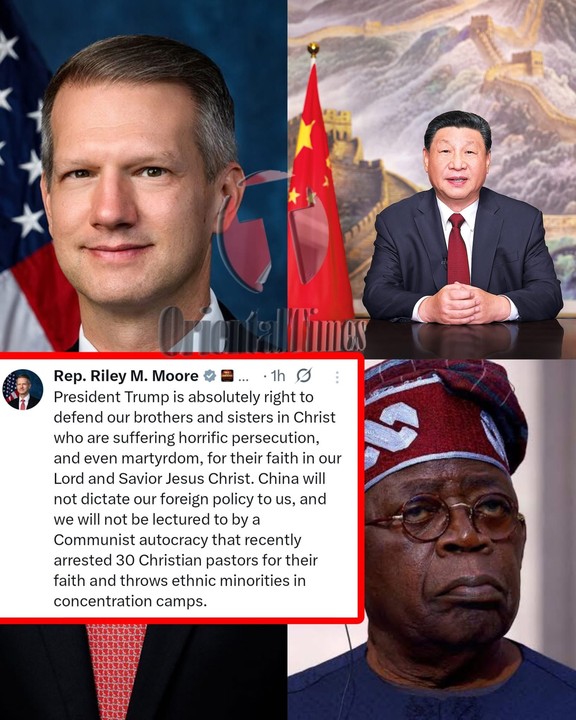

U.S. Congressman Riley Moore has reaffirmed Washington’s commitment to its foreign policy agenda in Nigeria and Africa at large, insisting that China will not influence or deter the United States from pursuing its plans in the region.
In a statement posted on X (formerly Twitter), Moore expressed strong support for former President Donald Trump’s stance on defending persecuted Christians across the world, particularly in Africa and Asia. The lawmaker emphasized that the U.S. would continue to stand by “brothers and sisters in Christ” facing violence and persecution, while condemning what he described as China’s record of religious repression.
“President Trump is absolutely right to defend our brothers and sisters in Christ who are suffering horrific persecution, and even martyrdom, for their faith in our Lord and Savior Jesus Christ,” Moore stated. “China will not dictate our foreign policy to us, and we will not be lectured to by a Communist autocracy that recently arrested 30 Christian pastors for their faith and throws ethnic minorities in concentration camps.”
Related News
Trump’s 2013 Tweet on Obama and Iran Resurfaces Amid Fresh US–Israel Strikes
A 2013 social media post by former US President Donald Trump predicting that then-President Barack Obama would attack Iran has…
Conflicting Reports Emerge Over Alleged Death of Iran’s Supreme Leader Ayatollah Ali Khamenei
Conflicting international media reports on Saturday claimed that Iran’s Supreme Leader, Ali Khamenei, may have been killed in a joint…
European Leaders Push Back Against Trump’s Tariff Threats Amid Escalating Greenland Dispute
European leaders have strongly rejected tariff threats issued by former U.S. President Donald Trump over Greenland, warning that such measures…
His comments come amid renewed diplomatic tensions between the United States and China over influence in Africa. Both countries have ramped up engagements in Nigeria in recent years — Washington through security and humanitarian cooperation, and Beijing through infrastructure and energy investments.
Moore’s statement has generated wide debate among Nigerians online, particularly following discussions linking the U.S. position to alleged plans for stronger American intervention in the fight against terrorism and religious extremism in northern Nigeria.
Some social media users welcomed Moore’s message as a show of solidarity against the persecution of Christians, praising former President Trump’s administration for its hardline approach toward terrorism in Africa. Others, however, criticized the remarks as hypocritical and interventionist, accusing the United States of using religion as a pretext for geopolitical influence.
Critics on local forums such as Nairaland described Moore’s comments as an example of “American double standards,” noting that while Washington often condemns China for its human rights record, it has also been accused of pursuing policies that serve its own strategic interests.
Supporters of Moore countered that China’s increasing presence in Africa, particularly its economic ties with Nigeria, has come at the expense of transparency and sovereignty. They argued that the U.S., despite its flaws, remains a more reliable partner in defending democratic values and religious freedoms.
The exchange reflects broader tensions in global geopolitics, where Africa’s largest economy has become a focal point of competition between the two powers. Nigeria’s government has not issued any formal response to Moore’s comments or to speculations about U.S. military activity in the country.
As both the U.S. and China seek to expand their influence in Nigeria — one emphasizing governance and security, the other infrastructure and trade — analysts say the competition is likely to intensify in the coming years. The latest exchange, they note, highlights how ideological and religious narratives are increasingly shaping foreign policy discourse between major powers in Africa.