Trump’s 2013 Tweet on Obama and Iran Resurfaces Amid Fresh US–Israel Strikes
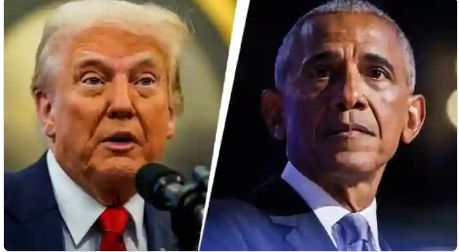

A social media post made in 2013 by former United States President Donald Trump has gone viral after fresh military strikes by the United States and Israel on Iranian targets dramatically escalated tensions in the Middle East.
In the resurfaced post, Trump wrote that then-President Barack Obama would eventually attack Iran due to what he described as poor negotiation skills. The comment, originally made during Obama’s second term, has drawn renewed scrutiny as military operations attributed to US–Israel coordination reportedly targeted key Iranian government and military facilities.
The latest escalation reportedly involved missile and air strikes on strategic sites in Tehran and other locations. While officials described the operation as targeting security threats, the developments have significantly heightened fears of a broader regional conflict.
The resurfacing of Trump’s 2013 post has triggered widespread debate online. Supporters argue that it highlights the cyclical nature of US–Iran tensions, while critics view it as an example of how political rhetoric evolves once leaders assume or leave office.
During Obama’s presidency, relations between Washington and Tehran underwent a significant shift. Diplomatic efforts intensified after the election of Iranian President Hassan Rouhani in 2013, leading to negotiations between Iran and the P5+1 group—comprising the United States, United Kingdom, France, Germany, Russia, and China. Those talks culminated in the 2015 Joint Comprehensive Plan of Action (JCPOA), commonly known as the Iran nuclear deal.
Related News
Henry Seriake Dickson Defects from PDP to Newly Formed Nigeria Democratic Congress
Senator Henry Seriake Dickson has formally defected from the Peoples Democratic Party (PDP) to the newly registered Nigeria Democratic Congress…

Hon. Sarah Ivie Adidi Receives “Her Excellence Award” During International Women’s Day Event in Abuja
Reps aspirant Sarah Ivie Adidi has been honoured with the 2026 “Her Excellence Award” during an event marking International Women’s…
Governor Peter Mbah Urges Ndigbo to Return to Strategic Politics
Peter Mbah, Governor of Enugu State, has urged the Igbo political class to return to what he described as “strategic…
The JCPOA sought to limit Iran’s nuclear program in exchange for sanctions relief. The agreement was widely regarded as a landmark diplomatic achievement at the time, though it faced strong opposition from critics in both the United States and Israel.
In 2018, during his first term, Trump withdrew the United States from the nuclear agreement, describing it as flawed and insufficient to curb Iran’s regional influence and long-term nuclear ambitions. The withdrawal marked a major shift in US policy and led to the reimposition of sanctions on Iran.
The recent strikes have unfolded against a backdrop of renewed diplomatic efforts and persistent disagreements over Iran’s nuclear activities and regional role. US officials have stated that their objective is to prevent Iran from obtaining a nuclear weapon and to address what they describe as imminent threats. Iranian authorities, in turn, have consistently denied seeking nuclear weapons and have accused Washington and its allies of aggression.
Reports indicate that Iran launched retaliatory missile strikes following the attacks, targeting military installations associated with US and allied forces in the Gulf region. Explosions were reported near certain facilities, though the full extent of damage and casualties remains unclear.
The rapid spread of online commentary has also revived older political statements and debates, including Trump’s 2013 remarks about Obama. Analysts note that political rhetoric often reflects the context of its time, and policy decisions may evolve due to changing intelligence assessments, regional developments, and strategic calculations.
As tensions remain high, international observers have called for restraint and renewed diplomatic engagement to prevent further escalation. Global markets and governments are closely monitoring developments, given the potential economic and security implications of a prolonged confrontation.
The resurfacing of Trump’s decade-old comment underscores how past political statements can gain new relevance during moments of crisis. It also reflects the enduring complexity of US–Iran relations, which have oscillated between diplomacy and confrontation for decades.
With military activity intensifying and diplomatic channels under strain, the coming days may prove critical in determining whether the region moves toward de-escalation or deeper conflict.