China Reaffirms Support for Nigeria’s Sovereignty, Condemns Foreign Interference Amid U.S. Tensions
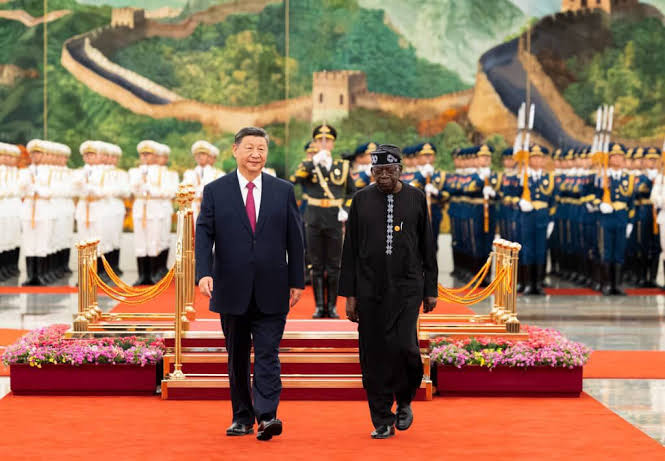

China has reaffirmed its commitment to Nigeria’s sovereignty and internal stability, emphasizing a growing partnership grounded in mutual respect, non-interference, and shared development goals.
This reassurance came after a meeting between the Chinese Ambassador to Nigeria, Yu Dunhai, and Nigeria’s National Security Adviser, Mallam Nuhu Ribadu, in Abuja. During the diplomatic engagement, both officials discussed expanding security collaboration, economic cooperation, and joint efforts to promote stability across West Africa.
Ambassador Dunhai, in a post on X (formerly Twitter), underscored that relations between China and Nigeria have deepened significantly since President Bola Tinubu’s state visit to China and participation in the 2024 Beijing Summit of the Forum on China-Africa Cooperation (FOCAC). He noted that practical partnerships between the two nations have already produced “fruitful outcomes,” citing ongoing infrastructure, energy, and agricultural projects that continue to strengthen Nigeria’s socioeconomic development and improve citizens’ livelihoods.
“The Chinese government firmly supports the Nigerian government in leading its people on a development path that fits Nigeria’s national realities,” Dunhai said. “China stands against any country interfering in the internal affairs of others under the pretext of religion and human rights.”
Related News

Trump’s 2013 Tweet on Obama and Iran Resurfaces Amid Fresh US–Israel Strikes
A 2013 social media post by former US President Donald Trump predicting that then-President Barack Obama would attack Iran has…
Conflicting Reports Emerge Over Alleged Death of Iran’s Supreme Leader Ayatollah Ali Khamenei
Conflicting international media reports on Saturday claimed that Iran’s Supreme Leader, Ali Khamenei, may have been killed in a joint…

European Leaders Push Back Against Trump’s Tariff Threats Amid Escalating Greenland Dispute
European leaders have strongly rejected tariff threats issued by former U.S. President Donald Trump over Greenland, warning that such measures…
The envoy’s remarks come amid heightened diplomatic tension following U.S. President Donald Trump’s recent designation of Nigeria as a “Country of Particular Concern,” citing alleged religious persecution and threats of sanctions. The Trump administration also hinted at a possible U.S. military intervention in response to what it described as “a growing Christian genocide” in the country — a claim strongly denied by Nigerian authorities.
In response, Ambassador Dunhai criticized what he called the “wanton threat of sanction and use of force,” describing such actions as destabilizing and contrary to the principles of international diplomacy. He reaffirmed China’s willingness to support Nigeria’s counterterrorism efforts and maintain domestic security through technical assistance and intelligence sharing.
Observers note that Beijing’s statement reflects China’s long-standing foreign policy doctrine of non-interference — a sharp contrast to the United States’ interventionist stance in global affairs. Analysts also view China’s support as a strategic move to consolidate its influence in Africa, especially as Western powers reassess their engagement with the continent.
China has been one of Nigeria’s largest bilateral partners, investing billions of dollars in railway, power, and telecommunication projects. Through the Belt and Road Initiative (BRI), Nigeria has received Chinese-backed loans and technical expertise for infrastructure modernization. However, critics argue that China’s economic presence in Africa often comes with risks of debt dependency and limited local empowerment.
Domestically, reactions to China’s position have been mixed. While some Nigerians appreciate Beijing’s diplomatic backing, others remain skeptical of China’s motives, accusing it of exploiting Nigeria’s natural resources and ignoring human rights issues within its own borders.
Nonetheless, both countries appear committed to deepening bilateral ties. The Nigerian government has welcomed China’s support as a gesture of respect for its sovereignty and a reaffirmation of mutual cooperation in the face of international pressure.
Ambassador Dunhai concluded his remarks by emphasizing that China “will continue to stand with Nigeria in safeguarding national security and promoting shared prosperity.”
As geopolitical rivalries intensify between Beijing and Washington, Nigeria’s position as Africa’s largest economy and a regional power makes it a critical player in the evolving balance of global influence. For now, the Tinubu administration appears intent on maintaining diplomatic equilibrium — leveraging both partnerships while asserting Nigeria’s independence on the world stage.