Peter Obi to Soludo: “We’re Not in the Same League, I Left Division 1 Thirteen Years Ago”
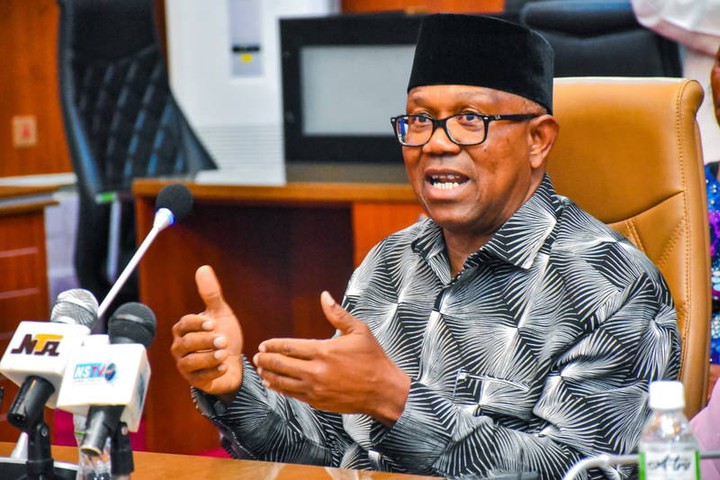

Peter Obi, former Governor of Anambra State and Labour Party presidential candidate in the 2023 general elections, has reignited political rivalry with the current governor, Professor Charles Chukwuma Soludo. During a recent media appearance, Obi made a sharp statement directed at Soludo, saying, “We’re not in the same league; I left Division 1 thirteen years ago.” The comment immediately drew widespread attention, reigniting debates about influence, legacy, and political relevance in Anambra’s complex political landscape.
The remark, widely circulated across social platforms and YouTube, appeared to be a subtle yet pointed response to Soludo’s previous criticisms of Obi’s political approach and economic claims. Soludo, a former Governor of the Central Bank of Nigeria (CBN) and current Anambra State leader under the All Progressives Grand Alliance (APGA), has often positioned himself as a technocrat focused on governance, contrasting himself with what he has described as Obi’s populist rhetoric.
Related News

Henry Seriake Dickson Defects from PDP to Newly Formed Nigeria Democratic Congress
Senator Henry Seriake Dickson has formally defected from the Peoples Democratic Party (PDP) to the newly registered Nigeria Democratic Congress…

Hon. Sarah Ivie Adidi Receives “Her Excellence Award” During International Women’s Day Event in Abuja
Reps aspirant Sarah Ivie Adidi has been honoured with the 2026 “Her Excellence Award” during an event marking International Women’s…

Governor Peter Mbah Urges Ndigbo to Return to Strategic Politics
Peter Mbah, Governor of Enugu State, has urged the Igbo political class to return to what he described as “strategic…
Public reactions to Obi’s latest statement have been swift and deeply polarized. On the popular Nigerian forum Nairaland, users were quick to weigh in. Some argued that Soludo remains the more accomplished figure, citing his academic credentials and tenure as CBN governor. “Soludo is smarter, more intelligent, and more courageous than Obi,” one user wrote, adding that the current governor’s reforms and published works demonstrate superior governance capacity.
Others defended Obi, emphasizing his political achievements and ability to influence electoral victories within Anambra’s APGA structure before transitioning to the Labour Party. “Without Obi’s victory in APGA, how would Obiano and Soludo have become governors?” a user countered. Another supporter described Obi as playing in the “Champions League,” implying his experience and national recognition place him above local political squabbles.
Some commentators dismissed the entire exchange as unnecessary political grandstanding. One observer quipped, “You can be in a higher division and still be in a poor team,” suggesting that both men should focus on governance rather than rivalry. Others criticized Soludo’s communication style, accusing him of undermining his reputation as a professor with politically charged remarks.
Beyond the banter, analysts note that the renewed Obi-Soludo tension underscores the growing ideological divide within southeastern politics. While Obi’s brand thrives on grassroots mobilization and moral persuasion, Soludo represents an intellectual, policy-driven leadership model. Both, however, continue to compete for moral and political dominance in Anambra’s political scene.
As reactions continue to pour in, the “Division 1” remark may have done more than spark laughter—it has exposed the deep undercurrents of ego, rivalry, and regional leadership struggle defining the next phase of southeastern politics.