Kenyan Athlete’s Journey to Russia Ends in Forced Conscription and Capture in Ukraine
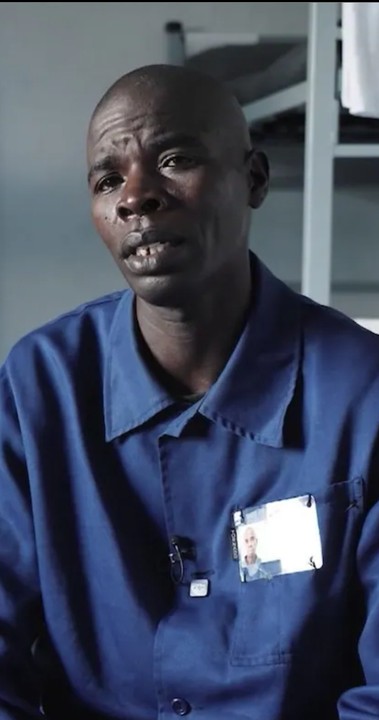

Kenyan athlete Evans Kibet, once hopeful that a trip to Russia would revive his athletic career, now spends his days behind barbed wire as a prisoner of war in Ukraine. His experience, recently made public through Ukrainian military channels, reflects a growing pattern of African citizens allegedly deceived into joining the Russian military amid Moscow’s urgent need for manpower.
Kibet, 36, had spent years trying to establish himself as a long-distance runner but struggled to break into the professional circuit. According to his account, he was approached earlier this year by an agent in Kenya who promised that a visit to St Petersburg would give him the opportunity to train, network, and participate in an exhibition race. Believing the offer could open long-overdue doors, he told his family he would be gone for only two weeks.
Upon arriving in Russia, the situation changed abruptly. Kibet says he and three other athletes were presented with documents they were told were part of a work permit process. After signing, their passports were reportedly seized, and they were taken to a military training camp. Kibet claims the contract he signed without reading was, in reality, a military enlistment agreement. “We signed this contract without reading it, without knowing what it was,” he told German broadcaster Deutsche Welle. “Either you go to fight or we’ll kill you,” he recalls being told.
Related News

UK Prime Minister Keir Starmer Defends Decision Not to Join US-Israel Strikes on Iran
UK Prime Minister Keir Starmer has defended his government’s decision not to participate in initial US-Israel strikes on Iran, insisting…

FIFA and UEFA Presidents Named in ICC Complaint Alleging Complicity in Settlement Activities
Presidents Gianni Infantino and Aleksander Ceferin have been accused of aiding war crimes in a complaint submitted to the International…

Trump Accuses South Africa of Human Rights Abuses and Announces Exclusion from 2026 G20 Summit
U.S. President Donald Trump has accused South Africa of committing severe human rights abuses against white citizens, announcing that the…
Following a week of training, Kibet was deployed to Ukraine. He did not make it to his first offensive. Instead, he fled his unit and wandered through no man’s land near Kharkiv, where he was detained by Ukrainian forces. His story emerged after Ukraine’s 57th Separate Motorized Infantry Brigade released a video in which he tearfully recounted his experience. The unit noted that he had fought for the opposing side, leaving it to viewers to decide how much weight to give his testimony.
Kenya’s Ministry of Foreign Affairs stated this week that more than 200 Kenyans are believed to be fighting for Russia, adding that recruitment networks continue to lure citizens with misleading promises. According to Andrii Sybiha, Ukraine’s foreign minister, Africans are being pushed into signing contracts that are “equivalent to a death sentence.”
Ukrainian officials estimate that more than 1,400 African nationals are currently fighting alongside Russian forces. While some knowingly enlisted, others were reportedly misled with promises of lucrative employment, academic placements, or fast-track citizenship. The high casualty rates among Russian troops have forced recruiters to look beyond domestic populations to meet battlefield demands.
Reports of similar cases have surfaced across Africa. Earlier in the year, investigations revealed that men in Cameroon were enticed to Russia with offers of factory jobs, only to be forced into combat. Social media obituaries in the country indicate dozens may have already died on the front lines. In South Africa, authorities recently confirmed that at least 17 nationals had issued distress calls after being taken to Ukraine. They had believed they were traveling for bodyguard training but ended up in military camps, their passports confiscated.
These cases have sparked concern among African governments, many of which warn citizens to avoid offers that seem unusually attractive or vague. For families of those already trapped in the conflict, uncertainty remains high, and efforts to secure safe passage are ongoing.
Kibet, a father to a 16-year-old daughter, says he regrets the decision that led him from an athletic dream to a battlefield. His story now stands as one of many cautionary accounts of how economic hardship, deceptive recruitment, and escalating military needs intersect in wartime Europe.