South East Leaders Split Over Federal Government’s Bid to Transfer Ekweremadu to Nigeria
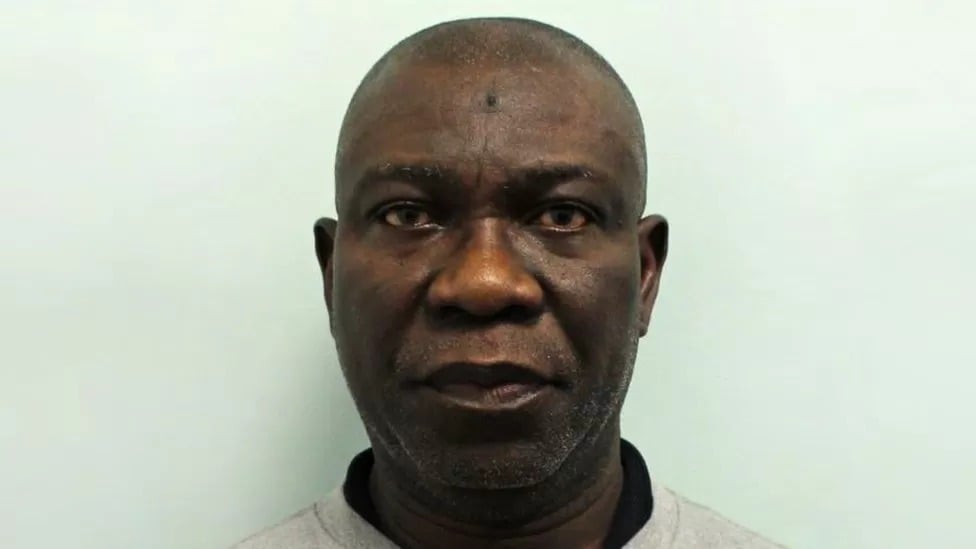

Political and socio-cultural leaders in the South East are expressing contrasting views following the Federal Government’s renewed efforts to transfer former Deputy Senate President, Senator Ike Ekweremadu, from a United Kingdom correctional facility to a Nigerian prison. The development comes more than two years after Ekweremadu and his wife, Beatrice, were arrested in London and later convicted for organ trafficking under the UK’s Modern Slavery Act.
Ekweremadu was sentenced in 2023 to nine years and eight months, while his wife received four years and six months. Beatrice has since regained freedom and returned to Nigeria earlier in the year. Their conviction stemmed from the presentation of a young man to UK doctors as a relative of their daughter, Sonia, in an attempt to facilitate a kidney transplant.
Recent diplomatic moves by President Bola Tinubu’s administration have revived public discussion around the case. A high-level government delegation led by the Minister of Foreign Affairs, Yusuf Tuggar, and the Attorney General of the Federation, Lateef Fagbemi, met UK Ministry of Justice officials to explore the possibility of allowing Ekweremadu to complete his sentence in Nigeria. Afterwards, the delegation visited the Nigerian High Commission in London for further briefing.
Related News
Henry Seriake Dickson Defects from PDP to Newly Formed Nigeria Democratic Congress
Senator Henry Seriake Dickson has formally defected from the Peoples Democratic Party (PDP) to the newly registered Nigeria Democratic Congress…

Hon. Sarah Ivie Adidi Receives “Her Excellence Award” During International Women’s Day Event in Abuja
Reps aspirant Sarah Ivie Adidi has been honoured with the 2026 “Her Excellence Award” during an event marking International Women’s…
Governor Peter Mbah Urges Ndigbo to Return to Strategic Politics
Peter Mbah, Governor of Enugu State, has urged the Igbo political class to return to what he described as “strategic…
The initiative has triggered varied reactions across key South East organisations. President of the Igbo National Council, Chilos Godsent, questioned both the timing and motive behind the Federal Government’s request. He warned against what he described as political manipulation ahead of the 2027 general elections. Godsent argued that the government’s sudden interest contrasted sharply with what he termed the Buhari administration’s failure to protect Ekweremadu during the trial, a situation he said allowed a “sitting senator” to be tried abroad. He also raised concerns about potential retrial or political retribution should the senator return.
In a similar tone, President of the Ala-Igbo Development Foundation, Prof. Awuzie Unachukwu, queried why the same administration advocating Ekweremadu’s repatriation had not taken similar steps to secure the release of detained IPOB leader, Mazi Nnamdi Kanu. He insisted that any move to return Ekweremadu should not lead to further incarceration in what he described as Nigeria’s “dungeon-like” prisons.
Contrastingly, the Deputy President General of Ohanaeze Ndigbo, Okechukwu Isiguzoro, dismissed claims of political motives. He said the organisation fully supported the President, adding that Ekweremadu had made significant contributions to the region, including his role in the 2017 release of Kanu. According to him, the South East would back any effort that reintegrates the senator, even if it indirectly benefits the President politically.
The Abia State PDP Chairman, Abraham Amah, also supported the effort, stating that governance is a continuum and that administrations make decisions based on present realities. He argued that political interpretations would always arise but should not overshadow humanitarian and national considerations.
Youth groups have also weighed in. The Coalition of South East Youth Leaders, led by Goodluck Ibem, described the move as an opportunity to reinforce justice and strengthen public confidence in government institutions. He urged citizens to focus on the broader implications of the potential transfer.
These discussions coincide with the Federal Government’s renewed attempt to revive the 2014 Nigeria–UK prisoner transfer agreement. Despite the UK funding a UN-standard prison wing in Lagos to support the arrangement, no transfer has occurred since its signing. Nigerian authorities say consultations are ongoing, with a formal request reportedly submitted to UK officials.
The debate continues as both countries explore updates to the agreement, including alignment with the Nigerian Correctional Service Act of 2019. Meanwhile, Nigeria’s overcrowded correctional facilities and continuing security challenges remain key considerations in the ongoing diplomatic discussions.