Lieutenant Yerima Allegedly Escapes Assassination Attempt in Abuja
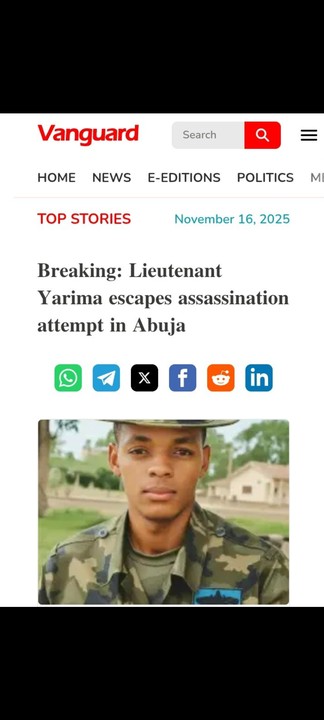

A Nigerian Army officer, Lieutenant Yerima, has reportedly escaped an assassination attempt in Abuja, according to emerging reports and viral discussions across social platforms on November 16, 2025. The incident has intensified ongoing debates surrounding the recent confrontation between the officer and the Minister of the Federal Capital Territory (FCT), Nyesom Wike, after Yerima intervened to stop the demolition of a military property. Though official details from security authorities remain limited at this time, the alleged attack has triggered significant public reaction and raised fresh questions about political tensions in the capital.
Lieutenant Yerima became a national figure earlier this month when a viral video showed him standing his ground against the FCT administration’s demolition team. Yerima insisted that the property in question fell under military jurisdiction and could not be demolished without due process―a position that reportedly infuriated top political actors. Supporters praised his boldness, while critics argued that his actions amounted to insubordination. Regardless, the confrontation cemented his visibility in national discourse.
Related News

Gunmen Attack ADC Leaders in Benin as Obi, Oyegun Allege Assassination Attempt
Tension rose in Benin City after gunmen attacked the African Democratic Congress (ADC) secretariat and the residence of former Edo…

NDLEA Arrests Lekki Real Estate Executive Kolapo Oladapo Over Alleged Drug Distribution Network
The National Drug Law Enforcement Agency has arrested Lekki-based real estate executive Kolapo Oladapo following the recovery of 89.2 kilograms…

Rising Phone Thefts and Scams Spark Fear at Lagos’ Ikeja Computer Village
Nigeria’s largest technology market, Ikeja Computer Village, is facing growing concerns over rising phone theft and scam activities.
According to a report attributed to Vanguard, Yerima was targeted by unknown assailants in Abuja, but he allegedly managed to escape unharmed. The circumstances surrounding the attack have not yet been fully clarified, and neither the Nigerian Army nor the FCT administration has issued a formal statement as of the time the report surfaced. However, the timing of the incident has fueled widespread speculation among Nigerians, many of whom believe the attack may be linked to the earlier demolition standoff.
Public reactions online reflect a mixture of outrage, suspicion, political interpretation, and concern for the young officer’s safety. Some commenters suggested that the attempt on his life could be the result of powerful interests feeling threatened by the embarrassment caused during the demolition saga. Others cautioned against drawing premature conclusions without verified information, pointing out that political rivalry in Nigeria often leads to misleading narratives being circulated for strategic gain.
Critics of the government argued that the incident, if confirmed, represents a dangerous escalation and a troubling sign of intolerance toward dissent within public institutions. They questioned why an officer performing his duties according to military regulations would become a target. Several voices called for thorough investigations and urged the military hierarchy to protect personnel who uphold established procedures, especially in situations involving high-profile political figures.
On the other hand, some respondents maintained that Lieutenant Yerima acted beyond his authority during the confrontation with the FCT demolition team, claiming that his behavior amounted to disrespect toward constituted civilian leadership. These critics questioned whether the narrative of an assassination attempt might be exaggerated or manipulated for political advantage.
Despite the divided views, a common theme across reactions is concern about the broader implications for security and governance. The idea that a military officer could be targeted following a high-profile administrative confrontation has raised worries about deepening political friction in Abuja. The incident has also reignited debates about the boundaries of military involvement in civil matters, the legal status of military properties in the FCT, and the growing fears around the use of violence as a political tool.
As Nigerians await an official statement from relevant authorities, the reported attempt on Yerima’s life remains a developing story. Analysts warn that if confirmed, the incident could have far-reaching consequences for civil-military relations, the credibility of political leadership, and public confidence in national security structures. For now, the alleged attack stands as yet another flashpoint in a year marked by increasing scrutiny of power dynamics within the Federal Capital Territory.