Nigeria Criticises U.S. Decision to Exclude It From Nicki Minaj’s UN Event
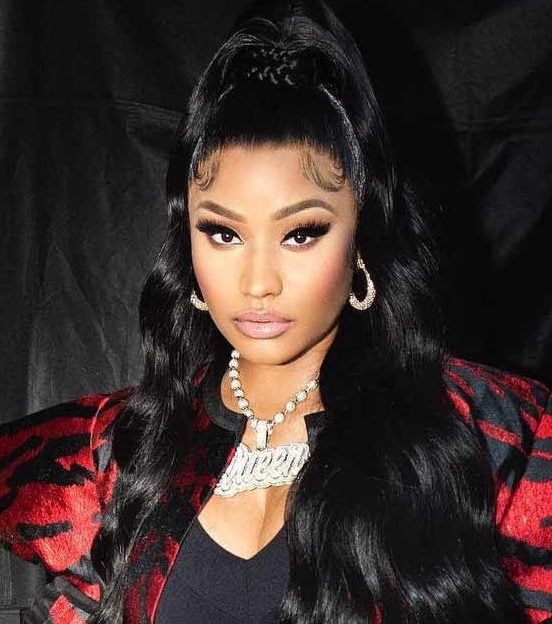

Nigeria has formally registered its displeasure with the United States following its exclusion from a United Nations event hosted in collaboration with American rapper Nicki Minaj. The programme, held at the UN headquarters in New York, centred on allegations of targeted killings of Nigerians of a specific faith group—a sensitive and longstanding point of contention between Abuja and Washington.
Speaking on Tuesday, Mr. Syndoph Endoni, Chargé d’Affaires at Nigeria’s Permanent Mission to the United Nations, described the decision as deeply troubling. He argued that the U.S. effectively sidelined Nigeria in discussions directly concerning its internal affairs, a move he characterised as “shaving our head in our absence.”
The event was organised against the backdrop of the United States’ renewed claims of Christian persecution in Nigeria. Earlier, U.S. President Donald Trump had redesignated Nigeria as a “Country of Particular Concern,” citing alleged religious genocide. This classification remains a major diplomatic pressure point between the two countries.
Endoni rejected those allegations, insisting that the Nigerian government has repeatedly debunked claims of systematic religious genocide. He stressed that Nigeria’s absence at the event denied it the opportunity to present factual context, provide clarifications and counter what it considers to be mischaracterisations of its security challenges.
Related News
Nigeria, Germany Move to Deepen Cooperation on Security, Power and Infrastructure
Nigeria and Germany have reaffirmed plans to strengthen bilateral relations following a high-level telephone conversation between President Bola Tinubu and…
King Charles III to Host Nigerian President Tinubu in First UK State Visit in 37 Years
Buckingham Palace has confirmed that King Charles III will host Nigerian President Bola Ahmed Tinubu and First Lady Oluremi Tinubu…
Macron Says “China Is Welcome” in Europe as Trade Tensions With U.S. Reshape Global Alliances
French President Emmanuel Macron has declared that “China is welcome” in Europe, a statement that has intensified debate about Europe’s…
“It is important to ensure that any country accused of atrocities is present and able to speak for itself,” he said. “You do not make major decisions about a sovereign state without its knowledge or participation.”
According to Endoni, only a few UN member countries were invited to the programme, along with a Nigerian pastor and other individuals. However, no representative of the Nigerian government—including those at its UN mission—received an invitation. The U.S. delegation reportedly informed him that the session was a private event, a justification Nigeria found insufficient given the gravity of the allegations discussed.
The envoy also highlighted concerns about the potential consequences of what he termed “naming and shaming,” warning that such actions could deepen public fear and inflame tensions within Nigeria. He called for more inclusive engagement between both nations, especially at a time when extremist attacks remain a major national security challenge.
Nigeria, he said, is not ignoring the violence that has affected various communities. Instead, he maintained that the government is actively responding and remains open to collaboration with international partners—but only through fair and transparent processes.
The News Agency of Nigeria (NAN) later reported that Ambassador Patricia Mahoney, U.S. Senior Adviser for African Affairs, had visited Nigeria’s mission in New York to notify Endoni of the event. She disclosed that the organisers acted on the participants’ specific request to exclude Nigerian officials due to fears of retaliation against them or their families back home. This explanation did little to ease Abuja’s concerns.
Despite the diplomatic tension, the Nigerian envoy emphasised that Nigeria will continue to engage the United States on security issues, particularly regarding extremist violence and the protection of vulnerable communities.
The incident has also attracted wide public reaction, with many Nigerians expressing frustration, criticism and, in some cases, support for the U.S. decision. The controversy highlights the growing strain in U.S.–Nigeria relations, especially on matters involving human rights, religious freedom and the handling of internal security.
As discussions continue, the Nigerian government maintains that it will defend its sovereignty, challenge unverified claims and seek constructive dialogue rather than unilateral narratives that exclude its voice.