Former Benue Governor’s Aide Sparks Outrage With Claims of Soldier Among Fulani Militants in Yelwata Massacre
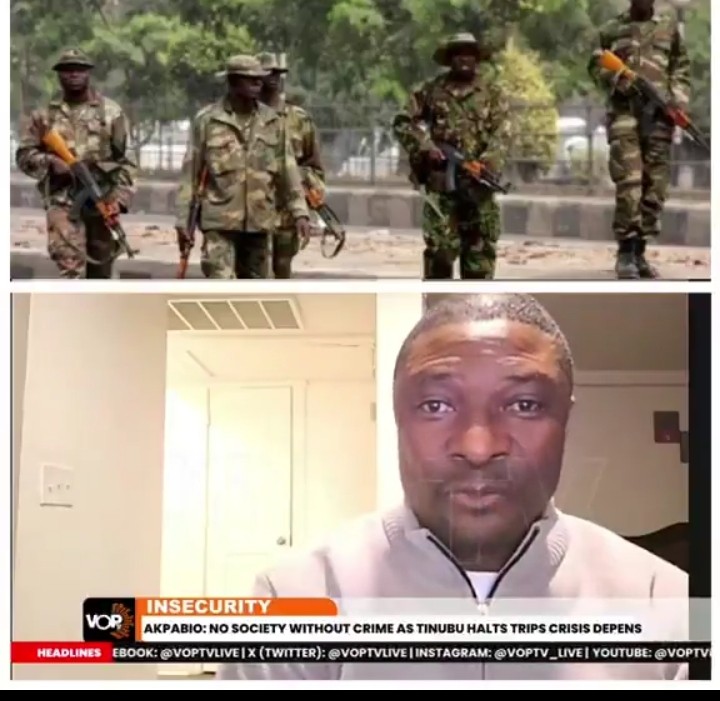

A former Special Assistant to a past governor of Benue State, Franc Utoo, has made a grave and unsettling allegation that has reignited national debate about insecurity, state complicity, and the rising violence in Nigeria’s Middle Belt. In a recent interview, Utoo claimed that during the aftermath of the June 2025 massacre in Yelwata — one of the deadliest attacks in Benue’s recent history — security personnel recovered the body of an active-duty Nigerian Army officer among the retreating Fulani militants.
The attack on Yelwata was brutal and devastating, leaving more than 200 residents dead and displacing scores of families. According to Utoo, as some of the attackers were neutralized while fleeing, one of the bodies recovered carried a valid Nigerian military identification card. He described this discovery as “clear evidence of state collusion” and insisted that the infiltration of the security forces pointed to a coordinated agenda targeted at the people of Benue.
This claim carries heavy political implications. Utoo served under former Governor Samuel Ortom, who for years accused Fulani militias of working in collaboration with extremist elements to terrorize farming communities. Ortom repeatedly warned that the violence was not random but organized and ideological. Meanwhile, current Governor Hyacinth Alia has maintained that many attackers are foreign fighters from outside Nigeria’s borders — possibly from Mali — rather than local Fulani or elements within Nigeria’s armed forces. Utoo’s revelation directly challenges that narrative.
Related News

Edo State Raises Alarm Over Growing Number of Widows and Orphans Linked to Cult Violence
The Edo State Government has expressed concern over the rising number of widows and fatherless children resulting from cult-related killings…
ADC Blames Tinubu Over Kwara Killings as Political Tensions Rise Nationwide
The African Democratic Congress (ADC) has blamed President Bola Tinubu’s administration for the recent mass killings in Kwara State, describing…

Tinubu Meets Kwara Governor AbdulRazaq Over Deadly Terrorist Attack in Kaiama Communities
President Bola Tinubu held an emergency meeting with Kwara State Governor AbdulRahman AbdulRazaq following a deadly terrorist attack that reportedly…
The allegation quickly went viral on Instagram, Facebook, and various online forums, triggering reactions across Nigeria. The comments ranged from support to skepticism, anger to resignation, with many Nigerians expressing deep frustration about a security crisis that has persisted for years.
Some users insisted that the possibility of military infiltration is not surprising, pointing to earlier reports of collusion, training, or supply leaks. Others referenced past statements from the late General Sani Abacha, who famously said that any insurgency lasting more than 24 hours had the backing of someone in power. This sentiment was repeated across multiple threads, with many arguing that bandits and militias could not operate at such scale without insider support.
Others questioned the evidence, asking why the identity of the alleged soldier had not been publicly released. They argued that unverifiable claims contribute to confusion and political manipulation, especially in a state already overwhelmed by grief and mistrust.
Still, the online debate grew increasingly heated. Some users accused the political class of allowing terrorists to infiltrate the military through failed deradicalization programs. Others lamented the federal government’s inability — or unwillingness — to confront the full extent of the insecurity. A few pointed to the need for state policing, arguing that regions such as Benue, the Southeast, and the Southwest must be allowed to secure themselves through localized forces.
Supporters of Utoo say his revelation merely confirms what rural communities have suspected for years: that the chain of violence is too coordinated, too well-armed, and too persistent to be the work of isolated criminal groups. Critics, however, dismissed him as seeking relevance or amplifying unverified claims without substantial proof.
What cannot be denied is the emotional impact. For residents of Benue — especially those living in heavily impacted areas like Zaki Biam, Katsina-Ala, Kyado, and Wukari — the allegations cut deeply. Many say the violence has reached unbearable levels, and that the politics surrounding the crisis have made recovery even harder.
As the debate intensifies, one fact remains clear: unless the Nigerian government takes transparent, decisive action, allegations of collusion, infiltration, and complicity will continue to flourish — and so will the violence.