Oshiomhole Dismisses Amaechi’s 2027 Prospects as Nigerians React With Sharp Criticism
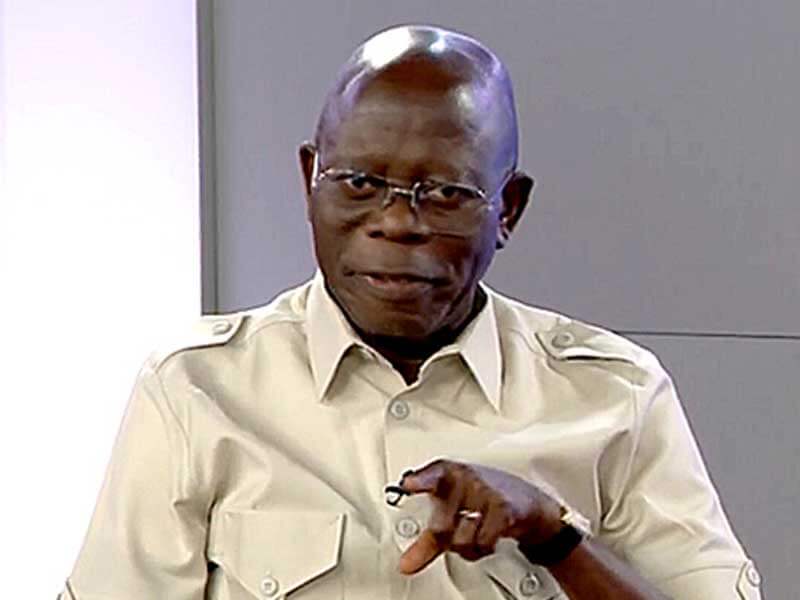

In a recent public commentary, Senator Adams Oshiomhole ignited a heated national conversation after stating that he does not believe any Nigerian would vote for former Rivers State Governor Rotimi Amaechi in the 2027 elections. Oshiomhole, a former national chairman of the All Progressives Congress (APC), dismissed Amaechi’s political relevance and extended his criticism to former Vice President Atiku Abubakar, questioning the credibility of the emerging movement around the African Democratic Congress (ADC), which Atiku is rumored to be strengthening.
Oshiomhole’s remarks quickly circulated across social platforms, drawing a flood of reactions that revealed deeper frustrations about the state of Nigerian politics. Many users interpreted his statement as typical intra-elite rivalry—politicians attacking one another while ignoring urgent national crises, especially insecurity and economic hardship. Others viewed his comments as reflective of long-standing political hypocrisy, where admiration or condemnation shifts based on alliances rather than principle.
Several respondents argued that Amaechi’s influence has drastically declined since leaving the PDP and joining the APC, noting that he became more politically combative than development-focused. Some referenced past controversies, including his confrontation with the Goodluck Jonathan administration, to illustrate what they believe contributed to his dwindling relevance.
Related News

Henry Seriake Dickson Defects from PDP to Newly Formed Nigeria Democratic Congress
Senator Henry Seriake Dickson has formally defected from the Peoples Democratic Party (PDP) to the newly registered Nigeria Democratic Congress…

Hon. Sarah Ivie Adidi Receives “Her Excellence Award” During International Women’s Day Event in Abuja
Reps aspirant Sarah Ivie Adidi has been honoured with the 2026 “Her Excellence Award” during an event marking International Women’s…
Governor Peter Mbah Urges Ndigbo to Return to Strategic Politics
Peter Mbah, Governor of Enugu State, has urged the Igbo political class to return to what he described as “strategic…
Conversely, many reactions turned their focus back on Oshiomhole himself. Critics accused him of selective morality, pointing out that he celebrated Amaechi while both men were in the same political camp. They argued that his sudden dismissal of Amaechi’s political value stemmed not from patriotic concern but from shifting alliances within the ruling class.
A recurring sentiment among commenters was a broader disillusionment with Nigeria’s political establishment. Many argued that figures like Amaechi, Atiku, and Oshiomhole are part of the same old network that has rotated power among itself for decades. Users emphasized that the country’s real challenge is not who can win elections but the entrenched system that keeps the same political actors in circulation, often at the expense of national progress.
Some commenters compared Oshiomhole’s remarks to similar predictions made about Peter Obi before the 2023 election, noting that Nigerian voters have occasionally defied expectations. Others insisted that electoral outcomes in Nigeria are less about popularity and more about political machinery, godfather networks, and access to resources.
A number of responses pointed to Nigeria’s worsening poverty rates, insecurity, and economic strain as more pressing matters than political bickering. Some argued that while politicians trade insults, citizens continue to suffer under policies and decisions made by these same individuals.
The conversation also highlighted frustration with the cycles of political betrayal, reconciliation, and rebranding among Nigeria’s elite. One commenter framed it as an endless Nollywood sequel—predictable, repetitive, and dominated by the same cast of characters regardless of public disapproval.
Ultimately, Oshiomhole’s statement served less as a political prediction and more as a spark that reopened long-standing grievances about governance, corruption, poverty, and the credibility of Nigeria’s political class. For many Nigerians, the debate was never truly about Amaechi—it was about a political system that continues to function without delivering the results citizens desperately need.