Hakeem Baba-Ahmed Says President Tinubu Should Not Seek Re-Election in 2027
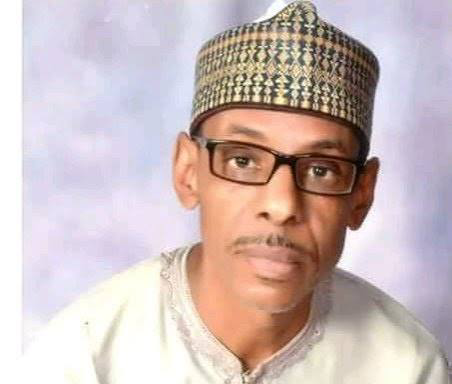

A former political adviser to Vice President Kashim Shettima, Dr. Hakeem Baba-Ahmed, has stirred widespread national debate after stating that President Bola Ahmed Tinubu should not run for a second term in 2027. Speaking on Politics Today with Seun Okinbaloye, Baba-Ahmed argued that the President has not managed the country well enough to justify seeking another four years in office.
When asked directly why he believes President Tinubu should withdraw from the 2027 race, Baba-Ahmed explained that the President had already fulfilled his long-held ambition of attaining the presidency. He referenced Tinubu’s famous “emi lokan” declaration, noting that his stated desire was to become President — a goal he achieved in 2023. According to Baba-Ahmed, the Tinubu administration has not demonstrated the urgency, creativity, or problem-solving drive many expected.
He argued that the President appears to be “running an economy, not a country,” emphasizing that the administration often highlights monetary savings and fiscal adjustments rather than presenting tangible evidence of improved national wellbeing. Baba-Ahmed expressed disappointment, saying he had anticipated a more energetic and innovative style from President Tinubu based on his reputation as a strategist and reform-minded political figure in earlier years.
Pressed on who should replace Tinubu if he steps aside, Baba-Ahmed suggested that the All Progressives Congress (APC) should consider a younger, healthier candidate capable of steering Nigeria with fresh ideas and renewed vigor. He did not endorse any specific individual but maintained that the ruling party must look inward for better leadership options.
Related News
Henry Seriake Dickson Defects from PDP to Newly Formed Nigeria Democratic Congress
Senator Henry Seriake Dickson has formally defected from the Peoples Democratic Party (PDP) to the newly registered Nigeria Democratic Congress…

Hon. Sarah Ivie Adidi Receives “Her Excellence Award” During International Women’s Day Event in Abuja
Reps aspirant Sarah Ivie Adidi has been honoured with the 2026 “Her Excellence Award” during an event marking International Women’s…
Governor Peter Mbah Urges Ndigbo to Return to Strategic Politics
Peter Mbah, Governor of Enugu State, has urged the Igbo political class to return to what he described as “strategic…
His remarks quickly ignited intense online discourse. Many commenters dismissed the issue as internal APC politics, arguing that the ruling party’s decisions are its own concern. Others, however, seized the moment to criticize Tinubu’s performance across major sectors.
Some contributors condemned the administration for worsening living conditions, pointing to inflation, unemployment, rising food prices, housing challenges, and stagnant electricity supply. They argued that no measurable indicator of national wellbeing has improved under Tinubu’s leadership. Several remarks highlighted the National Bureau of Statistics’ delay in releasing updated unemployment figures, suggesting the government might be avoiding unfavorable data.
On the other side of the debate, a few commenters questioned Baba-Ahmed’s consistency, pointing out that he had supported former President Muhammadu Buhari’s second-term bid despite widespread criticism of Buhari’s first four years. These participants argued that his newly discovered concerns appeared politically selective.
A number of reactions also took on a satirical or emotional tone, with some users expressing deep frustration and describing the administration as Nigeria’s worst in recent memory. Others accused the President of prioritizing political patronage over competence, alleging that appointments were being used to reward allies rather than strengthen institutions.
Not all views were critical. Some contributors defended President Tinubu, arguing that Nigeria’s complex economic and security challenges require strong leadership and continuity. They suggested that replacing him in 2027 might destabilize existing reforms or embolden political opponents perceived as weak or unable to withstand pressure from entrenched interests.
The conversation also touched on broader themes of ethnic politics, leadership expectations, and public frustration. Several users lamented what they described as Nigeria’s tendency to prioritize regional or ethnic loyalty over performance, claiming the country often chooses leaders based on identity rather than competence.
As discussions continue, Baba-Ahmed’s remarks have added fresh intensity to early conversations about the 2027 presidential election. While President Tinubu has not publicly responded to the comments, political observers note that debates over his potential second-term bid are likely to grow more prominent as the election cycle approaches.