APC Governors Reaffirm Unity on Governance Reforms and State Development at Lagos Retreat — Peter Mbah
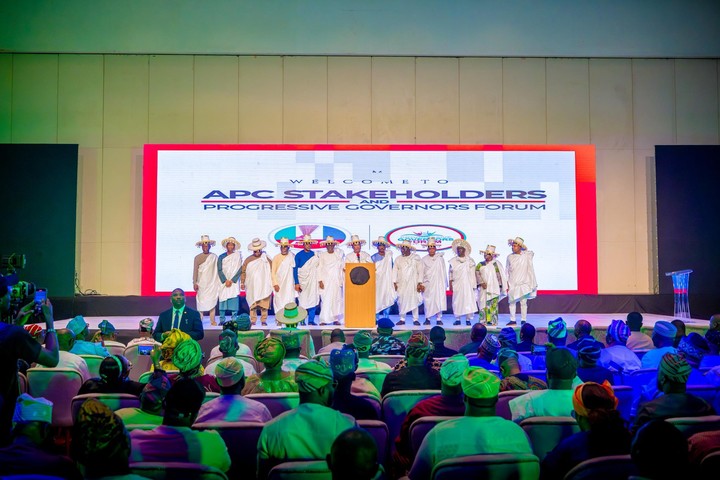

Governor of Enugu State, Peter Mbah, has reiterated the collective commitment of governors elected under the platform of the All Progressives Congress (APC) to strengthening governance structures, accelerating institutional reforms, and delivering measurable development outcomes across their respective states. Mbah made this known after attending a two-day retreat of the Progressive Governors’ Forum (PGF), held in Lagos over the weekend.
In a statement following the meeting, the Enugu governor described the retreat as a productive engagement that offered governors the opportunity to review shared policy directions, exchange ideas on governance challenges, and reinforce their joint resolve to deepen the progressive vision guiding the party’s administration at both state and federal levels. According to him, the gathering served as a platform for strategic alignment on national priorities and a renewed focus on people-oriented governance.
Mbah noted that the policies being pursued in Enugu State reflect the ideals discussed at the retreat. He highlighted ongoing reforms aimed at modernising public institutions, expanding critical infrastructure, transforming the education sector through the state’s Smart Schools initiative, strengthening internal security architecture, and stimulating economic growth. He added that these interventions are designed to improve the daily living conditions of residents and position the state on a sustainable development trajectory.
The governor said it was reassuring to observe that similar reform-driven conversations were taking place among his colleagues across the federation. He emphasized that the alignment of policy goals among APC-led states remains vital to achieving broader national objectives under the current administration.
Mbah also expressed appreciation to the Governor of Lagos State, Babajide Sanwo-Olu, for hosting the retreat, commending the warm reception and logistical arrangements that supported the deliberations. He described Lagos as a city that continues to provide a fitting environment for high-level policy engagements and reflections on Nigeria’s governance future.
Related News

Henry Seriake Dickson Defects from PDP to Newly Formed Nigeria Democratic Congress
Senator Henry Seriake Dickson has formally defected from the Peoples Democratic Party (PDP) to the newly registered Nigeria Democratic Congress…

Hon. Sarah Ivie Adidi Receives “Her Excellence Award” During International Women’s Day Event in Abuja
Reps aspirant Sarah Ivie Adidi has been honoured with the 2026 “Her Excellence Award” during an event marking International Women’s…
Governor Peter Mbah Urges Ndigbo to Return to Strategic Politics
Peter Mbah, Governor of Enugu State, has urged the Igbo political class to return to what he described as “strategic…
He further stated that the retreat offered governors an opportunity to reflect on the broader direction of the country under the Renewed Hope Agenda of President Bola Ahmed Tinubu, noting that state-level reforms are expected to complement national efforts aimed at economic stabilization, infrastructure expansion, and improved service delivery.
According to Mbah, the Progressive Governors’ Forum currently comprises 25 governors elected on the platform of the APC, and their unity of purpose remains central to driving policy coordination and reform implementation across states controlled by the party. He stressed that the shared objective is to build stronger subnational governments that can serve as engines for national growth and social stability.
However, the statement and the retreat itself have continued to attract mixed reactions from members of the public and political observers. While some stakeholders have praised the APC-led administrations for maintaining policy coordination and inter-state collaboration, others have expressed concerns over the implications of growing political dominance by a single party at the state level.
Several commentators have questioned whether the increasing migration of politicians into the APC could heighten internal tensions within the party, particularly during primary elections and candidate selection processes. Others have expressed apprehension about the potential impact on Nigeria’s multi-party democratic system.
Supporters of the ruling party, on the other hand, have argued that political realignments are part of Nigeria’s evolving democracy, emphasizing that governance performance, rather than party dominance, should remain the primary standard for evaluating leadership.
The retreat comes at a time when Nigeria continues to face significant economic and security challenges, placing increased pressure on state governments to improve revenue generation, address unemployment, enhance public safety, and deliver essential infrastructure. Analysts note that policy coherence between the federal government and states will be crucial in navigating these challenges over the coming years.
As the APC governors maintain their public show of unity, attention is expected to shift to how effectively commitments made at the Lagos retreat translate into concrete outcomes at the grassroots level. Citizens across various states will be watching closely to assess whether the promises of accelerated reforms and development will lead to tangible improvements in governance and living conditions.
For Governor Mbah, the emphasis remains on consolidating ongoing reforms in Enugu State while contributing to the wider progressive agenda at the national level. Whether the current political alignment will sustain long-term public confidence remains a key question as Nigeria approaches another crucial phase in its democratic journey.