APC Announces Defection of Plateau Governor Caleb Mutfwang from PDP
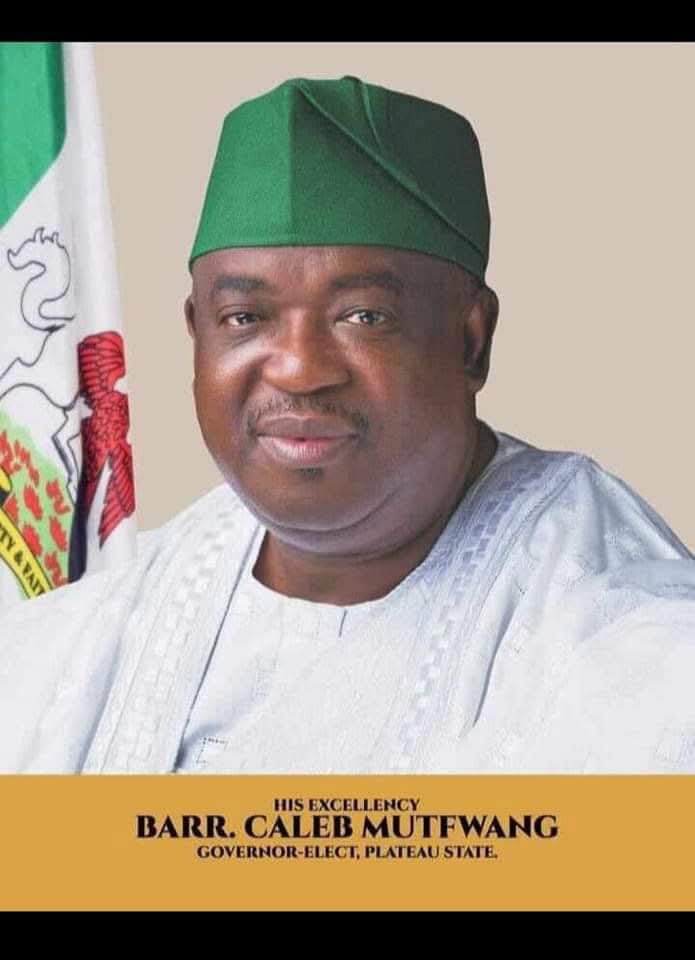

Nigeria’s political landscape witnessed another significant shift on Wednesday as the ruling All Progressives Congress (APC) announced the defection of Plateau State Governor, Caleb Mutfwang, from the opposition Peoples Democratic Party (PDP). The announcement was made by the APC National Chairman, Nentawe Yelwata, during the party’s 14th National Caucus meeting held at the State House Conference Centre in Abuja.
Yelwata, who is also an indigene of Plateau State, informed party leaders and stakeholders that Governor Mutfwang had formally joined the APC, describing the development as a strategic gain for the ruling party. According to him, the defection effectively places all states in Nigeria’s North Central geopolitical zone under APC control, further strengthening the party’s dominance ahead of the 2027 general elections.
The announcement comes amid a growing trend of high-profile defections from opposition parties to the APC, a development that has continued to generate intense debate across the political spectrum. While details surrounding the governor’s decision were not immediately disclosed at the caucus meeting, party insiders indicated that consultations had been ongoing for some time before the move was made public.
Related News

Henry Seriake Dickson Defects from PDP to Newly Formed Nigeria Democratic Congress
Senator Henry Seriake Dickson has formally defected from the Peoples Democratic Party (PDP) to the newly registered Nigeria Democratic Congress…

Hon. Sarah Ivie Adidi Receives “Her Excellence Award” During International Women’s Day Event in Abuja
Reps aspirant Sarah Ivie Adidi has been honoured with the 2026 “Her Excellence Award” during an event marking International Women’s…
Governor Peter Mbah Urges Ndigbo to Return to Strategic Politics
Peter Mbah, Governor of Enugu State, has urged the Igbo political class to return to what he described as “strategic…
Governor Mutfwang, who was elected on the platform of the PDP, has been a prominent political figure in Plateau State, a region that has often played a pivotal role in North Central politics. His defection is being interpreted by analysts as both a personal political calculation and a reflection of the broader challenges facing the PDP at the national level.
Following the announcement, reactions poured in from party supporters, political commentators, and members of the public. Supporters of the APC hailed the defection as evidence of the ruling party’s growing appeal and organizational strength. Some party members described the development as a “welcome boost” that would make Plateau State an easier contest for the APC in the 2027 elections.
On the other hand, critics expressed skepticism, questioning whether the growing concentration of power within a single party is healthy for Nigeria’s democracy. Some commentators argued that the wave of defections reflects deeper structural weaknesses within opposition parties, rather than genuine ideological alignment with the APC’s policies.
There were also divergent views on the implications of the defection for Plateau State itself. While some residents and political actors believe alignment with the ruling party at the federal level could attract increased attention and development to the state, others cautioned that political realignment alone does not automatically translate into improved governance or economic outcomes.
The PDP has yet to issue an official response to the announcement, but the defection of a sitting governor is widely regarded as another blow to the party’s efforts to reposition itself as a viable alternative ahead of future elections. Political observers note that internal divisions, leadership disputes, and strategic missteps have continued to weaken the opposition’s influence in several regions.
As Nigeria approaches the midpoint of President Bola Ahmed Tinubu’s first term, the consolidation of political power by the APC continues to shape national discourse. Whether the defection of Governor Mutfwang will deliver tangible political or developmental benefits to Plateau State remains to be seen, but its symbolic significance in the evolving balance of power between Nigeria’s major political parties is undeniable.