Sanwo-Olu Says Tinubu Well Positioned for Re-election in 2027 Presidential Contest
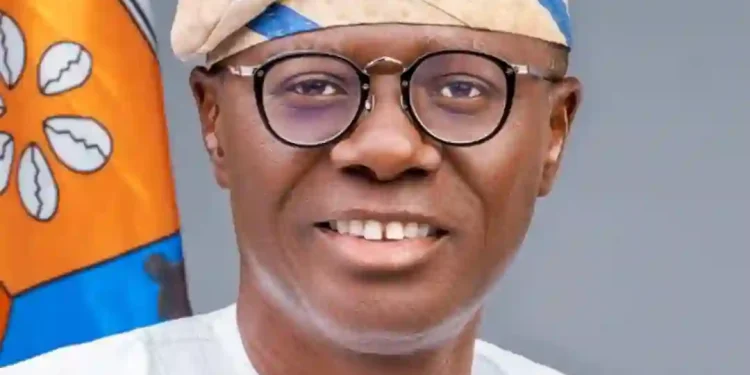

Lagos State Governor Babajide Sanwo-Olu has predicted that President Bola Ahmed Tinubu stands a strong chance of winning a second term in office in the 2027 presidential election, pointing to what he described as far-reaching reforms and growing political alignment across the country. The governor said recent developments under the Tinubu administration suggest that the president’s position will continue to strengthen as Nigeria moves closer to the next electoral cycle.
Governor Sanwo-Olu made the remarks on Monday while speaking on Journalist Hangout, a political discussion programme aired on Television Continental (TVC). During the interview, he argued that the reforms introduced under President Tinubu’s “Renewed Hope Agenda” have begun to reshape governance, improve revenue mobilisation, and lay foundations for long-term economic stability at both federal and state levels.
According to the Lagos governor, one of the most significant outcomes of the Tinubu administration has been improved revenue generation. He noted that both the federal government and subnational governments are recording better inflows as a result of policy changes aimed at closing financial leakages, strengthening compliance, and reforming fiscal management structures.
“The reforms in President Tinubu’s Renewed Hope Agenda have impacted governance and infrastructural development across the country,” Sanwo-Olu said. “States are seeing better revenue performance, and this has allowed many of them to invest more meaningfully in infrastructure and public services.”
The governor also pointed to what he described as early signs of economic recovery, including moderation in food prices, renewed foreign investor interest, and increased engagement from Nigerians in the diaspora. While acknowledging that the country continues to face economic challenges, Sanwo-Olu maintained that the administration’s policies are beginning to yield positive outcomes.
Related News
Henry Seriake Dickson Defects from PDP to Newly Formed Nigeria Democratic Congress
Senator Henry Seriake Dickson has formally defected from the Peoples Democratic Party (PDP) to the newly registered Nigeria Democratic Congress…

Hon. Sarah Ivie Adidi Receives “Her Excellence Award” During International Women’s Day Event in Abuja
Reps aspirant Sarah Ivie Adidi has been honoured with the 2026 “Her Excellence Award” during an event marking International Women’s…
Governor Peter Mbah Urges Ndigbo to Return to Strategic Politics
Peter Mbah, Governor of Enugu State, has urged the Igbo political class to return to what he described as “strategic…
He stressed that economic reforms, particularly those that initially place pressure on citizens, often take time before their full benefits become evident. In his view, the Tinubu administration has demonstrated political will to pursue difficult but necessary decisions in order to stabilise the economy and reposition Nigeria for growth.
Governor Sanwo-Olu further highlighted what he described as a shifting political landscape in favour of the ruling All Progressives Congress (APC). He observed that the number of APC-controlled states has increased since the 2023 general elections, rising from about 20 governors to between 28 and 29 at present. According to him, this development reflects growing acceptance of the president’s policies among political leaders nationwide.
“The political environment is changing,” he said. “More governors are aligning with the APC because they see value in the direction the country is headed.”
Based on these factors, Sanwo-Olu expressed confidence that President Tinubu would enjoy significant voter support in 2027. He argued that Nigerians tend to reward leaders who, in their assessment, deliver on campaign promises and demonstrate capacity for governance.
“Nigerians would vote for him because they can see that this President has done more work for us,” the governor stated. “He has done many of the things he promised to do.”
In addition to speaking on national politics, Sanwo-Olu also referenced developments in Lagos State under his administration. He said his government has continued to make progress under the THEMES+ development agenda, which focuses on transportation, health, education, security, entertainment, tourism, environmental sustainability, and technology-driven growth.
He noted that improved revenue generation has enabled Lagos State to sustain investments in infrastructure and social services, despite broader economic pressures affecting the country.
Sanwo-Olu’s comments have generated mixed reactions among Nigerians, with supporters viewing his remarks as a reflection of confidence within the ruling party, while critics question whether current economic realities will translate into electoral support. As the 2027 elections draw nearer, analysts say political debates are likely to intensify, with governance performance, economic conditions, and public trust expected to play central roles in shaping voter decisions.