Army Arrests Two Suspects Linked to Maiduguri Mosque Bombing as Investigations Deepen


The Nigerian Army has announced the arrest of two suspects believed to be connected to the recent bombing at a mosque in Maiduguri, the capital of Borno State. The development comes days after the deadly attack, which targeted worshippers and reignited national concerns over insecurity and insurgency in Nigeria’s North-East region.
According to military sources, the suspects were apprehended in the early hours of Tuesday during a carefully coordinated, intelligence-driven operation. Security operatives reportedly acted on credible information obtained through surveillance and community-based intelligence, which linked the arrested individuals to the planning and execution of the attack. The arrests were carried out without incident, and the suspects are currently in military custody.
Army authorities disclosed that investigations are ongoing to establish the precise roles played by the suspects and to determine whether they are part of a larger terrorist or criminal network operating within and around Maiduguri. Officials believe the suspects may provide critical intelligence that could help security agencies uncover collaborators, financiers, and logistics channels associated with the bombing.
Related News

Nigeria Moves to Modernise Air Defence Systems Amid Growing Security Concerns
Nigeria is reviewing proposals from Chinese and European defence companies to modernise its ageing air defence infrastructure as part of…

Rights Group Accuses Police of Judicial Persecution Over Remand of Blogger Maureen Badejo
The Committee for the Defence of Human Rights (CDHR) has accused the Nigeria Police Force of engaging in judicial persecution…
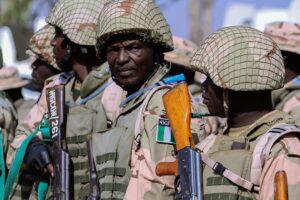
Tinubu Approves Salary Increase for Nigerian Armed Forces Personnel
President Bola Ahmed Tinubu has approved a salary increase and improved allowances for members of the Nigerian Armed Forces as…
The mosque bombing, which occurred during a period of worship, resulted in the loss of several lives and left multiple others injured. Victims were rushed to nearby medical facilities, where some remain under treatment. The incident drew widespread condemnation from government officials, civil society groups, religious leaders, and ordinary citizens, many of whom described the attack as a cowardly assault on innocent civilians and freedom of worship.
In response to the incident, the Nigerian Army reiterated its commitment to sustaining counter-terrorism operations across Borno State and the wider North-East. Military officials stressed that the arrests demonstrate the growing effectiveness of intelligence-led security operations and collaboration between the armed forces and local communities. They, however, acknowledged that the fight against insurgency remains complex and requires sustained effort.
Residents of Maiduguri have been urged to remain vigilant and continue providing timely and accurate information to security agencies. According to the Army, community cooperation remains a critical component in preventing attacks, disrupting terrorist movements, and protecting civilian populations. Authorities also warned members of the public against spreading unverified information that could undermine ongoing investigations or cause unnecessary panic.
The North-East has endured over a decade of insurgency-related violence, with places of worship, markets, schools, and public spaces frequently targeted. Although security forces have recorded gains in degrading insurgent capabilities, sporadic attacks such as the Maiduguri mosque bombing underscore the persistent threat posed by extremist groups and the need for continued security reforms.
Military sources added that further updates would be provided as investigations progress and as suspects are interrogated. The Army assured Nigerians that those responsible for the attack would be brought to justice in accordance with the law, while efforts to secure lives and property in the region would not relent.
As the investigation unfolds, the arrests have been seen by some observers as a positive step, even as calls grow louder for improved intelligence gathering, proactive prevention of attacks, and long-term strategies to address the root causes of insurgency, including poverty, radicalisation, and youth unemployment.