Onanuga Criticises Peter Obi’s Record as Anambra Governor, Defends Tinubu’s Reforms
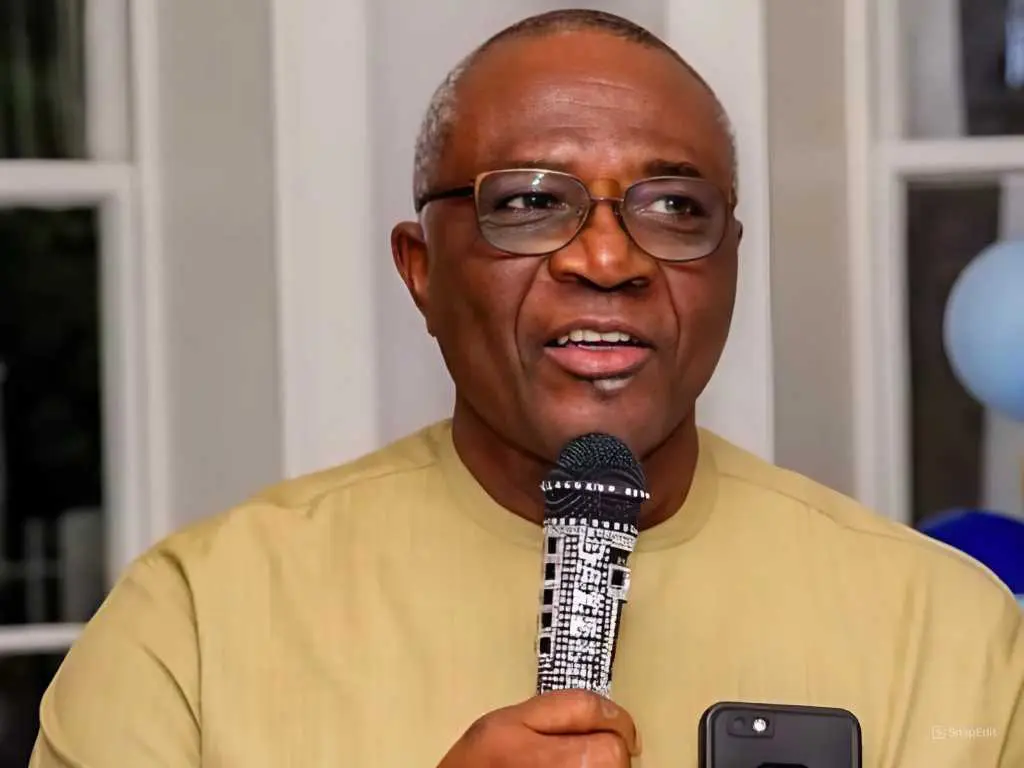

The Special Adviser to President Bola Tinubu on Information and Strategy, Bayo Onanuga, has strongly criticised former Anambra State governor and 2023 Labour Party presidential candidate, Peter Obi, describing him as a failed leader whose political claims should not be taken seriously. Onanuga’s comments come amid renewed political realignments, following Obi’s reported move to the African Democratic Congress (ADC) after leaving the Labour Party.
In a statement that has generated widespread reactions, Onanuga portrayed Obi as a politician still grappling with the outcome of the 2023 presidential election, where he finished third. According to him, Obi’s continued public commentary and criticism of the current administration are driven more by bitterness than by constructive engagement or credible alternatives.
Onanuga questioned Obi’s leadership credentials, arguing that his eight-year tenure as governor of Anambra State did not reflect the capacity required to manage a complex and diverse country like Nigeria. He described Obi’s time in office as underwhelming, asserting that a leader who failed to deliver transformative governance in a relatively small and economically vibrant state should not be trusted with national leadership.
He further criticised Obi’s frequent references to foreign models, academic theories, and international examples of development, which Obi often cites as lessons Nigeria should adopt. Onanuga argued that such an approach reflects a shallow understanding of governance, insisting that nations thrive on homegrown ideas tailored to their unique realities rather than imported frameworks.
Related News
Henry Seriake Dickson Defects from PDP to Newly Formed Nigeria Democratic Congress
Senator Henry Seriake Dickson has formally defected from the Peoples Democratic Party (PDP) to the newly registered Nigeria Democratic Congress…

Hon. Sarah Ivie Adidi Receives “Her Excellence Award” During International Women’s Day Event in Abuja
Reps aspirant Sarah Ivie Adidi has been honoured with the 2026 “Her Excellence Award” during an event marking International Women’s…
Governor Peter Mbah Urges Ndigbo to Return to Strategic Politics
Peter Mbah, Governor of Enugu State, has urged the Igbo political class to return to what he described as “strategic…
According to the presidential spokesman, “Nations are not identical, and what works in Indonesia or the United States cannot simply be copied and pasted into Nigeria’s political and economic context.” He stressed that sustainable development requires originality, deep institutional understanding, and policies rooted in local conditions.
Onanuga contrasted Obi’s approach with what he described as the reform agenda of President Bola Tinubu. He said that since assuming office on May 29, 2023, Tinubu has implemented far-reaching economic and structural reforms aimed at repositioning the country for long-term growth. These, he noted, include the removal of petrol subsidies, which he described as wasteful and unsustainable, and a deliberate shift away from excessive reliance on oil revenue.
He also highlighted the administration’s focus on gas development, tax reforms, and large-scale infrastructure projects, including the Lagos–Calabar Coastal Highway and the Sokoto–Badagry Superhighway. Onanuga dismissed claims that such projects were unrealistic, stating that they reflect a long-term vision for national integration and economic expansion.
Additionally, he said the Tinubu administration has recorded improvements in foreign reserves, relative exchange rate stability, and a gradual slowdown in inflation. With the introduction of tax reforms expected to begin in January, Onanuga said the government aims to harmonise Nigeria’s fragmented tax system, improve revenue generation, and increase the country’s tax-to-GDP ratio to support social services and infrastructure.
Onanuga also took aim at Obi’s frequent claims that he was robbed of victory in the 2023 election, arguing that available data and post-election analyses did not support such assertions. He claimed Obi was fortunate to finish third, citing what he described as irregular polling patterns in parts of the South-East that inflated expectations.
Looking ahead to 2027, Onanuga predicted that Obi’s move to ADC would not significantly alter Nigeria’s political landscape. He suggested that Obi would likely play a subordinate role within the coalition and could eventually emerge as a vice-presidential candidate, similar to his position in the 2019 elections.
The comments have sparked intense debate across political and social circles, with supporters and critics offering differing interpretations of both Obi’s record and the Tinubu administration’s performance. While some see Onanuga’s remarks as a robust defence of government policy, others argue they reflect growing political tension ahead of the next election cycle.
As political alignments continue to evolve, the exchange underscores the deep divisions shaping Nigeria’s political discourse and the competing narratives around leadership, reform, and national development.