Wike Says Fubara’s Second Term Would End His Political Career, Reaffirms Total Support for Tinubu
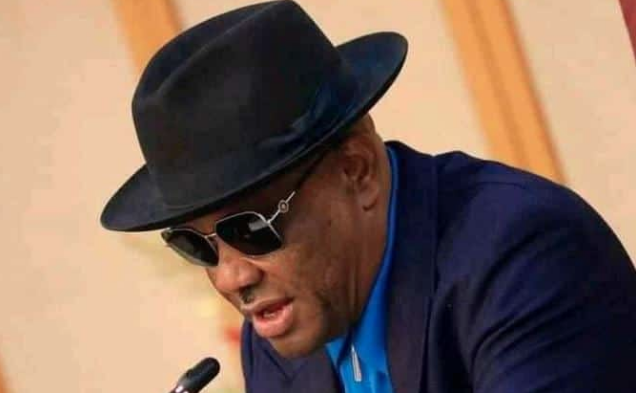

The political crisis in Rivers State has deepened as the Minister of the Federal Capital Territory, Nyesom Wike, openly declared that permitting Governor Siminalayi Fubara to secure a second term would effectively “bury” him politically. Wike’s comments signal a decisive break from any remaining attempts at reconciliation and underline the growing intensity of the power struggle ahead of the 2027 general elections.
Speaking during a recent political engagement, Wike said a firm decision had already been taken regarding President Bola Ahmed Tinubu, while ruling out any future support for Fubara. According to him, repeating what he described as a past “leadership mistake” in Rivers State would have irreversible political consequences.
“We have made a decision as far as Tinubu is concerned. The other one — no way. Because if we make another mistake, then we will go and bury ourselves politically. I will not allow myself to be buried. I will not allow that mistake again,” Wike said.
He added that the decision was final and should be clearly understood by political stakeholders across the state.
Wike’s renewed attack comes weeks after Governor Fubara defected to the All Progressives Congress (APC), a move that further complicated the already fragile political arrangement in Rivers State. The FCT minister accused Fubara of violating the peace agreement that preceded the lifting of the emergency rule in the state, an intervention that paved the way for the governor’s return to office after months of institutional paralysis.
Earlier in the week, Wike stated that the “leadership mistake” that led to the current crisis would be corrected in 2027. He also promised to disclose details of the peace agreement that restored Fubara to power, suggesting that key commitments had been breached.
Related News
Henry Seriake Dickson Defects from PDP to Newly Formed Nigeria Democratic Congress
Senator Henry Seriake Dickson has formally defected from the Peoples Democratic Party (PDP) to the newly registered Nigeria Democratic Congress…

Hon. Sarah Ivie Adidi Receives “Her Excellence Award” During International Women’s Day Event in Abuja
Reps aspirant Sarah Ivie Adidi has been honoured with the 2026 “Her Excellence Award” during an event marking International Women’s…
Governor Peter Mbah Urges Ndigbo to Return to Strategic Politics
Peter Mbah, Governor of Enugu State, has urged the Igbo political class to return to what he described as “strategic…
In a veiled reference to the governor, Wike argued that political leadership should be driven by the collective will of the people rather than personal ambition.
“We will not make the same mistake again at the state level in 2027, but we will talk about it later when the time comes,” he said.
Addressing stakeholders in Ogba/Egbema/Ndoni Local Government Area, Wike further dismissed suggestions that Fubara’s public support for President Tinubu would guarantee him political survival or re-election. He maintained that his own backing of Tinubu predated Fubara’s defection to the APC and insisted that loyalty alone would not override political realities on the ground.
“If you played well with the first one and succeeded, do you think you can succeed with the second one? There cannot be two markets in one day,” Wike said, referencing the multiple peace agreements associated with the Rivers crisis.
He warned that anyone assuring Fubara that aligning with Tinubu’s political structure would automatically secure his mandate was misleading him.
“All of us have decided to work for Bola Ahmed Tinubu. There is no discussion about that,” Wike added, stressing that his camp was fully committed to delivering support for the president.
Wike also questioned Fubara’s leadership capacity, accusing the governor of failing to maintain productive relationships with key political institutions, including local government chairmen, the state assembly, and members of the National Assembly.
“Someone who cannot relate with local government chairmen, state assembly members, and national assembly members—what kind of leadership do you want to provide?” he asked.
Responding to Fubara’s New Year remarks, in which the governor dismissed Wike’s statements as mere “noise,” the former Rivers governor insisted that Fubara owed his rise to political backing rather than popular support.
As the rivalry continues to polarise Rivers State politics, analysts say the outcome of the Wike–Fubara conflict could have significant implications not only for the state but also for President Tinubu’s broader political calculations in the South-South region ahead of 2027.