2027 Presidency: Dele Momodu Says He Never Discouraged Support for Peter Obi Amid ADC Debate
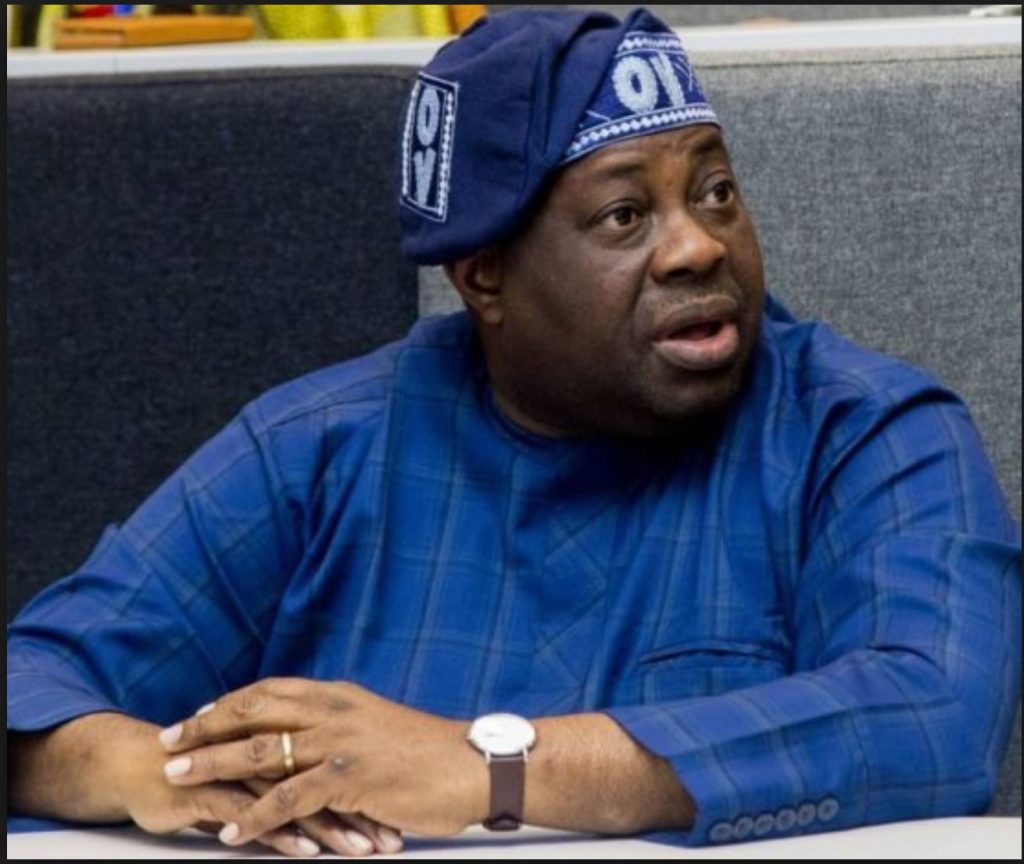

A prominent chieftain of the African Democratic Congress (ADC) and publisher of Ovation International, Dele Momodu, has dismissed claims that he advised Nigerians against supporting former Labour Party presidential candidate, Peter Obi, who recently defected to the ADC. Momodu stated that while he is entitled to his personal political views, he has never instructed anyone to withdraw their support for Obi or any other aspirant.
The clarification came after a heated exchange on social media platform X (formerly Twitter), where an X user, identified as @judeski007, expressed reservations about the ADC coalition allegedly projecting an elderly candidate for the 2027 presidential election. In the post, the user claimed to be supportive of the ADC coalition but argued that presenting an “80-year-old man” as a presidential candidate would be unacceptable, adding that he would rather support President Bola Tinubu if former Vice President Atiku Abubakar emerged as the opposition candidate.
The comment quickly gained traction and drew a response from Dele Momodu, who sought to correct what he described as a misrepresentation of his position. In a post shared on his official X handle, Momodu stressed that he had not discouraged support for Peter Obi, noting that Obi is not his political enemy.
Related News

Henry Seriake Dickson Defects from PDP to Newly Formed Nigeria Democratic Congress
Senator Henry Seriake Dickson has formally defected from the Peoples Democratic Party (PDP) to the newly registered Nigeria Democratic Congress…

Hon. Sarah Ivie Adidi Receives “Her Excellence Award” During International Women’s Day Event in Abuja
Reps aspirant Sarah Ivie Adidi has been honoured with the 2026 “Her Excellence Award” during an event marking International Women’s…

Governor Peter Mbah Urges Ndigbo to Return to Strategic Politics
Peter Mbah, Governor of Enugu State, has urged the Igbo political class to return to what he described as “strategic…
“There is nowhere I told you not to root for Obi. He’s not my enemy,” Momodu wrote. “But it is my right to state the facts and historical evidence that are available to me. My choice is also mine. We do not have to trade insults. In this game of numbers, every participant is important.”
Momodu’s statement highlights the growing sensitivity and internal debates within opposition circles as political actors begin positioning themselves ahead of the 2027 general elections. With Peter Obi’s recent defection to the ADC, discussions around leadership, electability, age, and coalition-building have intensified, particularly among supporters and critics on social media.
Observers note that Momodu’s response appears aimed at striking a balance between expressing personal political preferences and maintaining unity within the opposition. By emphasizing that “every participant is important,” he underscored the numerical and strategic realities of Nigerian politics, where voter coalitions and alliances often determine electoral outcomes.
The exchange has also sparked wider reactions among Nigerians, especially online, with opinions sharply divided. Some commentators dismissed the ADC’s ambitions as unrealistic, predicting internal divisions and an eventual collapse of the party’s coalition efforts. Others accused political figures like Momodu of sitting on the fence or aligning with more established political interests, while a section of users expressed unwavering support for Peter Obi, insisting that he remains a major political force ahead of 2027.
There were also voices expressing skepticism about the feasibility of Obi winning the presidency, citing Nigeria’s entrenched political structures, regional dynamics, and historical voting patterns. Conversely, some supporters argued that despite the odds, Obi’s popularity among youths and urban voters could still reshape the political landscape if properly harnessed.
The controversy reflects a broader challenge facing Nigeria’s opposition parties: how to present a united front capable of challenging the ruling party while managing differing ambitions, ideologies, and personalities. As political discussions gradually intensify, figures like Dele Momodu appear keen to assert their independence of thought while avoiding outright factional battles.
With more than a year to go before the 2027 elections formally take shape, analysts believe such debates will only grow louder. For now, Momodu’s intervention serves as a reminder of the delicate balance opposition leaders must maintain between personal conviction, party loyalty, and the broader objective of electoral competitiveness.