Sowore Advocates Drone-Led Security Strategy, Says Technology Would Replace Traditional Defence Structures If Elected President
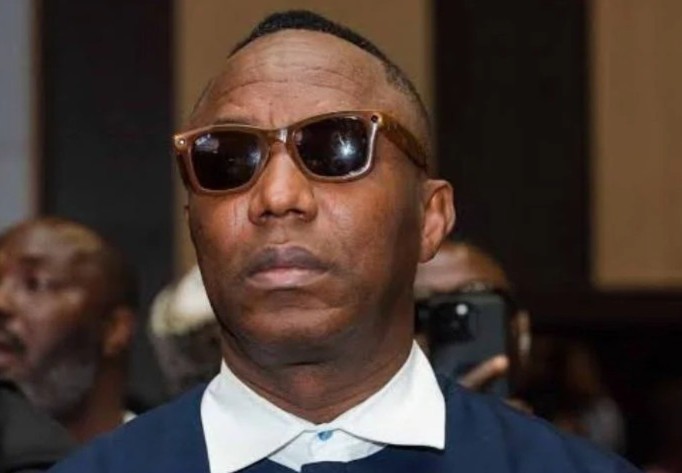

Omoyele Sowore, the 2023 presidential candidate of the African Action Congress (AAC), has reiterated his belief that modern technology, particularly unmanned aerial vehicles (UAVs), offers a more effective and practical solution to Nigeria’s persistent security challenges than conventional military hardware. Speaking during an appearance on Morning Brief, a programme aired on Channels Television on Monday, Sowore said he would prioritise investment in drones over fighter jets if elected president.
According to Sowore, Nigeria’s ongoing struggles with terrorism, banditry, and kidnapping require intelligence-driven solutions rather than heavy reliance on costly and maintenance-intensive military equipment. He argued that drones provide superior surveillance capabilities, faster response times, and broader coverage with fewer personnel.
“If I’m president of Nigeria, I’m not buying any jet anymore. I’m buying unmanned aerial vehicles. I want to invest in drones,” Sowore said. “They are expensive, but they are far more effective for the kind of security problems Nigeria is facing.”
He explained that drones are particularly useful in tracking criminal groups operating in forests, mountainous regions, and other hard-to-reach terrains where conventional security forces often struggle. With advanced imaging and real-time monitoring, drones, he said, could significantly improve intelligence gathering and coordination among security agencies.
Sowore further noted that drone operations require relatively fewer personnel compared to traditional military assets. He illustrated this by stating that a small team of operators could manage multiple drones simultaneously, making the approach more efficient and cost-effective.
Related News

Henry Seriake Dickson Defects from PDP to Newly Formed Nigeria Democratic Congress
Senator Henry Seriake Dickson has formally defected from the Peoples Democratic Party (PDP) to the newly registered Nigeria Democratic Congress…

Hon. Sarah Ivie Adidi Receives “Her Excellence Award” During International Women’s Day Event in Abuja
Reps aspirant Sarah Ivie Adidi has been honoured with the 2026 “Her Excellence Award” during an event marking International Women’s…
Governor Peter Mbah Urges Ndigbo to Return to Strategic Politics
Peter Mbah, Governor of Enugu State, has urged the Igbo political class to return to what he described as “strategic…
“You can have five people operating ten drones,” he said. “Even some drones that cost around two thousand dollars can cover a four-kilometre radius within twenty minutes. That alone shows how much ground you can monitor in a very short time.”
Drawing from his personal experience, Sowore stated that he owns drones that have been seized in the past, underscoring both their availability and potential effectiveness. He argued that with a coordinated system, drones could be deployed immediately when reports of kidnapping or criminal movement emerge, allowing security forces to track suspects until ground troops are able to intervene.
“If there is information that kidnappers are moving through the bush, drones can be used to track them temporarily until the police or other security agencies conduct a proper cordon-and-search operation,” he said.
In a statement that drew significant public attention, Sowore remarked that he would fundamentally rethink the structure of Nigeria’s defence leadership if elected.
“If I’m president of Nigeria, I won’t have a minister of defence. My minister of defence would be a drone,” he said, using the phrase to emphasise his belief in technology-driven security rather than traditional bureaucratic approaches.
Beyond security, Sowore also spoke about his broader governance priorities. He identified electricity supply as one of the most urgent challenges Nigeria must address, arguing that stable power would have a direct impact on economic productivity, national morale, and even security.
“My first priority would be to turn on electricity in Nigeria,” he said. “It would restore dignity to the people. For the first time, you would feel like you belong to a country that respects you and is ready to work.”
According to him, improved electricity supply would enhance surveillance systems, support small businesses, create jobs, and reduce crime by strengthening economic stability across communities.
Sowore’s comments reflect a broader debate in Nigeria about the role of technology in national security and governance, as well as the need to balance innovation with institutional capacity. While his proposals remain hypothetical, they continue to generate discussion around alternative approaches to tackling Nigeria’s long-standing challenges.