Labour Party Chieftain Accuses Peter Obi of Anti-Democratic Conduct After 2023 Election
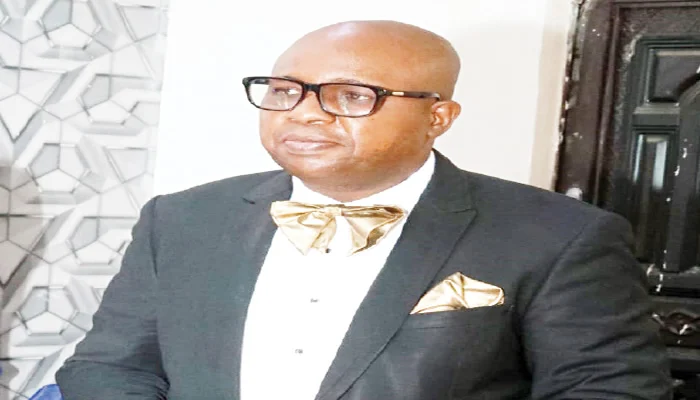

The internal crisis within the Labour Party (LP) has taken a sharper turn following fresh allegations against its 2023 presidential candidate, Peter Obi, by the Julius Abure-led faction of the party. Speaking in an interview, the spokesperson of the faction, Obiora Ifoh, accused Obi of exhibiting anti-democratic behaviour after the 2023 general election, a development he said ultimately led to the breakdown of the relationship between the former Anambra State governor and the party leadership.
Ifoh, who spoke to journalist Imoleayo Oyedeyi, clarified earlier remarks attributed to the party suggesting that Labour Party regretted presenting Obi as its presidential candidate. According to him, Obi was initially seen as a suitable flag bearer who aligned with the party’s core values of social democracy, justice, and equal opportunity at the time of his selection.
“At the point we chose him, we believed he met our standards and shared our vision,” Ifoh explained. “Everything we campaigned on during the election was rooted in those principles. But what came after the election was not what we expected.”
The LP chieftain alleged that Obi’s conduct following the presidential election and subsequent court cases marked a turning point in their relationship. He stated that rather than working to consolidate the party’s gains from the election — including reviewing campaign strategies and strengthening party unity — Obi allegedly pursued actions that undermined democratic processes within the party.
According to Ifoh, the party leadership expected Obi to initiate a post-election reconciliation process aimed at expanding on the over six million votes recorded during the election. This, he said, would have involved engaging party executives, acknowledging grassroots mobilisation efforts, and fostering internal cohesion after months of intense campaigning and legal battles.
Related News
Henry Seriake Dickson Defects from PDP to Newly Formed Nigeria Democratic Congress
Senator Henry Seriake Dickson has formally defected from the Peoples Democratic Party (PDP) to the newly registered Nigeria Democratic Congress…

Hon. Sarah Ivie Adidi Receives “Her Excellence Award” During International Women’s Day Event in Abuja
Reps aspirant Sarah Ivie Adidi has been honoured with the 2026 “Her Excellence Award” during an event marking International Women’s…
Governor Peter Mbah Urges Ndigbo to Return to Strategic Politics
Peter Mbah, Governor of Enugu State, has urged the Igbo political class to return to what he described as “strategic…
Instead, Ifoh alleged that Obi called for the removal of the party’s national executive committee, despite the fact that the executives were elected through a recognised convention which Obi himself reportedly endorsed at the time.
“He did not have the patience to wait for the end of our tenure as provided by the party constitution,” Ifoh said. “Rather, he mobilised certain National Assembly members loyal to him, as well as the Abia State governor, in a bid to forcibly remove the elected leadership.”
The spokesperson argued that such actions were contrary to the Labour Party’s constitution, which clearly outlines procedures for removing party officials. He described Obi’s approach as undemocratic and inconsistent with the values the party claimed to stand for.
Addressing claims that the fallout between Obi and the party leadership was linked to financial disagreements, Ifoh dismissed suggestions that the party demanded money or material support from the former presidential candidate. He insisted that no such requests were ever made during or after the campaign.
“We never accused him of refusing to give us money, and we never asked,” he said. “Throughout the campaign, he ran his finances independently. The party was not involved in campaign funding, and we didn’t interfere.”
Ifoh further claimed that Obi made no material contributions to the party during the election cycle, stressing that this was never a point of contention. According to him, the party’s focus was on ideological alignment and the belief that a Labour Party-led government would improve governance and welfare across Nigeria.
The allegations come in the wake of Obi’s recent defection to the African Democratic Congress, a move that has deepened divisions within the Labour Party and fuelled public debate about the future of the Obidient movement. While Obi has yet to formally respond to the latest accusations, his supporters have continued to defend his actions, accusing the Abure-led faction of mismanagement and clinging to power.
The ongoing dispute highlights broader tensions within opposition politics in Nigeria, where post-election power struggles, leadership legitimacy, and ideological direction often trigger prolonged internal crises. As the Labour Party seeks to redefine its path ahead of future elections, the lingering fallout from the 2023 presidential race continues to shape its internal dynamics and public perception.